

Modalyst has joined Wix.com | Read More Here
Integration
Seamlessly integrate to your eCommerce store to become a successful dropshipping business overnight.
Wix
Add Modalyst to your ecommerce plan and start taking your Wix website to the next level.
Shopify
Install Modalyst's Shopify app in one click to automate dropshipping for your Shopify store.
BigCommerce
List thousands of products to your BigCommerce store with a single click..
Partner
Kit
Peer-to-peer marketplace

Learn how to start a successful dropshipping business with Modalyst. Overnight.

Over 250,000 entrepreneurs & online businesses have signed up to receive tips, tricks, and news on dropshipping & ecommerce success.

Protecting Your E-commerce Business Assets with Physical Access Control

The Hidden Risk in E-commerce

For most e-commerce businesses, growth starts on a screen. You optimize product pages, refine your ad strategy, and look for ways to reduce friction across the customer journey. But even the most digital brand still relies on physical operations behind the scenes. Inventory has to be stored, shipments have to move, and teams, vendors, and couriers all need to access real-world spaces. When those systems work, customers barely notice. When they break down, the impact is immediate.

A missed delivery, unauthorized entry, or inventory loss creates more than a temporary disruption. It can delay fulfillment, increase support volume, and erode customer trust. For businesses operating on tight margins and high customer expectations, those problems add up quickly.

This risk grows as operations grow more complex. More locations, more vendors, more delivery volume, and more people moving through physical spaces can create vulnerabilities that are easy to overlook when most attention is focused on digital performance.

That’s why physical access control deserves a place in the broader e-commerce conversation. Protecting revenue is not only about improving conversions and acquiring customers. It’s also about securing the real-world systems that support the business behind the scenes.

Building a resilient e-commerce brand means looking beyond the screen.

Why Physical Security Matters for Dropshipping & E-commerce

Dropshipping is often seen as a low-risk, asset-light business model. Without the need to own or manage inventory directly, many operators assume physical security is someone else’s responsibility. But in reality, your business still depends on a network of physical touch points, and each one introduces risk.

Even if you never step inside a warehouse, your products do. Inventory moves through supplier facilities, third-party logistics (3PL) centers, and distribution hubs before reaching your customers. Along the way, there are multiple moments where things can go wrong: misplaced stock, unauthorized access, or breakdowns in delivery coordination.

When a package is delayed, lost, or stolen, your customer doesn’t see a supplier or logistics partner. They see your brand. 

That means every gap in physical security can translate into:

– Refund requests and chargebacks

– Negative reviews and support tickets

– Lower repeat purchase rates

As order volume increases, so does the complexity. More shipments mean more handoffs. More vendors mean more people with access to physical spaces. Without clear oversight into who can enter facilities or handle inventory, it becomes harder to maintain consistency and control.

There is also the challenge of shared environments. Many e-commerce businesses rely on co-warehousing spaces or multi-tenant fulfillment centers, where multiple companies operate under one roof. In these settings, access is often distributed across staff, contractors, and delivery personnel, making it difficult to track who’s coming and going.

The result is a growing disconnect: highly optimized digital storefronts supported by physical operations that lack the same level of visibility and control.

Common Physical Vulnerabilities in E-commerce Operations

As e-commerce operations scale, physical processes often evolve organically rather than strategically. New suppliers are added, fulfillment partners change, and delivery volume increases, but the systems used to manage access and security don’t always keep up. Over time, this creates gaps that are easy to miss but costly to ignore.

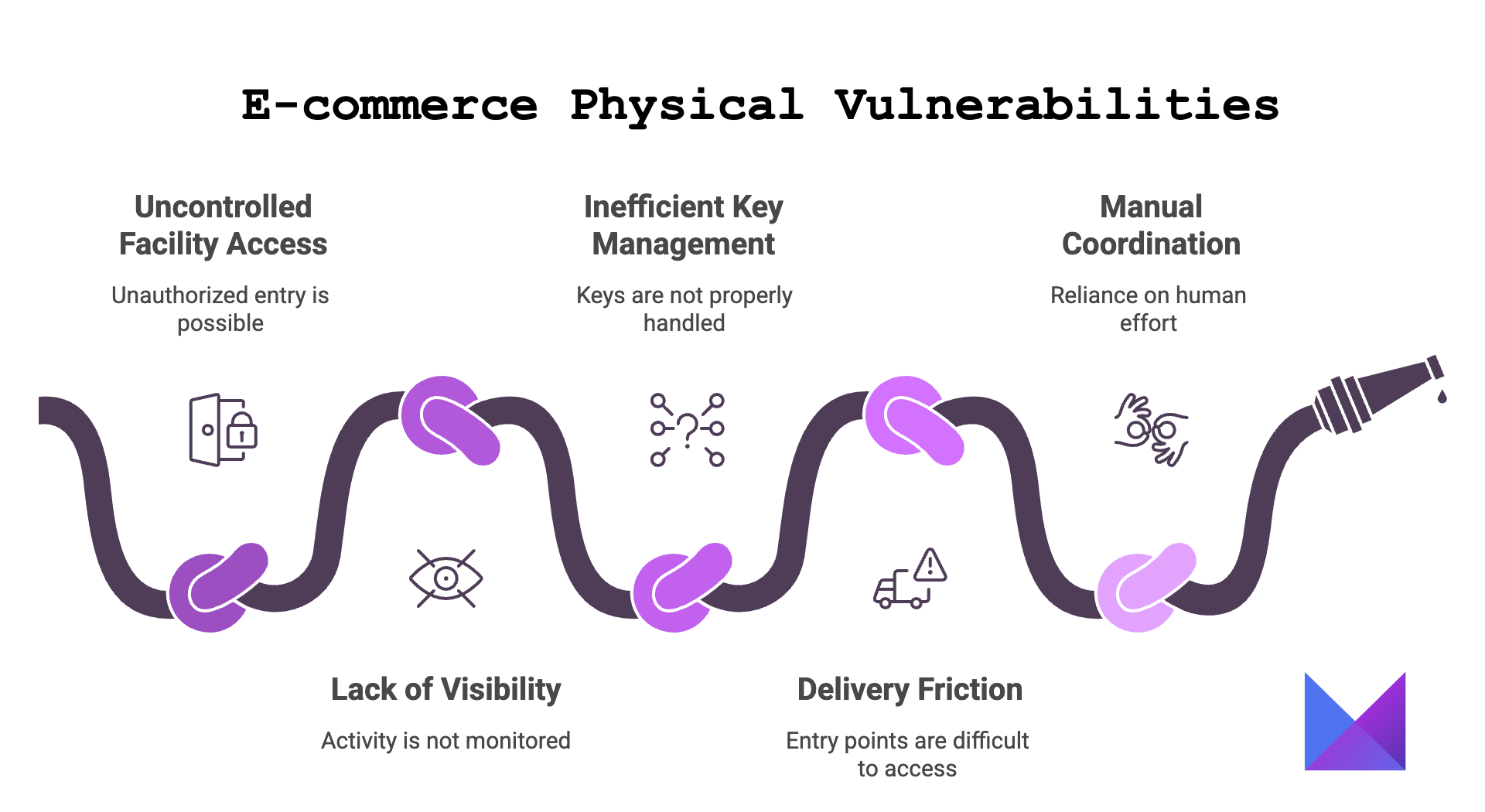
Here are some of the most common physical vulnerabilities that impact e-commerce and dropshipping businesses:

1. Uncontrolled Facility Access

In many fulfillment environments, especially shared warehouses or multi-tenant spaces, access is distributed across a wide range of people, staff, third-party vendors, cleaning crews, and delivery personnel.

Without a centralized way to manage who can enter and when, access quickly becomes difficult to control. Credentials may be shared, permissions may not be updated, and former vendors may retain entry longer than intended.

When too many people can access a space without clear oversight, it becomes harder to prevent or investigate issues like inventory loss or unauthorized activity.

2. Lack of Visibility Into Activity

Knowing that something went wrong is one thing. Knowing when, where, and how it happened is another. Many e-commerce operators rely on partners or facilities that lack detailed access logs or tracking systems. This means there is little visibility into who entered a space, at what time, or for what purpose.

When issues arise, such as missing inventory, damaged goods, or delayed shipments, this lack of visibility slows down resolution and makes it harder to identify the root cause.

3. Inefficient Key and Credential Management

Traditional access methods like physical keys or keycards are difficult to manage at scale. Keys can be lost, copied, or passed between individuals without oversight. Keycards can remain active long after someone no longer needs access.

For e-commerce businesses working with multiple vendors or temporary staff, this creates unnecessary risk. Each new partner or delivery driver introduces another layer of access that must be managed manually.

4. Delivery and Entry Friction

High order volume means frequent deliveries, and each delivery requires access. In many cases, drivers arrive at facilities that are locked, unattended, or difficult to navigate.

When entry is not streamlined, deliveries can be missed, delayed, or left unsecured. This not only impacts fulfillment timelines but also increases the risk of theft or damage. For businesses that rely on speed and reliability, even small inefficiencies at the point of entry can create ripple effects across the entire customer experience.

5. Overreliance on Manual Coordination

Many access-related tasks still depend on manual processes: coordinating entry over phone calls, sharing codes via text, or relying on someone to be physically present to unlock a door.

This may work at a smaller scale, but it becomes unsustainable as operations grow. Manual coordination introduces delays, increases the chance of human error, and limits the ability to scale efficiently.
Common Physical Vulnerabilities in E-commerce Operations

How Modern Access Control Solves These Problems

Addressing physical vulnerabilities in e-commerce operations starts with rethinking how access is managed. Traditional methods, like keys, shared codes, or manual coordination, were not designed for the speed, scale, and complexity of modern logistics, but modern access control systems are. 

What is Physical Access Control?

At its core, physical access control is a way to manage and monitor who can enter a space, when they can enter, and under what conditions. While older systems rely on physical credentials like keys or fobs, newer solutions are cloud-based and designed to be managed remotely.

Instead of distributing access manually, with a tool like ButterflyMX, operators can control permissions through a centralized platform, often from a desktop or mobile device.

Key Capabilities That Address Common Gaps

Modern access control systems are built to solve the exact challenges e-commerce businesses face as they scale:

– Remote Access Management. Grant or revoke access instantly without needing to be on-site. This is especially useful when working with multiple vendors, temporary staff, or rotating delivery personnel.

– Audit Trails and Activity Logs. Track who entered a space and when. This creates accountability and makes it easier to investigate issues like missing inventory or unauthorized access.

– Reduced Reliance on Physical Credentials. By moving away from keys and shared codes, businesses can minimize the risk of lost, copied, or misused credentials.

– Centralized Oversight Across Locations. For operators managing multiple facilities or working with distributed partners, access can be controlled from a single interface rather than handled separately at each site.

From Reactive to Proactive Operations

One of the biggest advantages of modern access control is the shift from reactive problem-solving to proactive management.

Instead of responding to missed deliveries or investigating issues after they occur, businesses can put systems in place that prevent these problems from happening in the first place. Access becomes structured, trackable, and aligned with operational needs, rather than improvised.

For growing e-commerce brands, this level of control is about building a more reliable and scalable foundation for day-to-day operations.

Use Case: Securing Your E-commerce Operations End-to-End

To understand the impact of modern access control, it helps to look at how it applies across the different stages of an e-commerce operation. While each business setup is unique, most rely on a combination of storage, fulfillment, and delivery environments.

Warehouse and Storage Management

Whether you use a dedicated warehouse, a shared facility, or a smaller storage unit, controlling who can access inventory is critical.

With modern systems, you can:

– Grant access only to authorized staff

– Adjust permissions as roles change

– Maintain a record of all entry activity

Third-Party Logistics (3PL) and Vendor Access

Working with external partners introduces flexibility and complexity. Vendors, contractors, and logistics teams may need temporary or limited access to facilities.

Instead of relying on shared credentials or manual coordination, access can be:

– Issued for specific timeframes

– Restricted to certain entry points

– Revoked immediately when no longer needed

Delivery and Courier Coordination

Deliveries are one of the most frequent and vulnerable touchpoints in e-commerce operations.

Modern access control can streamline this process by:

– Allowing secure entry for couriers without requiring someone on-site

– Reducing missed or failed delivery attempts

– Minimizing the need for packages to be left unattended

Multi-Location Oversight

As businesses grow, operations often expand across multiple sites, whether through additional warehouses, new markets, or different logistics partners.

A centralized access control system allows operators to:

– Manage all locations from a single platform

– Maintain consistent security standards

– Scale operations without adding complexity

Final Thoughts: E-commerce Doesn’t Stop at the Screen

E-commerce may begin with a click, but it’s sustained by everything that happens after. Inventory is stored, orders are processed, and deliveries are completed in the physical world, whether you see it directly or not.

As operations grow, so does the need for structure behind the scenes. What starts as a flexible, lightweight setup can quickly become complex, with more vendors, more locations, and more moving parts to manage. Without the right systems in place, small inefficiencies and security gaps can scale alongside your business.

The most resilient e-commerce brands recognize that digital performance and physical operations are closely connected. A seamless customer experience depends just as much on reliable fulfillment and secure access as it does on a well-optimized storefront.

By taking a more proactive approach to how physical spaces are managed, especially when it comes to access and visibility, businesses can reduce risk, improve efficiency, and create a stronger operational foundation for growth.

Picture of Katie Kistler

Katie Kistler

What Is Dropshipping in 2026?

eCommerce is exploding, and the numbers don’t lie. Experts predict the global eCommerce market will soar to an incredible $83.19 trillion by 2035.

When you narrow in on dropshipping, the growth is just as impressive. This corner of the market is expected to reach an amazing $1,253 billion by 2030. That’s a massive number of people shopping online, creating a fantastic opportunity for entrepreneurs like you to build a business that meets this growing demand.

This fast-paced growth brings up a big question: Is dropshipping still a great, low-risk business model, or has the game completely changed in 2026?

The short answer is yes, the rules have definitely shifted. What worked five years ago won’t get you the same results today. To succeed, you need to get familiar with how this business operates now. In this guide, we’ll walk you through the basics, explain how the business model works, and explore what’s new for 2026.

Dropshipping – The foundation

Let us start with a simple definition. Dropshipping website is a retail fulfillment method where a store does not keep the products it sells in stock. When your store sells a product, it purchases the item from a third party and has it shipped directly to the customer.

This creates a straightforward three-way relationship: the seller (you), the supplier, and the customer. You focus entirely on marketing and sales. The supplier handles the warehouse, the packaging, and the shipping. The customer simply gets the product they ordered.

You never have to touch the inventory. This matters because it removes the biggest financial hurdle of starting a traditional retail business. You do not need thousands of dollars to buy stock upfront. You only pay for a product after a customer has already paid you.

Your profit is the margin between the wholesale price you pay the supplier and the retail price the customer pays you. If a supplier charges you $10 for a custom mug, and you sell it for $25, you keep the $15 difference.

Traditional retail requires you to guess what people want, buy it in bulk, and hope it sells. Dropshipping removes that guesswork. It is the art of selling without stocking. However, in 2026, it demands far more from you than just listing products on a website.

How dropshipping works: Step by step

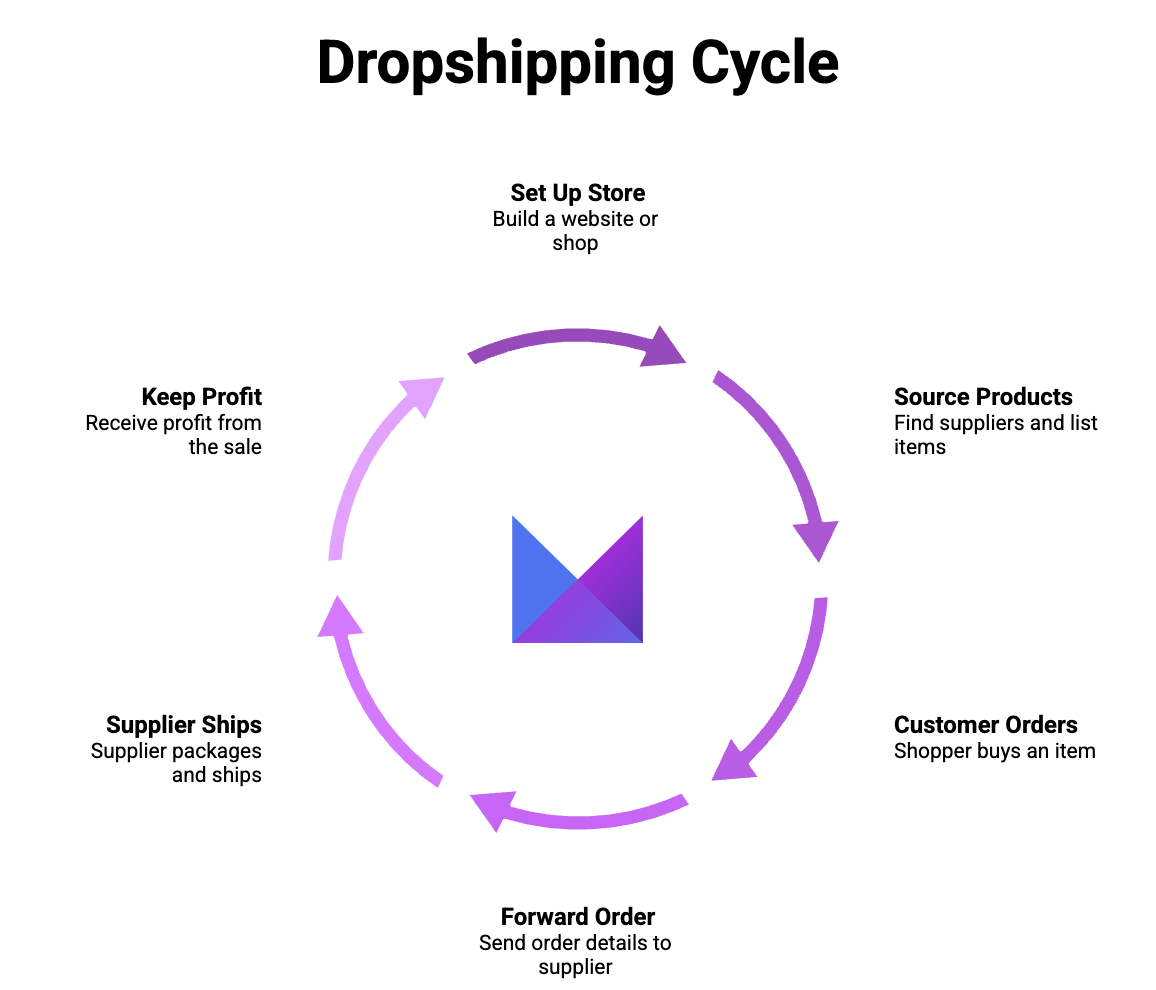
The mechanics behind this model are logical and easy to follow. If you were to draw a simple flowchart of the process, it would look exactly like this:

Step 1: Set up your store
You build a website using platforms like Wix, Shopify, WooCommerce, or even set up a TikTok Shop. This is where your brand lives and where customers browse.

Step 2: Source and list products
You find reliable dropshipping suppliers who offer thier services. You select the items you want to sell, add your own photos and descriptions, and list them on your site at a marked-up price.

Step 3: A customer places an order
A shopper visits your store, loves what they see, and buys an item at your retail price. The money goes directly into your merchant account.

Step 4: You forward the order
You take the customer’s order details and send them to your supplier. You pay the supplier their wholesale price for the item.

Step 5: The supplier ships the product
The supplier packages the item and ships it straight to your customer. They often use blind shipping, meaning their own company name does not appear on the box.

Step 6: You keep the profit
The transaction is complete. You keep the difference between the retail price and the wholesale cost.

How dropshipping works
The process is remarkably straightforward. But remember, execution in 2026 requires smart automation and sharp supplier relationships. You need systems in place to make sure these steps happen quickly and reliably.

Is dropshipping still worth it in 2026?

Let’s get real. Dropshipping in 2026 is still a fantastic business model, but it’s no longer the get-rich-quick scheme it once was. Success now rewards a specific set of skills. To win, you need to master digital marketing, create compelling content, and actively pursue sales. The days of launching a generic store with a few basic ads and watching the sales roll in are long gone.

Today’s shoppers are smarter and more discerning. They research products, pore over reviews, and compare prices across multiple sites before making a purchase. This means maintaining pricing consistency across all your channels is more important than ever.

AI, LLMs and the Future of Dropshipping

This is where the revolution in AI and LLMs comes into play. These technologies aren’t just changing the game; they’re rewriting the rules. While AI can automate tasks like writing product descriptions or generating ad copy, it also raises the bar for everyone. Your competitors are using the same tools, which means creating a genuine, memorable brand is your ultimate advantage. A brand-first approach has completely replaced the old one-product store model. People want to buy from brands they trust and connect with. They’re looking for a cohesive look and feel, excellent customer service, and a clear mission that resonates with them.

AI can be your most powerful ally in building that brand. You can use it to analyze customer data and personalize your marketing messages. You can also add AI-powered chatbots to provide instant, 24/7 customer support. The right AI tools for your drop shipping website can even help you brainstorm creative content ideas that genuinely engage your audience, moving beyond generic templates. The trick isn’t just to use AI, but to use it to amplify your unique brand voice and build authentic connections.

So, is dropshipping for you? It is if you’re ready to build a real, long-term brand and dive into the world of modern marketing. It’s not for you if you’re just hunting for a passive income source. Dropshipping isn’t dead; it has evolved. Treat it like the serious business it is, or don’t start at all.

The biggest news in dropshipping: 2026 updates

The landscape shifts rapidly, and smart sellers adapt just as quickly. Here is a look at what has changed this year and why it matters for your store.

AI takes center stage

Artificial intelligence is no longer just a buzzword; it is a required tool for serious sellers. AI-powered personalization engines now deliver shopping experiences that adapt to each visitor in real time. They analyze browsing patterns and instantly suggest products the customer is most likely to buy.

Store owners are using AI to generate compelling product descriptions, adjust pricing based on market demand, and even predict which products will trend next. By using AI to find winning products before competitors do, you gain a massive advantage in the market.

Trade wars and tariff turbulence

International shipping costs are shifting. Baseline tariffs of around 31% to 45% remain in place between the US and China. Experts predict that new tariffs as high as 40% could still be imposed soon.

This turbulence forces dropshippers to completely rethink their supplier strategies. Relying solely on cheap overseas manufacturing is becoming risky. We are seeing a massive shift toward local and regional suppliers to avoid unpredictable delays and sudden cost surges.

Social commerce explosion

Social media is no longer just a place to run ads; it is the actual store. TikTok Shop has emerged as a dominant dropshipping channel in 2026.

Smart dropshippers are cashing in on viral short-form videos. Punchy TikTok videos and Instagram Reels are driving direct sales and increasing profit margins for those who act fast. Social media serves as both your marketing channel and your checkout counter, shrinking the path to purchase to just a few taps.

Faster shipping becomes non-negotiable

Customers expect quick delivery, no more waiting around. In fact, a recent survey of over 3,000 store owners revealed that 64% see shipping delays as their biggest challenge. Buyers aren’t going to wait four to six weeks for products to arrive from overseas. click here to review some great free shipping tips.

This demand has led to the rapid rise of US, EU, and local warehouse suppliers. Shipping speed is now a core competitive differentiator. If you can deliver a product in three days while your competitor takes three weeks, you will win the sale every single time.

Crypto payments go mainstream

Cryptocurrency payment options have moved out of the experimental phase. They are now completely mainstream across major eCommerce platforms in 2026. Offering crypto payments opens your store up to a massive, global audience that prefers decentralized transactions. It gives your buyers more ways to pay, which naturally leads to more completed checkouts.

The hottest dropshipping niches of 2026

Finding the right niche is half the battle. You want to sell products that solve clear problems or feed passionate hobbies.

The best trending dropshipping products in 2026 are heavily dominated by the “At-Home Health” sector. Consumers are skipping expensive spas and gym memberships to save money. Instead, they are investing in high-quality gadgets that bring those luxurious experiences right into their living rooms.

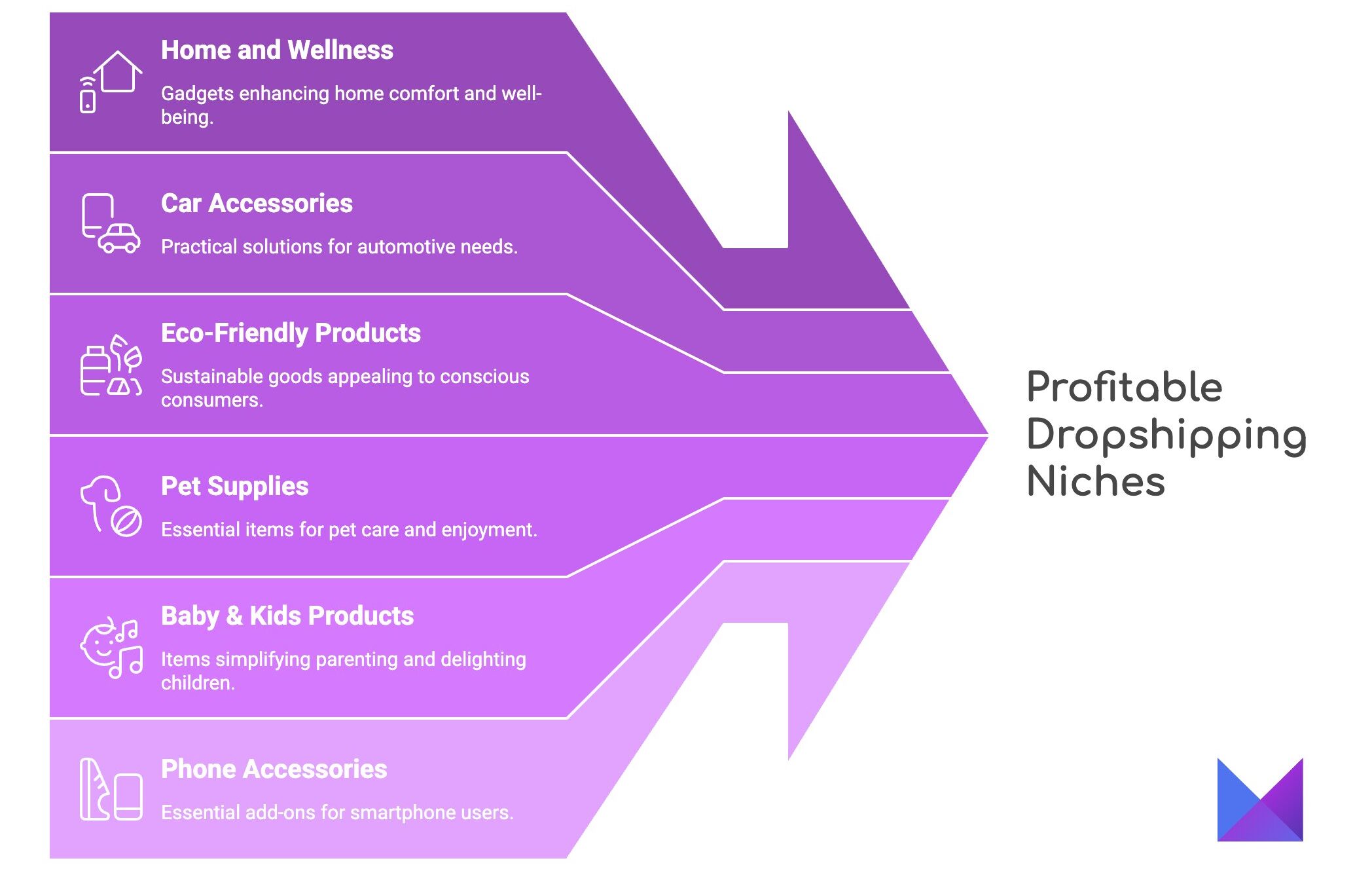
Here are the top-performing niches right now:

  • Home and Wellness: With people spending more time at home, gadgets that improve their living space are a big hit. Think red light therapy masks, smart home devices, and kitchen gadgets that go viral on TikTok.
  • Car Accessories: This is a huge market with endless practical, problem-solving products. From phone holders to trunk organizers, these items are always in demand.
  • Eco-Friendly Products: More people are shopping with their values. Reusable, sustainable, and biodegradable goods attract a loyal customer base that’s often willing to spend a bit more.
  • Pet Supplies: People love their pets, and it shows. The demand for everything from toys to grooming tools is consistently high, making it a reliable niche.
  • Baby & Kids Products: Parents are always looking for items that make their lives easier and their children happier. It’s an emotional niche with a high potential for repeat customers.
  • Phone Accessories: Almost everyone has a smartphone, creating a massive audience for cases, chargers, and other add-ons. This is a competitive but highly scalable market.

The hottest dropshipping niches of 2026
The best products for 2026 are not reinventing the wheel. They are simply making everyday items smarter, greener, or more beautiful.

The rise of the micro-brand in dropshipping

Generic, “sell-everything” stores simply do not convert anymore. When a customer lands on a site that sells dog toys, kitchen knives, and phone cases all on the same page, they get confused and leave.

Hyper-focused specialization is the new winning strategy. Entrepreneurs are diving incredibly deep into specific niches. They build micro-brands that serve targeted audiences who deeply value expertise and are willing to pay premium prices for it.

Instead of just selling a product, you build a brand identity around a specific feeling or lifestyle. If you sell yoga mats, your entire site should breathe calmness and wellness. You write blog posts about mindfulness. You share stretching routines on social media.

By positioning your store as a true authority in its narrow niche, you build trust. In 2026, you are not just selling products; you are selling an experience and a compelling story.

Tools and platforms powering your store

You cannot run a modern business on outdated software. The tech stack of a modern dropshipper is leaner, faster, and more integrated than ever before.

Your foundation starts with top eCommerce platforms like Wix, Shopify, WooCommerce, or direct integrations with TikTok Shop. These platforms give you the reliable, secure checkout process your customers demand.

From there, you layer on AI-powered automation tools to handle order fulfillment and dynamic pricing. You stop guessing what to sell and start using product research tools like Google Trends, TikTok Creative Center, and dedicated spy tools to see exactly what people are buying.
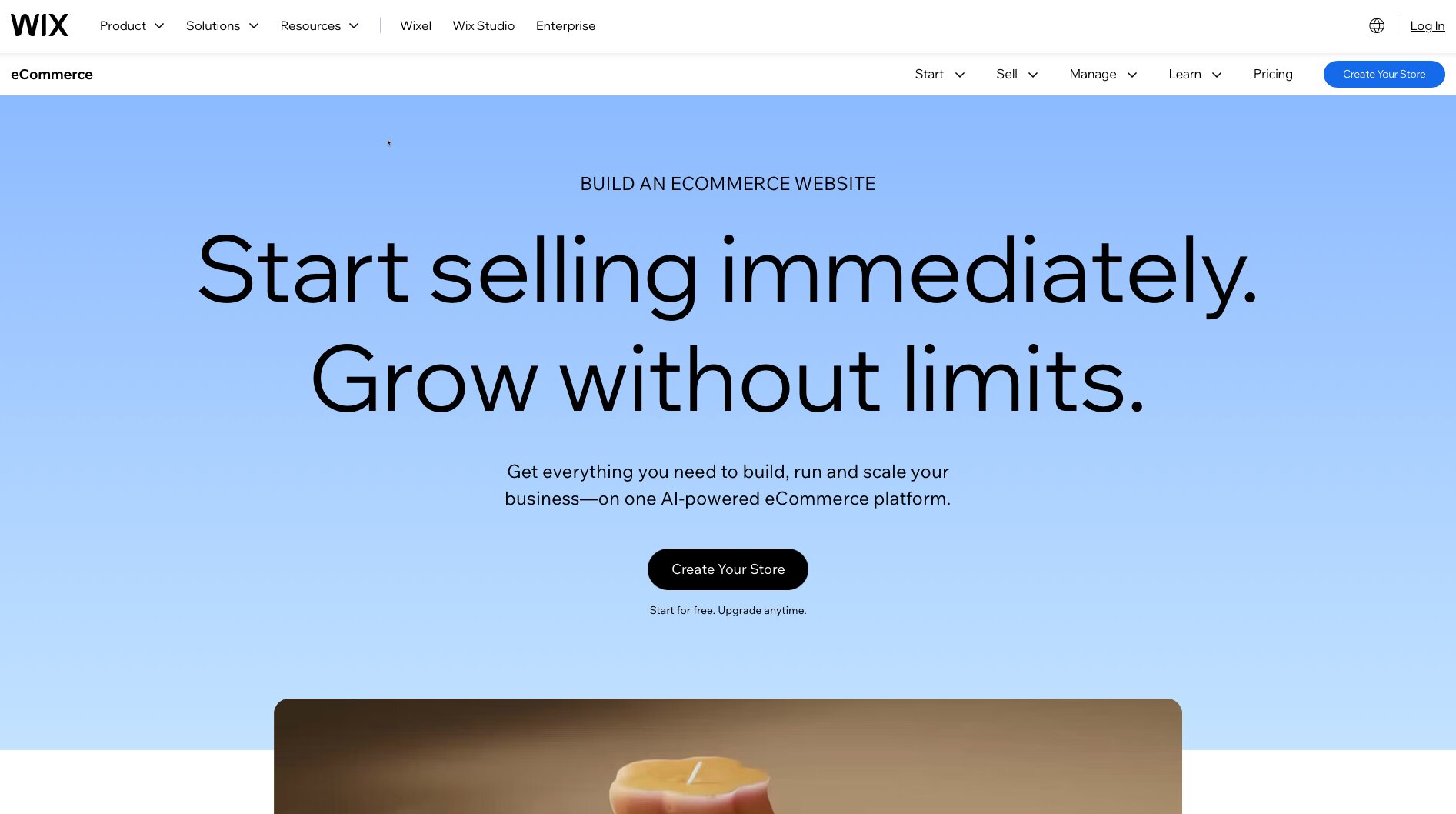
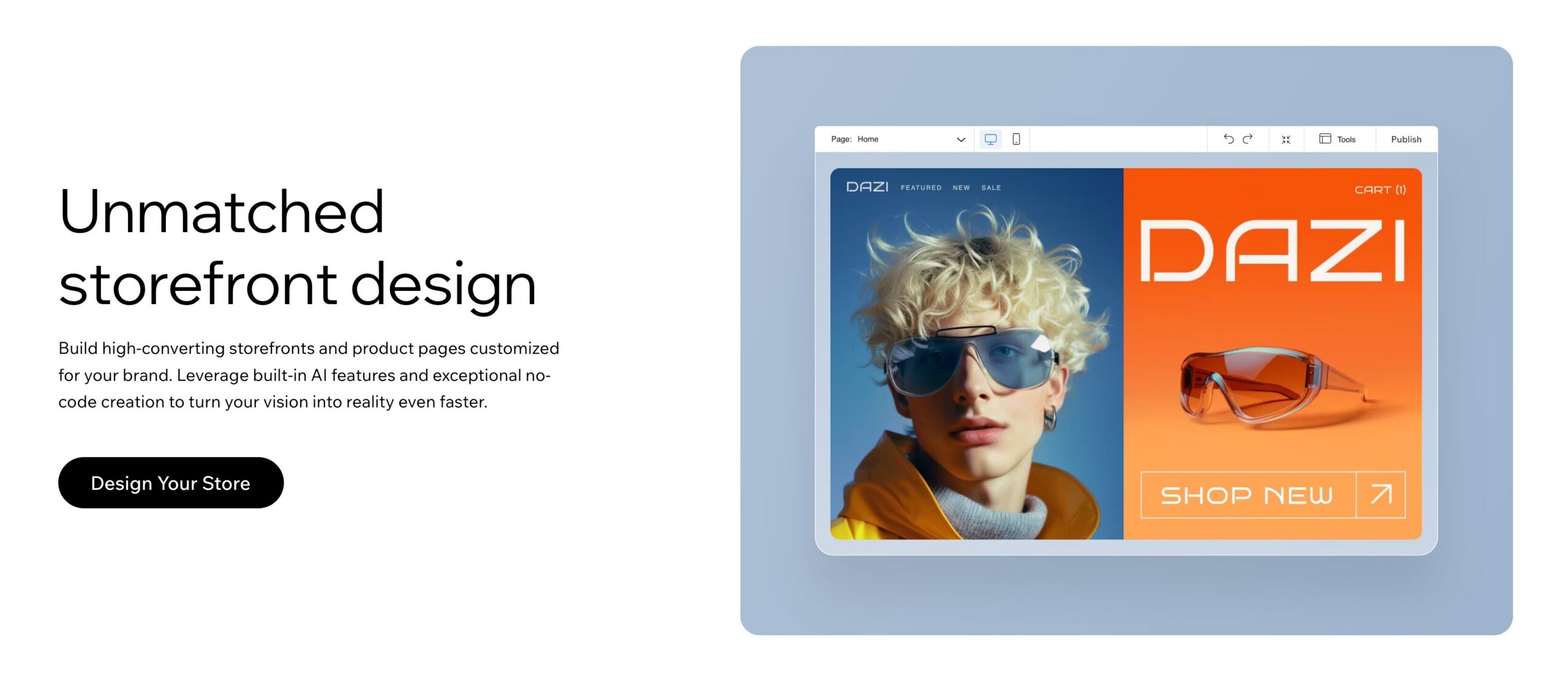
Wix E-commerce websiteImage source: Wix ecommerce

Finally, you connect with modern supplier marketplaces. While AliExpress is still around, smart sellers are moving toward US-based suppliers, local directories, and niche wholesalers to guarantee those vital fast shipping times. The right tools truly make the difference between a struggling store and a wildly successful brand.

Challenges to watch out for in 2026

Every business model has its hurdles. Knowing what can go wrong is the first, most important step to avoiding it entirely.

Rising ad costs continue to eat into thin margins. As platforms get more crowded, you pay more for every click. This makes your organic content and customer retention strategies incredibly important. You also face intense competition in oversaturated niches. If you sell the exact same basic product as a hundred other stores, you will struggle to make a profit.

Supply chain disruptions and tariff impacts can suddenly change your product costs overnight. You must stay flexible and keep backup suppliers ready. You also have to manage massive customer expectations around shipping speed, product quality, and easy returns.

Currently, net profit margins average near 10% for standard dropshipping stores. Only the best brands consistently break above 20%. Selling high-ticket items with larger margins is often far more sustainable than relying on volume-based, low-ticket strategies.

Dropshipping in 2026: Evolved, not expired

Dropshipping is very much alive, but it has matured. The days of throwing up a sloppy website and making sales are behind us.

The clear winners in 2026 are dedicated brand builders, niche specialists, and creative marketers. They have a solid marketing strategy, use AI to work faster, source from reliable local suppliers, and connect deeply with their customers through engaging social content.

The barrier to entry for this business is still incredibly low. You can launch a beautiful store this weekend with very little upfront cash. But the bar for true success is higher than it’s ever been. You have the tools, the data, and the blueprint. Are you ready to rise to the challenge? Set up your store, find your winning niche, and start building your future today.

Sale Fail? How Accessibility Testing Fixes Broken Dropshipping Stores

I have worked in website accessibility for years, helping businesses spot real usability issues that frustrate actual users. Recently, I have tested dozens of dropshipping stores across different platforms, themes, and product categories.

One thing became clear very quickly: dropshipping stores face a unique set of challenges. It isn’t because store owners don’t care. It is because the business model relies on speed, automation, and rapid changes. When you are moving that fast, accessibility often gets pushed to the side without anyone realizing the cost.

This guide is for you if you run a dropshipping business. It will help you get back on track, remove the barriers that hurt your conversion rates, and align your store with the guidelines that matter for modern ecommerce.

TL;DR

Accessibility in dropshipping often gets overlooked due to the fast-paced nature of the business. This guide will help you identify and fix accessibility issues, improve conversion rates, and align your store with essential ecommerce standards.

Why Speed Can Hurt Sales

Dropshipping stores are built to move fast. You import products from suppliers, install a theme in minutes, and add apps to boost your average order value. Let’s be real—checking for accessibility usually isn’t on the launch to-do list.

The problem is that accessibility issues don’t just affect a tiny group of people. They affect keyboard users, mobile shoppers, people with low vision, and anyone browsing in difficult conditions like bright sunlight. These users rely on a clear structure and predictable interactions.

When these users hit a wall, they don’t send a support ticket to complain. They just leave. Accessibility testing helps you find the exact spots where your store blocks people from giving you their money.

That “Perfect” Theme Might Be Hiding Flaws

Most dropshipping companies launch with pre-built themes that promise high conversions and mobile readiness. Most owners assume accessibility is built-in.

In practice, many themes ship with poor heading structures, missing landmarks, and interactive elements that don’t use the right code. Visually, everything looks great. But from a usability standpoint, assistive technologies struggle to read the page.

Testing at the theme level is essential. If the foundation is broken, every single product page you build on top of it will inherit those same problems.

Product Pages: Where the Friction Starts

Product pages are where accessibility problems start to hit your revenue directly.

Supplier images and different Video Formats often come in without meaningful alt text. Sometimes they have generic descriptions that add zero value. For users who rely on screen readers, this makes it impossible to understand what you’re actually selling.

Product variations add another layer of trouble. Size selectors, color swatches, and custom dropdowns are frequently built just for mouse clicks. Keyboard users often cannot select an option, and screen readers get no feedback when a selection changes.

Accessibility testing focuses on whether users can actually use these elements, not just see them.

The Keyboard Test: Can You Navigate Without a Mouse?

One of the fastest ways to find serious issues is to try navigating your store using only your keyboard. This type of testing exposes failures that are invisible during a visual check but immediately block users who rely on predictable navigation.

In dropshipping stores, keyboard testing often reveals these conversion killers:

  • Focus traps: Getting stuck inside navigation menus or mega menus with no way out.
  • Skipped actions: The “tab” key skips right over important buttons like “Add to Cart” or “Checkout.”
  • Lost focus: The cursor disappears when cart drawers, popups, or discount modals open.
  • Sticky overlays: Popups that you cannot close without a mouse.
  • Navigation fatigue: Users are forced to tab through dozens of irrelevant links before they can reach the “Buy” button.

These issues are rarely caught during standard design reviews, yet they make the store unusable for people ready to buy. If users cannot move through the page in a way that makes sense, they will abandon their cart.

The Checkout Challenge

Checkout is the most critical area to test, and unfortunately, it is one of the most commonly broken.

I frequently see form fields without clear labels, error messages that aren’t announced aloud to screen readers, and focus that jumps to random places after a form is submitted.

From a business perspective, this is where accessibility matters most. Users at checkout have already decided to purchase. If they cannot understand why their card was declined or how to fix an address error, that sale is lost. Testing ensures your checkout works for every user, not just those using a mouse.

Mobile Traffic Needs Mobile Accessibility

Many store owners assume that if a site looks okay on a phone, it is accessible. That assumption falls apart during testing.

Since most dropshipping traffic comes from mobile devices, mobile accessibility is vital. Common issues include touch targets that are too small for fingers, zoom features that don’t work, content hidden behind chat bubbles, and elements that become unreachable when screen readers are active.

When Apps Break Your Store

Upsell tools, review widgets, chat systems, countdown timers, and exit-intent popups are the engine of many dropshipping strategies.

Sadly, many of these tools introduce major accessibility issues the moment you install them. They can break focus management, ruin keyboard navigation, and fail to announce dynamic content to assistive technologies.

Even stores that start with a solid foundation often lose accessibility as they add more apps. Your testing must include how these third-party tools behave, not just your core pages.

Using an Accessibility Checker to Get Visibility Fast

For dropshipping stores, speed matters. When issues block users from buying, you need to see them quickly. That’s where an automated accessibility checker becomes a key solution.

A tool like the Tabnav accessibility checker does more than scan code. During testing, it simulates real user interaction on your live website, including keyboard navigation and common shopping flows.

This simulation is critical. Many accessibility issues only appear when a user actually tries to interact with the page. Keyboard users getting stuck in menus, focus skipping purchase buttons, or form errors not being announced are problems that directly affect conversions.

The checker collects these accessibility failures, aligns them with accessibility guidelines, and delivers a clear, structured report. Instead of guessing what matters, store owners can see exactly where users are blocked and why.

An accessibility checker does not replace manual testing, but it gives dropshipping stores fast visibility, clear priorities, and fewer blind spots as the store evolves.

Better Access Means Better SEO

Testing your site for accessibility doesn’t just improve usability. It also helps search engines and AI systems understand your store better.

Clear headings, proper labels, and logical structures help crawlers interpret your pages accurately. When you fix accessibility issues, your content becomes easier to parse and index.

For SEO dropshipping websites in competitive markets, this is a significant advantage. A well-structured site enhances discoverability and improves product understanding on search platforms. Accessibility also reflects strong technical quality, boosting your SEO performance.

More Than Just Good Looks

A huge misconception is that accessibility is only about colors and font sizes. In reality, it is about structure, interaction, feedback, and clarity.

A visually polished store can still be completely unusable if users cannot navigate it, select products, or recover from errors. Accessibility testing focuses on how the store behaves, not just how it looks.
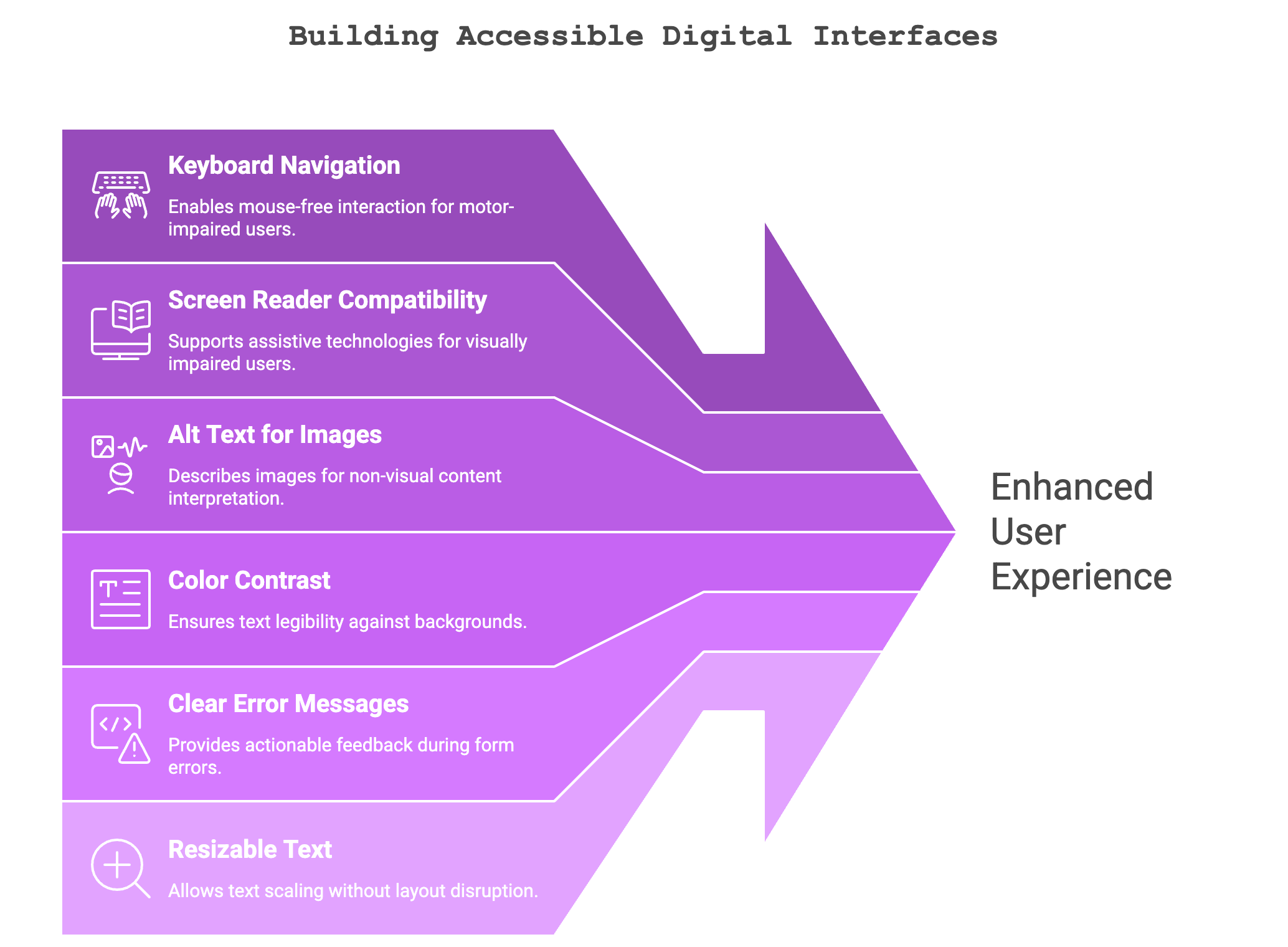
Key elements of accessibility

Getting Back on Track

If your dropshipping store has never gone through accessibility testing, start with your main user flows. Test your navigation, product pages, cart behavior, and checkout process.

Use an accessibility checker to find the obvious issues quickly, then double-check them by trying to use your site yourself without a mouse. Small fixes often lead to real improvements in how easily people can buy from you.

Accessibility testing isn’t about slowing you down. It is about removing the friction that quietly hurts sales. When barriers are removed, your store becomes easier to use, more trustworthy, and ready to scale.

Dropshipping Accessibility FAQ

Accessibility ensures your website is usable by everyone, including people with disabilities. Removing barriers improves usability, builds trust with your customers, and can directly increase your sales.

Start by using an accessibility checker to quickly identify major issues. Then, try using your site without a mouse to experience it as some users might. Focus on key areas like navigation, product pages, the cart, and the checkout process.

Not necessarily. Many accessibility improvements are simple fixes, like adjusting button sizes or making text readable. These small changes can have a significant impact on usability and sales.

An accessible site is easier and more pleasant to use for all customers. This creates a better user experience, which can lead to increased customer loyalty, positive word of mouth, and a broader audience for your store.

How to Turn Your Dropshipping Store Into a Global Brand Through Smart Localization

Despite most online stores operating only in English, most consumers want to purchase products from sites using their native language. Given that your dropshipping business likely operates globally (or you want it to), this is both a massive opportunity and a critical vulnerability.

You’re able to build a truly global brand through strategic localization even if your competitors struggle with basic translation. In short, you need a complete framework for taking your dropshipping store global. This covers the technical foundations, cultural adaptations, and operational strategies that are vital for expansion.

TL;DR

– Most consumers prefer shopping in their native language, making localization crucial for dropshipping stores aiming for global reach.

– Effective localization involves technical implementation, cultural adaptation, and operational excellence to enhance customer trust and conversion rates.

– Only 25% of customers will buy from sites that aren’t in their native language, underscoring the importance of a native shopping experience.

– Utilize tools like Weglot for multilingual SEO and consistent terminology, enabling smooth integration across different markets.

– Clear communication about shipping times and payment options tailored to local preferences can greatly improve customer satisfaction and sales.

Dropshipping Store Into a Global Brand Through Smart Localization

What Localization Means for Dropshipping Stores

While translation changes the actual words on the screen, localization is the process of adapting your entire shopping experience to feel native in each target market. This is a huge deal for dropshipping businesses, where trust and perceived legitimacy often determine whether your visitors convert into customers.

There are three pillars of effective localization that work together to create this native experience:

– Technical implementation is how you set up proper URL structures, handle different currencies, and carry out solid SEO.

– Cultural adaptation will ensure your messaging, imagery, and promotional strategies resonate with the local preferences and sensitivities of your target market.

– Operational excellence is more subjective, but essentially is how you deliver on the promises you make to the customer. This could be through reliable shipping, appropriate payment methods, customer service, and other aspects that meet local expectations.

Unlike typical e-commerce businesses, dropshipping doesn’t control inventory or shipping directly. This means your localization strategy must account for supplier capabilities, shipping timeframes, and product availability across different markets.

effective localization that work together

Why Translation Alone Kills Your International Conversion Rates

Given that a majority of customers won’t entertain buying from a ‘non-native’ store, this explains why many dropshipping stores see disappointing results when trying to expand to other markets.

While basic content translation seems like the right idea, it only stands to create the illusion of localization without delivering the substance. For instance, a French customer visiting your translated store might be able to read product descriptions in their language, but will encounter USD pricing, US-focused shipping information, and checkout flows designed for American shopping behaviors. Each element adds friction to the purchasing process.

In fact, removing small uncertainties throughout the shopping journey that results in a properly localized experience means your purchasing metrics (such as Conversion Rate Optimization (CRO)) can stand to improve:

– Currency displays need to show prices in local formats rather than simple conversions.

– Payment methods must include the options customers actually use in each market. For example, PayPal dominates in some regions while bank transfers or local payment apps lead in others.

– Shipping expectations can vary based on location. Some markets might accept multi-week delivery windows, while others will abandon carts if delivery exceeds a week.

There are other psychological factors too, such as color associations across cultures and product presentation differences. Even the tone and style of your copy will need adjustment. As an example, direct sales language that converts in American markets can feel pushy or inauthentic to European audiences.

How to Choose Your Target Markets

Like any new venture, choosing the right initial target market needs care and attention. You can begin by examining where your current traffic originates, as existing visitor patterns will often reveal untapped demand. For instance, your analytics might show promising traffic from specific countries where your conversion rates lag behind your primary market.

Shopping behaviors will be an influence on your choice of market, too. Some regions prefer mobile shopping while others maintain strong preferences for desktop purchases. None of these factors are in a bubble, as they all interlink. As an example, higher-value items could go hand-in-hand with using desktops rather than mobile devices.

Payment types are another example: it could be that your European customers use bank transfers more often than the mobile payment platforms of Asian markets. You’ll need to research these preferences early so you get a realistic assessment of whether you can serve each market.

Related to payments, shipping and delivery expectations will take up a lot of your attention. Your supplier network will determine what you can actually deliver, so you have to verify that those suppliers can ship to your target markets within the timeframes your customers expect.

If you work with suppliers across multiple regions through platforms such as Modalyst, you’ll have the flexibility to serve different markets from geographically appropriate locations.

Cultural Adaptation Strategies to Make Your Store Feel Like Home

When it comes to your store’s content, such as product descriptions, tactics that work in one market might not be right in others due to cultural differences in how people perceive sales and discounts. For example, a market that responds well to ‘limited time offer’ urgency tactics might feel manipulative or inauthentic to others.

This is the same for your images and media too; in fact, it could carry a greater cultural weight in some cases. When it comes to localization, your product photography should reflect the diversity of your target markets to show products in contexts that feel relevant and aspirational.

Part of that relevance is through color schemes and design elements. Yes, there are symbolic meanings for colors in various cultures, but the style (such as minimalist aesthetics in Scandinavian markets) is also crucial.

However, substance in the form of your content is the other side of the coin. A market that prefers straightforward, factual communication (such as Germany) will clearly need a different approach and style to warmer, relationship-focused messaging that Italian customers might appreciate.

The Weglot Glossary Rules panel

Part of your cultural adaptation will be making sure that your content has the right consistency for building recognition. This is where a website translation tool comes into play, such as Weglot, as its glossary rules will ensure that key terms always translate the same way across your entire store.

Getting the Technical Foundation Right for Global Dropshipping

Speaking of which, Weglot can translate your website and allow you to properly localize it too. Tools like this handle the technical side of URL structure, hreflang tags, and multilingual SEO automatically. This lets you focus on the cultural and operational aspects of your localization rather than wrestling with complex technical implementations.

Proper URL structure doesn’t seem like it matters, but it forms the foundation of multilingual SEO. You have two primary options:

– Subdirectories (example.com/de/). This structure generally provides stronger SEO benefits by keeping all language versions under your main domain, which can consolidate your domain authority

– Subdomains (de.example.com). These are separate entities under your main domain name and can be great for support pages in different languages, blogs, and plenty of other site setups.

With Weglot, you can choose between both subdirectories and subdomains. It also automatically adds hreflang tags, which tell search engines the right language version to show to specific users. These technical elements prevent situations where German users see English content in search results or French content appears for Spanish speakers.

However, hreflang tags are notorious for being difficult to set up and administrate, which is why this happens under the hood thanks to Weglot.

Creating the Right Experience for Your International Customers

One of the first indications that your dropshipping website will be multilingual is your language switcher. Its design and positioning will influence whether customers even discover other languages.

In a nutshell, the switcher should be immediately visible without cluttering your header design. Most successful implementations place the switcher in one of the corners of the screen and use language names in their native form (“Deutsch”, not “German”), with or without flag icons.

 The Weglot interface showing language switcher design options

When it comes to payments, prices need some adaptation to local formats. European currencies typically use commas for decimal separators, 

while US formats use periods, for instance.

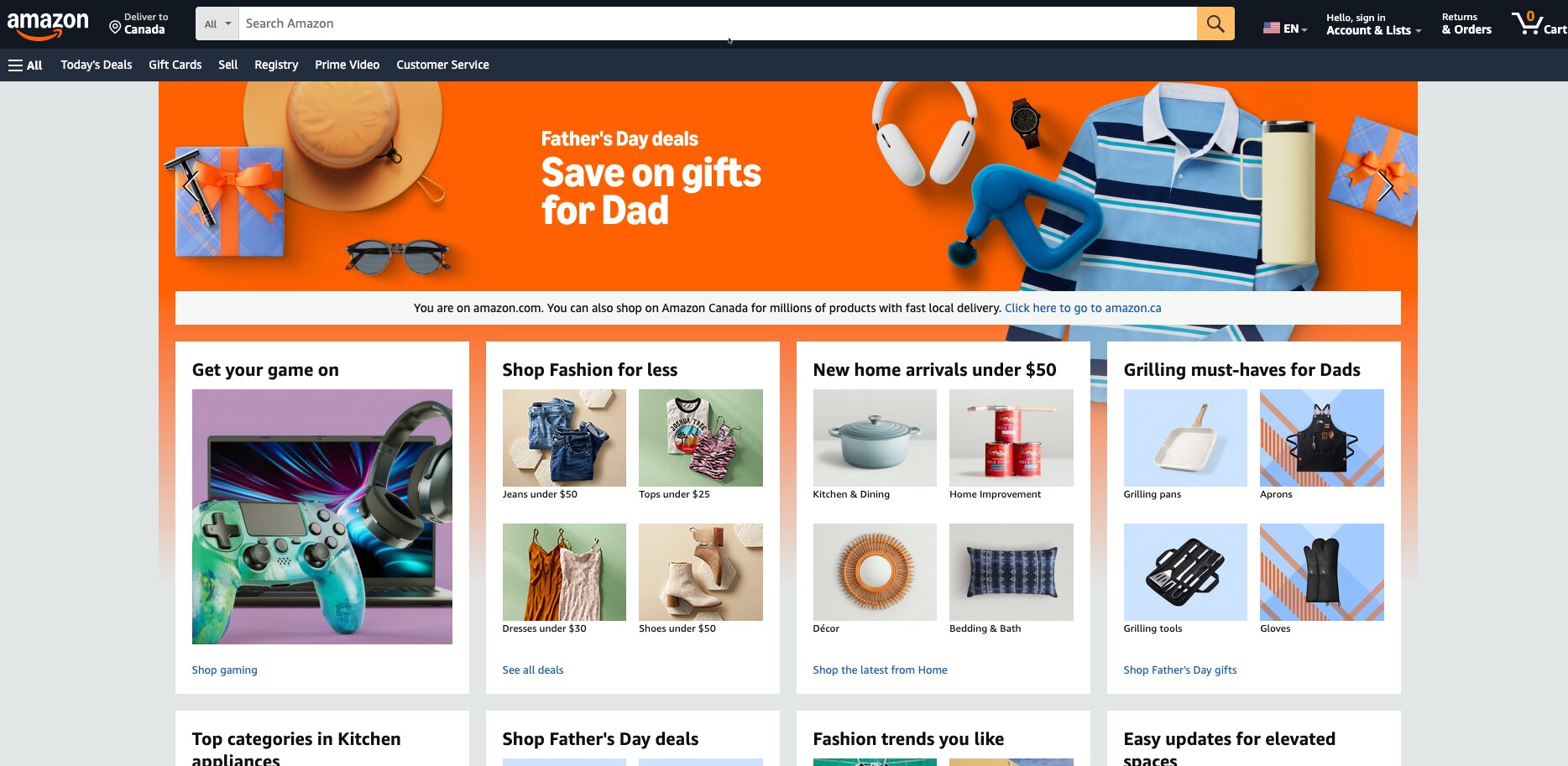
Amazon showing its front-end currency switcher

Even the way you present your pricing will change based on the culture:

-Some cultures respond to .99 endings.

-Others prefer round numbers.

Simple currency conversion often produces awkward pricing, such as €87.43, which feels less professional than rounded pricing like €89.00. As such, much like your content, your pricing will need translation as well as localization.

Remember that for your dropshipping store, the technical implementation needs to account for how supplier pricing, shipping costs, and local taxes affect your final customer-facing prices. Building a sufficient margin into your localized pricing ensures you can cover these variable costs while maintaining profits.

Moving on, every step in the checkout process will need both localization and translation. This includes cart review screens, payment processing, order confirmations, error messages, form labels, and instructional text.

You should look to be the most clear when it comes to shipping. Here, display realistic delivery timeframes based on where you ship from and typical customs processing times for the destination country. Transparency about your shipping process will build trust and reduce post-purchase anxiety, particularly for international customers who may be unfamiliar with your brand.

Managing Operations Across Multiple Markets

Dropshipping, more than most other e-commerce types, will have unique requirements relating to inventory visibility. You need systems that track which products and regions suppliers can ship to in order to prevent situations where an order might not reach the customer.

One way to begin implementing this is to communicate with suppliers who serve your target markets about capabilities and limitations:

– Verify shipping coverage for your target countries.

– Confirm typical delivery timeframes.

– Identify any restrictions on what products can be shipped to specific countries.

– Understand any customs documentation requirements.

This groundwork is something Modalyst can help to streamline. It provides clear information about which suppliers serve which markets, so youcan  curate product catalogs appropriately for each region.

As for your customers, communicate clearly about your delivery windows. So, if products ship from China to European customers, you can state multi-week delivery windows rather than implying faster shipping you can’t deliver. Honesty builds trust even when the news isn’t ideal.

For times when your customers need support, a multilingual approach is necessary but tough to implement. It could be that you handle the initial volume through automation. You could use Weglot to translate common inquiries, but you should also plan for how you’ll handle complex issues that need native language support. Some businesses outsource multilingual support, while others hire multilingual team members.

Conclusion

Localization transforms how international customers will perceive your business. First, targeting one or two markets lets you develop your localization strategy before scaling to additional regions. Having the right foundation using tools such as Modalyst can take care of many of the aspects of selling in these new markets, but others can tackle other facets.

3D Model vs. 360 Video vs. Images: Which Product Display Converts Best?

In this guest post, we’ll explore which product visuals convert best in the world of dropshipping and e-commerce. Based on current benchmarks and real-world case studies, immersive media formats like 360° views and 3D models significantly outperform standard images in driving purchases. 

We’ll also review what types of visuals are supported by major platforms such as Amazon, Modalyst, eBay, Shopify, and Etsy, and we’ll outline the tools available for generating immersive product views.

Then, we’ll conclude by reviewing methods to generate a 3D model rendition of your product. There’s a method for every pocket from hi-tech machinery to do it yourself. 

TL;DR

  • – Immersive Media Wins: 3D models and 360° views significantly outperform static images; conversion rates for 3D models can be up to 94% higher.
  • – E-commerce Platform Support: Platforms like Amazon, Shopify, and eBay increasingly support immersive media formats, enhancing customer experience.
  • – Budget-Friendly Tools: Various methods, from expensive photogrammetry to cost-effective AI tools like Sloyd, allow for easy 3D model generation.
  • – Key Niches Benefit Most: Categories such as fashion and home decor gain substantial confidence from immersive product views, driving sales effectively.

3D Model vs. 360 Video vs. Images
Summary of Case-Studies on Conversion by Media Type


Media Type

Images

360 view

3D model and AR

%Conversion 

3%

4.5%

6%

%Conversion uplift

30 – 50% 

60 – 150%

Sources include:

Speed Commerce Conversion Benchmarks: This industry benchmark report aggregated data across various e-commerce verticals and reported an average conversion rate of 3% for listings that relied solely on static images. This figure was used as the baseline in our summary table. 

Practical E-commerce Blog: Several case studies shared by Practical E-commerce, particularly in categories like tools and consumer goods, showed that adding a 360° product view increased conversions by approximately 30% to 50%. For example, True Value Hardware saw a 22% boost, while other retailers reported similar double-digit gains when using rotating image formats. 

Shopify Merchant Studies: Shopify released internal research showing that stores using 3D models and AR experiences (like “View in Your Space”) achieved conversion rates up to 94% higher than listings with just static images. This uplift, paired with store case studies like Rebecca Minkoff and pet product retailers, supports the 60% to 150% uplift range shown in the table. 

Single Grain Case Studies: Single Grain compiled conversion metrics from brands leveraging AR tools such as Sephora and Warby Parker. These brands reported gains between 85% to 189%, with AR allowing users to preview makeup or accessories on themselves before buying. These high-end cases influenced the upper bounds of the “3D Model & AR” category in the conversion uplift range.

Together, these sources illustrate a trend: the more interactive and immersive the visual content, the more likely customers are to convert. The summary table reflects a median estimate based on reported data from multiple verticals and platforms.

Interactive visuals give customers a clearer sense of a product’s dimensions, texture, and real-world application. This increased clarity builds confidence and leads to higher purchase rates. Fully 3D and AR-based previews go even further by enabling shoppers to interact with items or see them in their own space, making them particularly valuable for categories where fit and aesthetics matter.

Why This Matters for Dropshippers

Dropshipping is a competitive space where differentiation often hinges on product presentation and customer experience. Unlike traditional retail, dropshipping doesn’t give customers a chance to touch or try a product before purchasing. As a result, visual trust-building tools like 3D views and AR can play a pivotal role.

Popular dropshipping niches include: Fashion accessories (bags, watches, jewelry), home decor and furniture, fitness gear and equipment, and beauty products.These categories benefit from immersive media because customers often hesitate to buy without seeing multiple angles or understanding scale. A 360° view of a decorative lamp or a try-before-you-buy AR preview of a gym bench in a customer’s living room can significantly boost purchase confidence.

The payoff is substantial: Shopify merchants who added 3D/AR models saw conversion increases of up to 94%, and platforms like Amazon have reported 2-3x higher conversions on listings with 3D-enabled features.

Media Types Accepted By Leading E-commerce Platforms

Platform

Image 

360 view

3D model and AR

Amazon

Yes

Yes (360 modal viewer)

Yes (View in your room and Virtual try-out)

Modalyst

Yes

Yes  (plugins such as 360 Product View)

Yes (plugins such as SwiftXR)

Shopify

Yes

Yes (3D quicklook)

Yes (View in your space) 

eBay

Yes

Yes (3D true view) 

Limited to some pilots

Etsy

Yes

Limited – Sellers have to create a video or GIF

Limited – in mobile app for some categories

Modalyst users can easily integrate 3D and 360° content using apps from the Wix marketplace. Shopify offers native 3D model support and converts them into interactive viewers. Amazon supports both AR and 3D, particularly in electronics, fashion, and home decor. Etsy is further behind, focusing mostly on static visuals with some limited AR capability in its mobile app.

How to Generate a 3D Model for 360 Views and Commerce AR

There are three main ways to create 3D models or 360° views, varying in cost and complexity.

Method

Photogrammetry

Turntable 

AI multiview

Output Format

3D model
(+ 360 video)

360 video

3D model (+360 video)

Output Quality

High

High

Medium

Cost

Expensive

Moderate

Budget friendly

1. Photogrammetry scanning 

Photogrammetry uses a scanning machine to capture hundreds of precise images of an object and stitch them into a photorealistic 3D model. Machines range from handheld to large industrial setups. For example, the Artec Eva scanner costs around $20,000 and is used in professional retail and manufacturing workflows. These setups are ideal for high-value or intricate items where accuracy is critical.

2.Turntable

This method involves placing the object on a rotating platform (manual or motorized) and photographing it from multiple angles using a DSLR camera. A typical setup might include:

  • Motorized turntable ($100 – $300)
  • DSLR camera with interval timer ($500+)
  • Tripod and lighting kit ($150)

The result is usually a 360° spin video or image sequence. While not a true 3D model, this format adds substantial visual appeal and simulates interactivity. It’s useful for marketplaces like eBay or Etsy, which support embedded video or spinning GIFs. However the embedded 360 solution in Amazon and in many other platforms requires uploading a 3D model and not a video. In addition, as a video, it would not fit an AR integration.  

You might hire a professional photographer once for a few hero products, or set up your own mini studio.

The budget way: Multiview AI

New AI-driven tools like Sloyd offer AI multiview-to-3D conversion. All you need is a smartphone and 3-4 orthogonal photos (front, side, back). Sloyd’s AI predicts how the object looks from all angles and generates a basic 3D model. It’s a great choice for small gadgets, accessories, and handmade items. In Sloyd with a subscription, you can generate unlimited models. While the fidelity may not capture micro details, it’s fast, affordable, and increasingly accurate. 

Beyond 3D multi-view with Sloyd’s image generation and image editing you can also:

  • Remove and replace backgrounds automatically
  • Predict product shadows and reflections
  • Generate synthetic lifestyle photos with consistent lighting

For dropshippers, especially those managing large catalogs, these tools reduce the need for costly photoshoots and enable rapid iteration.

In Summary

As e-commerce becomes more competitive, dropshippers must invest in visual experiences that inspire confidence and reduce friction. The data is clear: immersive content converts better. With tools now available at every budget level, there’s no reason not to elevate your product displays. 

Whether you’re using high-end photogrammetry or AI multiview tools like Sloyd, richer visuals can be a powerful edge, especially when integrated seamlessly with platforms like Modalyst. Customers today expect to see products from every angle. Meeting that expectation could be the difference between a bounce and a sale

FAQ - 3D Models vs. 360 Video vs. Images

Immersive media formats like 360° views and 3D models significantly outperform standard images in driving purchases. For instance, while traditional images have a conversion rate of about 3%, 360° views can boost this by approximately 30-50%, and 3D models can lead to conversion increases of up to 60-150%.

Major platforms such as Amazon, Shopify, and eBay support various visual formats. Amazon allows both 360° views and 3D models, particularly in categories like electronics and fashion. Shopify has native support for 3D models and AR experiences. eBay offers limited support for 3D true views, and Etsy primarily focuses on static images with some limited AR capabilities.

There are three primary methods for generating 3D models: photogrammetry, which uses a scanning machine to capture images; a turntable setup, which photographs an object from multiple angles; and AI-driven tools like Sloyd, which can create 3D models from several photos taken with a smartphone. Each method varies in complexity, quality, and cost.

In dropshipping, the inability for customers to physically interact with products makes visual trust-building tools crucial. Immersive media formats help to convey product details, dimensions, and applications more effectively, thus boosting customer confidence. Categories like fashion accessories and home decor particularly benefit from this enhanced visualization.

According to various studies, static images have an average conversion rate of 3%. 360° views can increase conversions by 30-50%, and 3D models can lead to conversion rates up to 94% higher compared to static images. Some brands have reported even higher uplifts, with AR experiences resulting in gains between 85% to 189%.