

Modalyst has joined Wix.com | Read More Here
Integration
Seamlessly integrate to your eCommerce store to become a successful dropshipping business overnight.
Wix
Add Modalyst to your ecommerce plan and start taking your Wix website to the next level.
Shopify
Install Modalyst's Shopify app in one click to automate dropshipping for your Shopify store.
BigCommerce
List thousands of products to your BigCommerce store with a single click..
Partner
Kit
Peer-to-peer marketplace

Learn how to start a successful dropshipping business with Modalyst. Overnight.

Over 250,000 entrepreneurs & online businesses have signed up to receive tips, tricks, and news on dropshipping & ecommerce success.

Is Wix Free? A Balanced Look at Features and Pricing

Wix is a popular platform that allows users to create websites, but a common question often arises—does it cost anything?

The answer is both yes and no. Wix offers a free plan that gives users access to its platform, but also offers several paid plans designed to unlock additional features.

This guide will examine what is included in each plan, breaking down their features, pricing, and limitations, so you can decide which option works best for your needs.

Wix free website builder


What Does Wix’s Free Plan Offer?

Wix’s free plan allows users to build and publish a website without any upfront costs. This entry-level plan includes the following features:

  1. Up to 500MB of storage and 1GB of bandwidth.
  2. Access to a library of over 2,000 customizable templates, offering layouts for various industries including eCommerce, construction, and creative portfolios. 
  3. Basic design options, such as custom color palettes, vector art, and a library of media resources like images and videos. 
  4. Built-in business tools, including SEO functionalities, a content management system (CMS), and email marketing tools. 
  5. Free hosting services and automatic SSL certificates for secure browsing.
  6. Access to the Wix App Market, where users can add functionalities like forms, galleries, and social media integrations. Many apps are free. 
  7. Websites are automatically mobile-optimized, plus users can create a free members-only app for their site. 
  8. Access to an extensive help center for support. 

While the free plan helps users get started, it comes with some limitations, which we’ll discuss next.


What Are the Limitations of the Free Plan?

Though the free plan can be sufficient for personal projects or early-stage ventures, it has notable drawbacks:

  • Limited bandwidth and storage: Users may face challenges if their site attracts high traffic or requires substantial media files. 
  • Branded domain: Free websites use a Wix-provided URL (e.g., username.wixsite.com/sitename), which may look unprofessional for businesses aiming to establish credibility. 
  • Wix branding: Ads promoting Wix appear on websites created under the free plan. 
  • No eCommerce functionalities: Payment processing and online store capabilities are only available on paid plans. 
  • Restricted integrations: Analytics tools like Google Analytics are not accessible on the free plan. 

For users needing more advanced features or looking to build a professional online presence, Wix offers paid plans. Below is an overview of these plans and their features.


Comparison of Wix’s Paid Plans

Wix’s paid subscriptions are available at various price points, tailored to meet different needs. All paid plans include options to connect a custom domain, remove Wix ads, and access enhanced support. 

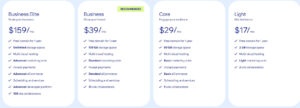
PlanFeaturesPrice
Light2GB storage, 2 collaborators, basic marketing tools, and the ability to connect a custom domain.$17/month
CoreFree domain for 1 year, 50GB storage, basic eCommerce functionality, and up to 5 collaborators.$29/month
Business100GB storage, advanced marketing suite, standard eCommerce tools, and up to 10 collaborators.$36/month
Business EliteUnlimited storage, advanced eCommerce features, priority support, advanced marketing, and up to 100 collaborators.$159/month
wix pricing
Wix Pricing Plans


Key Features of Paid Plans

  1. Custom Domain Name: All premium plans allow users to connect or purchase a personalized domain name. 
  2. Ad Removal: Paid plans remove the Wix ads present on free websites. 
  3. Expanded Storage and Bandwidth: Higher-tier plans support larger sites and allow greater traffic. 
  4. ECommerce Tools: Starting with the Core plan, users can accept payments and set up online stores. 
  5. Additional Collaborators: Team members can contribute to the website with permissions that fit their roles. 


Choosing a Paid Plan 

When considering upgrading, it’s important to evaluate the features you’ll need. For example:

  • Small businesses may find the Core plan ideal, because it balances cost with essential tools like custom domains and eCommerce functionality. 
  • Growing businesses that need advanced operations or a plan for significant traffic might benefit from the Business plan. 
  • Large-scale operations seeking advanced eCommerce, marketing tools, and collaboration should consider Business Elite. 


Who Should Use the Free Plan?

The free plan can be a great starting point for individuals or groups who:

  • Want to test an idea or prototype a project. 
  • Are students creating portfolio websites, artists posting personal galleries, or community groups sharing information. 
  • Require a temporary or non-professional website, such as a personal blog or event page. 

This makes it valuable not only for personal projects, but also for those evaluating Wix’s capabilities before committing to a paid plan.


When Should You Opt for a Paid Plan?

For those planning to grow or run a professional operation, the paid plans unlock functionality essential for scalability. Some scenarios that often require a paid plan include:

  • Launching a professional business: Users aiming to build a credible website with a custom domain won’t want to rely on a branded URL. 
  • Opening an online store: Accepting payments and managing e-commerce functionality are critical features included only in paid subscriptions. 
  • Building a long-term brand: Ads often hamper branding efforts from a free plan. 
  • Handling high traffic: Expanding storage and bandwidth ensures smooth visitor experiences as a website scales. 

Users can upgrade seamlessly without losing existing work, ensuring a smooth transition whenever a paid plan becomes necessary.20

FAQ About Wix Plans

Yes, all design elements and content are retained during the upgrade. Paid features activate immediately, such as analytics tools and domain connections.

Wix does not impose a time limit on free plans. They remain available indefinitely unless you choose to delete your site.

Yes, hosting is included for both free and paid plans.

Wix’s subscription plans range from $0 for its free plan to $159 per month for its Business Elite plan.

Paid plans include one free domain for the first year. Free plan users receive a Wix-branded domain instead.

Currency Conversion Tips for International Ecommerce Stores

Selling to customers overseas has never been simple for ecommerce companies.

With the right setup, going global could multiply your Total Addressable Market (TAM) overnight. But going global comes with new challenges, especially when dealing with different currencies.

Let me take you through eight quick wins for international ecommerce businesses to tune their multi-currency setup.

1. Show Prices in Local Currencies

Shoppers are more likely to buy when prices are shown in their own currency. It feels familiar and reduces mental friction. Use IP-based geolocation or browser settings to show the right currency automatically. Still, give users the option to change it manually if needed.

And don’t just swap the symbol. The price itself needs to reflect the correct exchange rate. Seeing $99 instead of £77 might not seem like a big deal, but it can cause confusion or mistrust.

Pro tip: smart businesses don’t just convert their prices to other currencies; they localise them to markets in a more strategic way. You can run A/B tests to find the optimal price points in each local market. This allows your international pricing to factor in cultural differences, pricing psychology, local competition and even price/demand elasticity effects.

2. Let Customers Pay (and Be Charged) in Their Currency

If your ecommerce store uses a base currency for processing (say, USD), but you sell globally, your customers might still be charged in USD even when they see the price in their local currency (e.g., EUR). This mismatch often leads to surprise FX fees from their bank or card issuer.

Instead, implement true multi-currency payments, where the transaction is settled in the customer’s local currency. Many payment gateways like Stripe, Adyen, or Payoneer allow you to enable this. Not only does this reduce friction, it also gives you better control over FX markups and improves trust in key markets.
Currency Conversion Tips for EcommerceGenerated Image by Wixel 

3. Don’t Get Stung by Hidden Currency Markups

It’s easy to conflate fees and exchange rates. The truth is, the two work together. A 0.5% transaction fee may seem reasonable, but if the exchange rate is 2% worse than mid-market, you’re giving away your valuable profit margin.

Many platforms convert currencies for you but bake in hidden margins. These can run as high as 3–5%, eating into your profits or pricing you out of certain markets.

Look for services that use mid-market rates (the kind you see on Google) and let you control how much, if anything, you add on top. It gives you more control and helps keep your pricing fair and competitive.

4. Pick the Right Payment Processor for Cross-Border Sales

Not all ecommerce software is built with international trade in mind. Some are better than others at handling multiple currencies and overseas customers.

Choose one that offers solid FX rates, low fees, and supports payments in multiple currencies. It should also offer things like local settlement accounts and currency balancing tools.

Many such services exist, from well-known names to niche specialists in FX. But don’t just go by name. Dig into the details. Compare rates, supported currencies, and how easy it is to get paid where you need the money. 

Leading money transfer website Moneytransfers.com offers tools and calculators for comparing the real cost of currency conversions, including FX markups, fees & other factors.

5. Make Currency Clear at Checkout

One mistake that trips up a lot of stores: the final checkout screen doesn’t clearly show which currency the customer is being charged in.

That’s a quick way to lose a sale, or create a chargeback. Make sure the transaction currency is obvious. If there’s a conversion involved, show the rate. And if there are any fees (even if you’re not charging them), be transparent.

Clarity here builds trust and reduces friction.

6. Use Buffers to Protect Against Exchange Rate Fluctuations

Exchange rates move. If your costs are in one currency and your income in another, your margins can take a hit without warning.

You can protect yourself by adding a small buffer to your foreign prices. Some platforms let you set automatic pricing rules tied to live FX rates. Others allow you to set limits, so prices don’t drop too low if the rate swings.

It’s not just about profit, but stability.

Pro tip: To take this to the next level, high-scale international businesses make the most of something called dynamic hedging. This advanced strategy uses FX derivatives, like forwards and options, to protect against fluctuations and manage margin volatility.

7. Consider the Impact on Refunds

Refunds should happen in the same currency the customer paid in, at the same rate.

For example, if your pricing is anchored to your local currency ($100), an international customer makes a purchase (£80), and then requests a refund two weeks later, the rate may have changed to 0.75 and therefore they would only be refunded £75. That does not make for a happy customer, and you could probably expect a one-star review!

It’s important therefore to refund in the same currency as the customer paid in, or if not, make your policy very clear.

There can also be the issue of FX charges being incurred on both the payment and the refund. Our next point can help resolve this, only converting currencies when you really need to. Multi-currency treasury and refunding is the gold standard.

8. Keep Balances in Multiple Currencies

Instead of converting everything back to your home currency straight away, consider holding balances in the currencies you sell in.

This gives you flexibility. You can wait to convert when rates are better. Or pay suppliers, freelancers, and platforms in the same currency they bill you in, avoiding extra conversions.

Fintech services like Wise, Airwallex, or Sokin make this easy. Over time, this can save money and help you manage FX risk without getting fancy.

Pro tip: it’s relatively easy to find multi-currency services for businesses that support the most liquid global currencies, such as USD, GBP, EUR etc. If you do a substantial amount of trading volume from less popular or more exotic currencies, you may need to consider a niche payment provider. These services aren’t always as well known or easy to find, but they are better suited to specific currency needs in Africa, Asia and LatAm.

What next for Ecommerce stores?

Selling internationally is a huge opportunity. With a few smart adjustments, you’ll create a smooth customer experience and maybe even better margins for your business.

You could get started on this journey with a simple currency audit. Review your ecommerce software reporting and accounting transaction logs, and look for the following conmen questions:

FAQ

Most frequent questions and answers

This will usually be a percentage plus a fixed fee per transaction

You may want to migrate to a more flexible solution if your international business is forecast to continue growing

The rates you see online are usually for the lowest sales volumes. The biggest companies aren’t paying these rates. If you think your volume could justify it, see if there is wriggle room to negotiate a volume discount

How AI-Powered Email Automation Can Boost E-Commerce Sales

Did you know that automated emails get 52% better open rates and 2,361% conversions compared to regular email campaigns? Automation helps marketers reduce their workloads and reap better results by providing recipients with a personalized email experience. What’s more, AI-powered email marketing automation enables e-commerce businesses to offer smart product recommendations, forecast customer behavior, choose the best time to send emails to certain recipients, and more. 

In this article, we will expand on what AI-powered email automation is all about, demonstrate how it can benefit e-commerce dropshipping businesses, and share some tips on using it for online retail businesses .

What Is AI-Powered Email Automation?

AI-driven email automation extends far beyond sending emails on a schedule. Traditional automation uses predefined triggers (like sending a welcome message after a new subscriber signs up for your newsletter), while AI processes recipient data, spots patterns, and helps e-commerce stores send the right emails at the right time to the right audience segments. 

AI automation in email marketing relies on machine learning, predictive analytics, and behavior monitoring to analyze information about your customers—their buying habits, interaction patterns with your previous messages, and the time they spent on product pages—to predict what a particular customer is going to do next. Will they place this order? Are they going to unsubscribe? What can motivate them to keep buying from you?

E-commerce stores must contend with short attention spans and inboxes overflowing with typical promotional emails. AI-powered automation minimizes the daunting guesswork and helps you make decisions based on data insights—for example, providing smarter product suggestions tailored to buying habits, forecasting customer behavior to group recipients accordingly, or analyzing subscriber interactions to understand which leads will drive more sales. Let’s take a closer look at these benefits.

Key Benefits of AI-Powered Email Automation for E-Commerce

One of the most powerful AI email automation benefits is triggering emails according to customer behavior, so you don’t have to track and send anything manually. You can draft the key stages of the customer journey and create automated scenarios to guide clients through your funnel. 

Besides being a time-saver, AI automation can also become a growth engine for your online store. Let’s see how you can constantly engage your subscribers by turning data into insights. 


1. Hyper-personalization at scale

Emails based on behavioral patterns get 10X higher revenue than traditional emails. Long gone are the times when email personalization was just about addressing your subscribers by name—now, a personalized email experience includes past purchases, preferred categories, and even the time a customer spent lingering on a web page choosing between two pairs of trending sneakers. AI can speed up the data collection and analysis process so that you can provide smarter recommendations and relevant offers for every recipient. 
emailsloveSource

2. Abandoned cart recovery optimization

The cart abandonment rate for the apparel and accessories industry is 80.3%, and for the footwear industry, it is 69%, but AI can use customer data to adjust send time, email copy, and incentives for better conversions. It can also analyze which incentive is more likely to motivate certain audience segments to convert. 

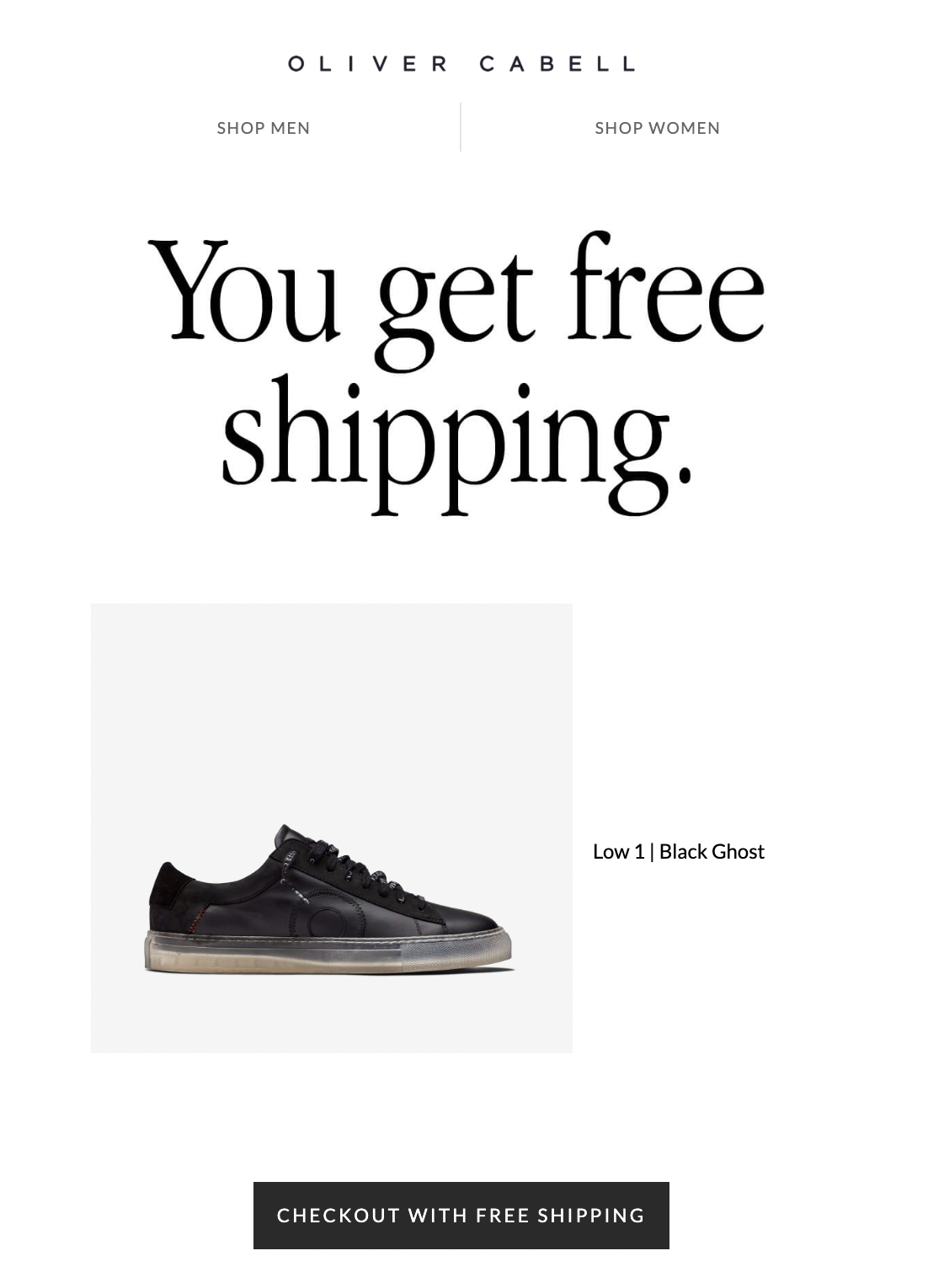
For example, AI might predict that new customers would prefer a 10% discount, while loyal customers would place an order after a free shipping offer. AI learns from the data you feed it and the constant feedback you provide, and over time, it will detect what brings better results and optimize your cart abandonment strategy accordingly.
Optimize cart abandonment emails with AISource

3. Predictive segmentation 

Besides email segmentation based on your recipients’ demographic data, AI can group subscribers by detecting their behavioral patterns and forecasting their possible future actions. It enables you to create more targeted segments—for example, AI can offer an e-commerce store to send loyal subscribers an email with exclusive benefits, like early access to a new product, while recipients who haven’t opened your emails for a while and are likely to unsubscribe will get a newsletter with a limited-time offer to engage them. 
MilledSource

4. Predictive sending for better timing 

The right sending time can lead to higher open and click-through rates, as 86.4% of recipients claimed that they decide whether to open an email based on whether they have time to actually read it. 

Are your recipients more likely to interact with your emails in the evening after work or in the morning while commuting? Or are they most active on weekends? Do they read your emails on a mobile or desktop? 

When you use predictive sending, AI analyzes your subscribers’ previous activities to define the optimal send time for each segment. Thus, your emails will land in the inboxes when readers are ready to interact with them. You put a lot of effort into your email campaigns—don’t let the poor send time ruin them. 

5. Lead scoring for better sales automation 

AI can gather and process data on how customers interact with your emails, website, and products. Then, it will assign each lead a score so that you can adjust your communication accordingly—the subscriber close to converting will get a discount on a product they browse often, while a user who needs more nurturing will receive an email with customer reviews and real-life product photos. 

Best Practices for Using AI Email Automation for E-Commerce

We recommend you start with a clear goal for each of your email campaigns—e.g., welcome and educate new subscribers, re-engage customers, or motivate them to get back to their abandoned carts and place an order. Then, define the perfect email segment—with AI, the segments can be dynamic and adapt to subscribers’ behavior. Finally, it’s time to create content aligned with your audience’s preferences and stages in the sales funnel. 

Now that you understand how your ecommerce business can benefit from AI-powered email automation, let’s explore some best practices that will help you reap maximum results from this approach and reduce your workload. 

1. Start simple by focusing on several key flows (e.g., cart recovery or welcome)

It might be tempting to start automating everything at once, but we recommend that you concentrate on several flows with a high ROI so that you can see AI value faster. You can apply AI automation to smart product recommendations, post-purchase follow-ups tailored to your customers’ buying habits, and abandoned cart reminders with effective incentives. 

2. Regularly check the content you generated with AI for accuracy, relevance, and tone

Despite being a time-saver, AI still can’t replace the human touch that your subscribers value, and it makes mistakes that require your attention. Don’t forget to review and adjust automated content to make sure the tone of voice is authentic, all email elements are brand consistent, and the content is relevant to your recipients. 

You should also give AI constant feedback and feed it as much information about your brand as possible so that it can learn faster and provide better output. AI is not your replacement—think of it as a strong junior specialist that can help with routine tasks but still needs your oversight.  

3. Balance AI email automation with your unique brand tone and style

Even though automation is a great way to scale your communication with subscribers and build lasting relationships, excess is never good. With too much AI automation, you risk making your emails feel cold and robotic. Remember that your newsletter should always reflect your brand’s voice and values—it helps subscribers notice your emails in crowded inboxes. 

4. Remember about opt-in consent and GDPR

Prioritizing consent and respecting data privacy laws like the GDPR is a must. Monitor that all of your subscribers give opt-in consent and understand how your business uses their personal data. AI automation helps you build better communication, but it can’t be an excuse for careless compliance. 

5. Don’t overautomate 

When you overload recipients with too many automated emails or overpersonalized messages based on their behavior, recipients might feel that they are being spied on or their every move is being watched, which can lead to unsubscribes or even spam complaints. Avoid automating everything just because you can do it—use it sparingly and constantly monitor engagement. 

Wrapping up

AI-powered email automation is an amazing way for online selling or dropshipping methods to provide smart product recommendations, predict customer behavior, and choose the perfect send time. From hyper-personalization and lead scoring to abandoned cart recovery optimization and predictive segmentation, it can help you turn regular promo messages into a unique experience. 

Remember to always check the content for relevance and accuracy, don’t overload recipients with overautomation, and stick to GDPR rules to treat your customers’ data with the utmost respect and care. 

Picture of Olena Zinkovska

Olena Zinkovska

Editor and content writer at Stripo. I strive to make my content engaging, relevant, and valuable for those who want to empower their marketing efforts with attention-grabbing and meaningful emails.

How to Leverage Video Content to Supercharge Your Dropshipping Business

Growing your dropshipping business is a major challenge, but one you can overcome with the appropriate amount of planning. Choosing the right promotional strategy is key and will help you take your business to the next level. 

In 2025, a crucial element of that strategy is video content. Statistics show that video is one of the most effective weapons in your dropshipping marketing arsenal. 

Here’s all you have to know about using video content to supercharge your business. 

Why invest in video marketing for your dropshipping business? 

To start with, why should you invest in video marketing for dropshipping? After all, creating a video – filming footage, editing it, and putting it online – takes much more time and energy than launching text- or image-based promo campaigns. 

Simply put, several studies have shown that video content, like email, has an incredibly high ROI when it comes to dropshipping marketing approaches. 

On average, consumers spend 17 hours per week watching videos – and 94% of them use video content to learn more about products and services they are interested in purchasing.

Moreover, a majority of consumers report making purchasing decisions after viewing a product demonstration video.

That said, how can you actually leverage video content to boost your dropshipping business? 

Showcase your products 

To start with, the basis of video content for your dropshipping business should be a great showcase of your products – and exactly what is great about them! 

This can be a simple demonstration of how a product works with a few strategic zoom-ins, an explainer on a particularly handy feature, or a demo in a real-life situation.

What’s important is that the viewer gets to see exactly how your products help them address the challenges they face in their everyday lives. 

Are you selling bags tailored to the needs of busy professionals who travel a lot? A simple demo video demonstrating how many items can be efficiently stowed away in your product while it still remains stylish can do wonders to sway customers. 

Leverage testimonials and user-generated content to build trust 

Another type of video content that’s a must for your dropshipping business are testimonials and user-generated content (UGC). 

Statistics show that customers are more than twice as likely to remember video reviews than text-based ones. They also demonstrate that UGC is unparalleled in building trust – 82% of people are more likely to buy from a business that uses it in its marketing. 

To start harnessing video testimonials and UGC for your dropshipping business, it’s often enough to offer small incentives to your users (such as a discount on their next purchase if they record a video review), or to make it part of a challenge. 

Rely on well-structured content with clear CTAs

What all video content approaches for dropshipping businesses have in common is that it’s crucial to structure the videos well – and especially to include a clear call to action. 

Effective as video content may be in driving conversions, it has to get past people’s ever-shortening attention spans first. 

That’s why it’s crucial to have a solid, attention-grabbing hook in the first few seconds. The golden rule used to be that your video had to captivate the viewer within its first five seconds. In 2025, it’s essential to achieve this by second three of a video to stop people from scrolling on. 

Consider creator partnerships 

Another asset in the video marketing strategy for your dropshipping business are creator partnerships. In the burgeoning creator economy, millions of content creators have built loyal audiences in thousands of incredibly specific niches – whether that’s fly-fishing or crocheting. 

Consider teaming up with these creators and leveraging their audience rather than starting from scratch and building your own. This has the added advantage that viewers already have implicit trust in the creators they follow. A product recommendation from them is going to carry much more weight than a video posted by you yourself. 

video content for dropshipping businessSource: freepik

Optimize content for different platforms 

The next puzzle piece in building a solid video marketing strategy for your dropshipping business is optimizing content for different platforms. 

As a first step, of course, you need to determine which platforms you want to target depending on your target demographics. Are you going for Gen Z on TikTok? Or targeting Gen X professionals on LinkedIn? 

Once you have pinpointed on which platforms to engage with your audience, though, it’s necessary to fine-tune your content for each one. This includes the length, format, and tone of each video. For instance, trending audio and effects that capture Instagram Reels viewers may seem too informal for LinkedIn. 

Invest in quality content when you can 

Another crucial step in building your video marketing strategy for your dropshipping business is to invest in quality wherever you can. 

Thanks to professional-grade content creators, people who watch online videos have come to expect top-notch video and audio quality. Dropshipping content has to follow suit. 

That means making sure that your gear is on point, with high-res cameras and mics that record crystal-clear audio. Similarly, you should consider outsourcing video editing to a professional editor. 

Not only does editing take up massive amounts of time, it’s also a skill that takes years to perfect. A professional video editor will help you free up your time and can reliably deliver top-notch content at predictable turnaround times. 

Stay consistent until you see results 

One thing that’s essential to keep in mind is that while video marketing has a high ROI, it’s unlikely to give you stellar results overnight. 

In order to gain traction with your video content, you need to consistently produce and post high-quality video for a few weeks, gradually winning over algorithms and building a viewer base, before you get tangible results. 

The best way of bracing for this is to draw up a content schedule for the next two to three months, and follow it religiously. At the end of that period, you can circle back around and assess your strategy.  

Analyze your performance and adapt 

Once you’ve consistently produced video content for your dropshipping business for a few weeks, you should circle back around and assess its performance as part of your marketing attribution strategy. That way, you can make adjustments to your strategy, if necessary. 

Take a look at metrics like click-through rates, watch time, likes, and comments to see what genre of content and what kind of format resonates most with your target audience. What videos generate engagement? Which are met with crickets? 

Once you’ve reflected on that, you can tweak your content strategy and leverage video content with maximum efficiency to promote your dropshipping business. 

Conclusion: Taking your dropshipping business to the next level with video marketing 

In 2025, video content is an invaluable asset in promoting your dropshipping business and boosting your sales. By outlining a solid video marketing strategy and consistently producing high-quality clips that resonate with your target audience, you’ll be able to take your business to the next level. 

Why eCommerce Stores Need Price Intelligence (and How to Start)

Pricing your products is one of the most important decisions you have to make at every step of your ecommerce journey, whether you are a beginner wanting to get involved in the online retail industry or an established store trying to elevate and scale your business. That’s where the ultimate help that every ecommerce store needs comes in: price intelligence.

Price intelligence offers competitive insights to help merchants determine the optimal product price by automatically gathering actionable information from the market. It allows online retailers to adjust their prices in the fast-paced ecommerce environment where shoppers are price-sensitive and bombarded with better offers.‍ 81% of retail shoppers browse for the products they intend to buy before making a purchase, making automation no longer optional in ecommerce. 

Why eCommerce Stores Need Price Intelligence

Why Ecommerce Stores Need Price Intelligence

A survey conducted among 1,000 US consumers showed that 43% of the participants shop at least once a week, and 30% shop at least once a month. So, businesses must stay on top of their game and fine-tune every aspect of their business processes to keep up with the competition.

Price intelligence can help you choose the right pricing strategy to implement according to your business objectives. There might be a lot of online businesses to compete with, but numerous potential customers out there can also buy your products. Having the pricing data of your competitors allows you to improve your prices continuously and be profitable with dynamic pricing adjustments.

Common Pricing Challenges without Intelligence

Executing ineffective pricing strategies can affect your business’s potential profits and, more importantly, hurt customer trust. Customers determine the value of your products by price, quality, and brand image. If you haven’t implemented competitive pricing intelligence, you might be losing profits by not matching your product’s perceived value with customer expectations. When customer expectations are unmet, it will directly affect their purchasing decisions. What do we mean by that?

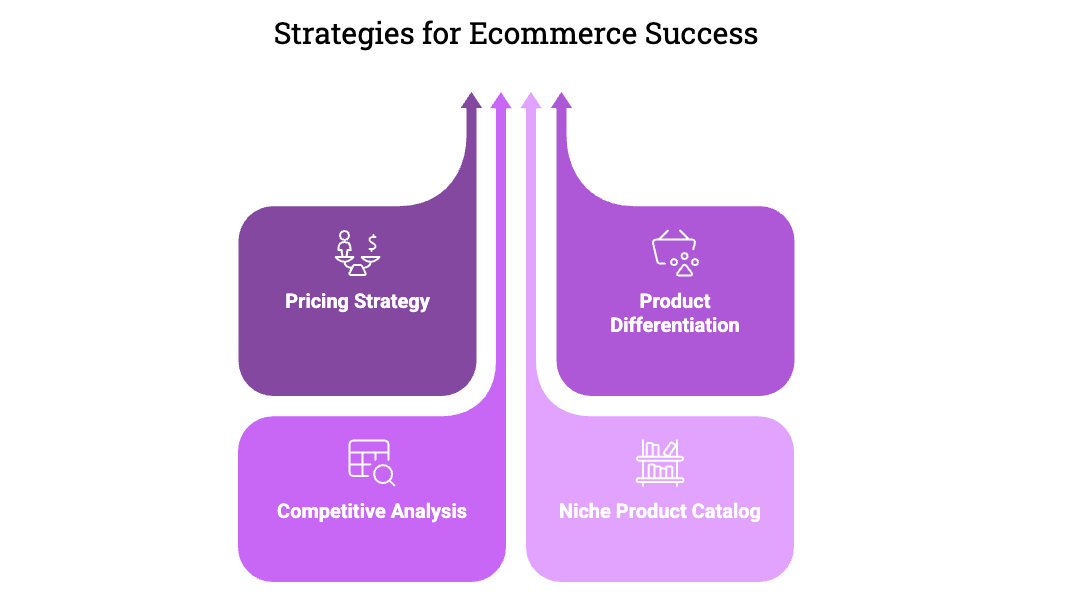
Successful businesses use pricing information to provide the best prices to prioritize customer satisfaction. In order to be successful in ecommerce, you have to find products that differentiate your business from the crowded ecommerce area, whether in terms of unique prices or offerings. Another main point is that you need to keep an eye on competitors across various channels. Leveraging a niche product catalog can help you stand out because if not, there will be lots of other stores that can provide the same items at a much lower price point, leading to price competition that you will not likely hurdle with manual price adjustments.
Strategies for Ecommerce Success

You might think offering the cheapest prices is the best. However, if your prices are out of sync with those of your competitors, the customers can psychologically associate your low prices with lower quality, especially if equivalent products are positioned at a higher price point. Creating a strong brand image is highly advised, yet you need to price your products by monitoring the market and your competitors to increase the perceived value of your products. Remember, if your products are perceived as low quality once, it will be much harder to change perception after a time, which will hurt your profits and business.

Observe the market and competitor strategies to gain a competitive advantage. Research successful stores to find unique value propositions that you can offer as well, such as ethical resourcing, organic materials, etc., while you develop your product catalog; this way, you can justify charging premium prices for your niche products and have healthy profit margins. If the consumers believe your products are worth investing in, they will not hesitate to pay multiple times more than the other competitors. In short, you need price intelligence to offer the right prices and products to the right people. So, how can you overcome these challenges and start using price intelligence? Let’s see.


How to Get Started with Price Intelligence

Identify your Competitors and Prioritize your Key Products

First, you have to identify your direct competitors. Being competitive in ecommerce heavily depends on increasing your market position, turning your competitors’ weaknesses to your advantage, and having a thorough understanding of your direct competitors.

Secondly, you must work on choosing the products or categories that require close monitoring. In order to compete on price, start by selecting some of your high-potential products or product categories that you believe you can gain the best market position and profits.

Use Competitive Pricing Tool

After you have gained confidence about your competitors and product catalog, the next step is to choose an automated tool like Prisync. To start, you have to list your products and upload them to the system. The software retrieves the prices across all of your competitors; then, you can manually add the direct competitors that you want to keep an eye on as well. The benefit of using competitor tracking software is that you will receive alerts when competitors change prices, allowing you to take action quickly and focus on perfecting your pricing strategy.

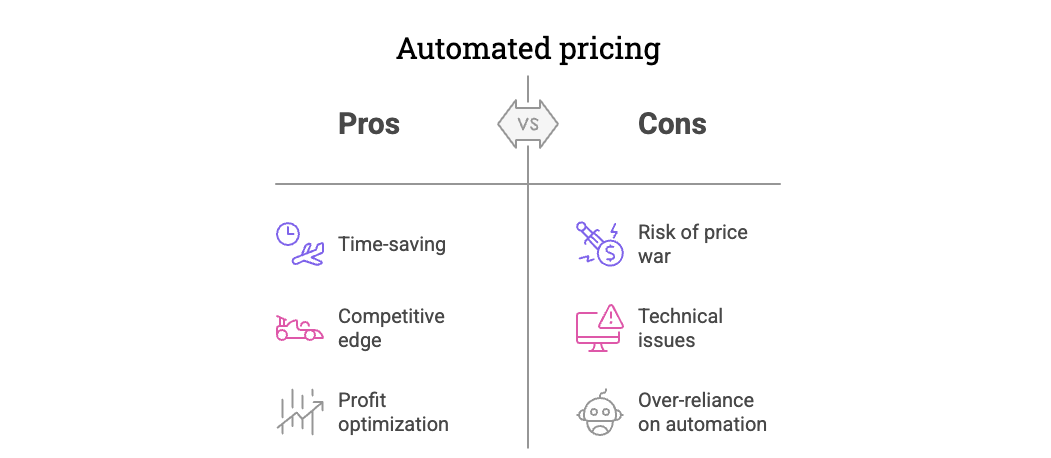
Once you start the automated price tracking process, you are free to use the smart pricing rules to save you extra time without worrying about your prices. If you want to beat your competitors in terms of price, you can set a price rule so that, for example, you want to be a certain percentage lower than your cheapest-priced competitor. It is not an easy task to find the right price point without racing to the bottom or missing some opportunities among thousands of other ecommerce merchants. Conduct A/B tests and try out different pricing strategies with smart rules to make sure your prices are on point and you have higher profit margins.
automated pricing

Being Competitive with Stock Tracking

It is also beneficial to track competitors to know what other merchants charge for similar products or if they are out of stock. Still, it is best to find your niche and differentiate your business’s offerings so that you do not have to deal with your prices or stocks aggressively, and let your customers choose you despite higher prices.

Nonetheless, price monitoring and dynamic pricing tactics are must-haves for scaling your business if you sell a high volume of products with lower margins. In that case, using an automated price tracking software like Prisync is very important to set and adjust prices automatically when market prices or stock availabilities change. If they are out of stock, make sure your products stand out without cutting your profits. Price intelligence tools can help you avoid potential underpricing or overpricing errors that could hurt your margins or sales.


Conclusion

Having the perfect products for your store is a great start, but it is not enough in the highly competitive ecommerce landscape. Pricing is an ongoing process that affects your profits and customers’ buying decisions. Successful ecommerce businesses rely on price intelligence to work with quality data, offer the right prices at the right time, and create measurable outcomes. Since the prices are transparently open to all buyers on the Internet, the competition is getting harsher each day, and businesses need to stay in control of their prices with momentary adjustments and competitor monitoring.

Whether you’re an online merchant who is just starting ecommerce or aiming to scale your business, price intelligence allows you to price your products confidently and with flexibility, which helps you maintain customer satisfaction and higher profits in the long run. As you can see, price intelligence is not optional anymore; the sooner you start implementing it, the sooner you can create a sudden benefit to your store and take control of your pricing.

Seray Begüm Sezkir

Seray Sezkir is a Marketing Specialist at Prisync. She has been writing about ecommerce and pricing strategies to help ecommerce retailers improve their pricing insights.