
You know that feeling of having everything lined up perfectly? You have sourced an incredible product, your suppliers are ready to ship, and your platform is built and waiting. But when it comes to picking the actual name of your shop, your mind goes completely blank. It is a tension most new ecommerce founders feel. You want something that sounds professional but approachable, catchy but not cheesy.
A store name is not just a label you slap on a website; it is the first brand promise a customer ever encounters. The stakes are much higher than they seem when you are just starting out. A great name sets the tone for every interaction that follows, from the moment a shopper clicks your ad to the day they receive their first package. If you feel stuck, reviewing practical Store name ideas offers a great entry point. You need both inspiration and a solid decision-making framework to land on a name that truly works for your business.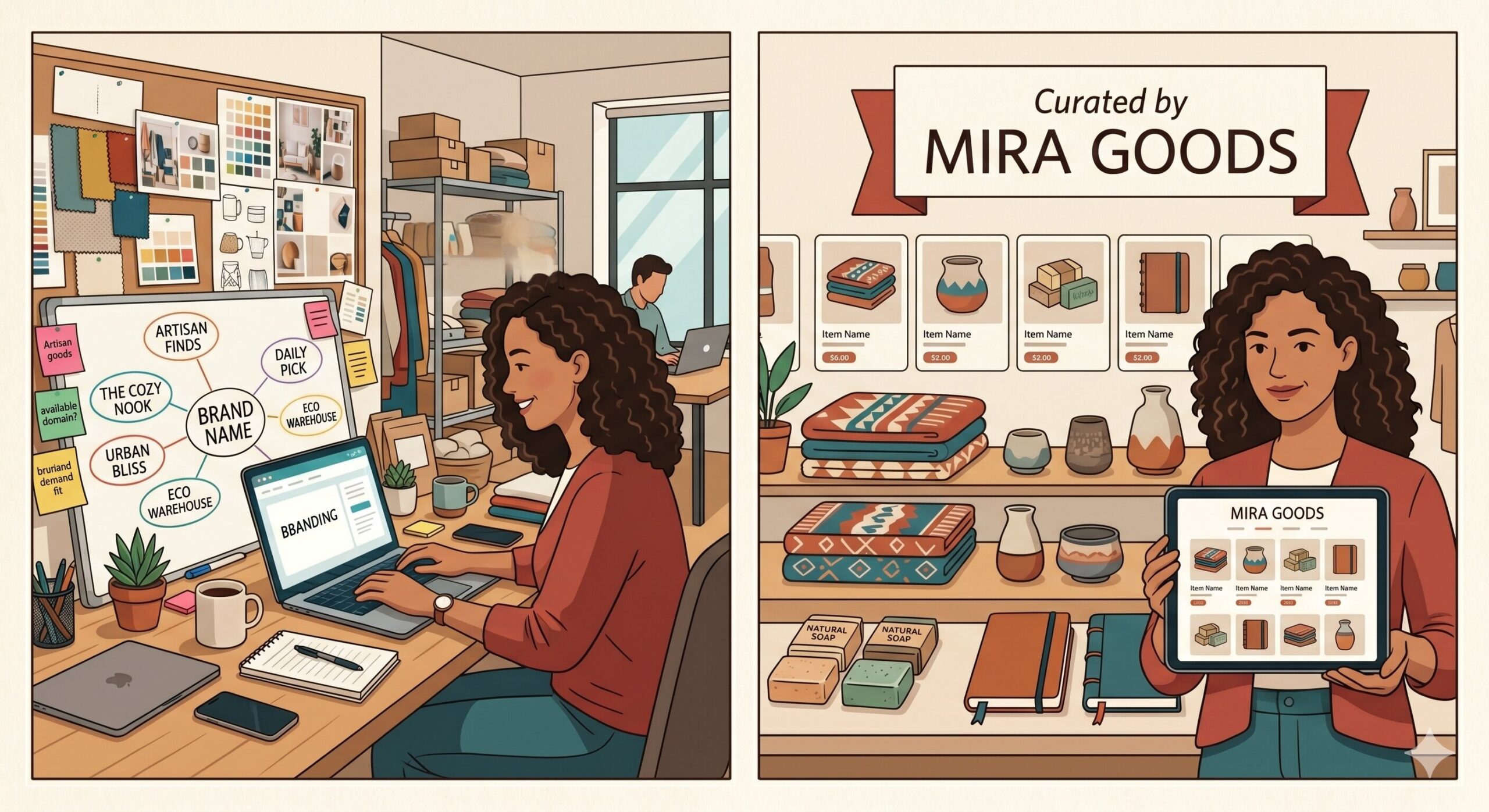 TL;DR:
You have an amazing product ready to sell, but finding the right name can feel impossible. This guide walks you through choosing a memorable, scalable store name that connects with customers and supports your long-term goals. Learn how to avoid common pitfalls, claim your perfect domain, and confidently build a brand you love.
Why Your Store Name Is the First Brand Decision That Actually Matters
Many founders treat naming as a quick task to cross off their to-do list. They rush the process, pick something that sounds okay in the moment, and move on. Unfortunately, this often leads to a costly rebrand within the first two years. Changing your name later means buying a new domain, redesigning logos, updating social media handles, and retraining your existing customers to search for a completely different word.
A strong ecommerce business store name does heavy lifting for your business. It sets category expectations, builds memorability, and signals quality. Think about the difference between a name like “Bob’s Discount Tech” and “Aura Electronics.” The first one limits the business to cheap, bargain-bin items, while the second feels scalable, modern, and trustworthy. Your name anchors every future marketing effort you make. When you take the time to browse different Store name ideas, look for concepts that give you room to grow. You want a name that feels just as appropriate when you are making ten sales a month as it does when you are making ten thousand.
Know Your Numbers Before You Name Your Store
Brand positioning and naming are completely inseparable from your financial reality. Before you start brainstorming clever puns or elegant words, you need to look at your math. If you target premium buyers, your store needs a name that signals luxury, exclusivity, and high quality. If you run a value-driven store, your name needs to signal accessibility, friendliness, and trust.
Your expected margins and price points define exactly who your customer is and what your brand should feel like. A shopper expects a different experience from a boutique charging $150 for a t-shirt than they do from a shop charging $15. Understanding these numbers helps you filter out names that send the wrong message. Running your numbers through a margin calculator is a highly practical first step. Once you know exactly how much profit you need to make on each item, you can accurately picture the type of customer willing to pay that price, which makes naming your store so much easier.
How Your Business Plan Should Shape Your Naming Strategy
The best store names in the world are never random. They reflect a deliberate, thoughtful brand strategy rooted in a clear Business plan. Your specific niche, your target audience, your product category, and your long-term growth goals should all inform the names you consider and the ones you quickly eliminate.
Before you generate a single name, write down your brand promise in one clear sentence. What exactly are you offering, and who are you offering it to? For example, “We provide eco-friendly camping gear for weekend adventurers.” That single sentence becomes the ultimate filter for every option on your list. If a brainstormed name sounds overly industrial or highly technical, it fails the filter because it does not match the “eco-friendly weekend adventurer” vibe. Let your overarching strategy do the hard work of narrowing down your choices.
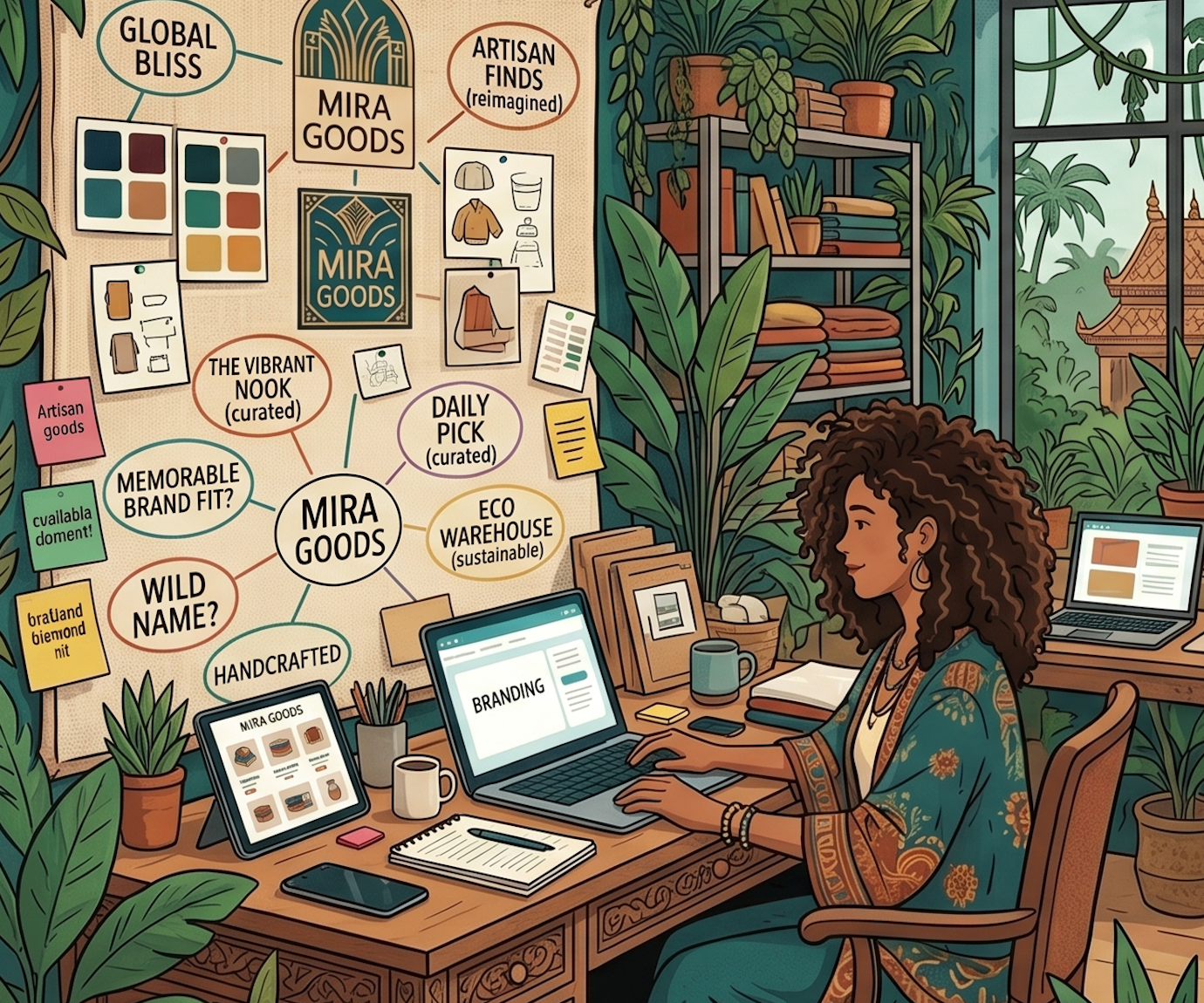
Brainstorming Your Business Brand Name
Niche | Recognized Colors for Logo | Name Style | Example Business Names |
|---|---|---|---|
Eco-Friendly Products | Green, Brown, Earth Tones | Simple, Nature-Inspired | “GreenSprout”, “EarthWise” |
Technology | Blue, Silver, White | Modern, Futuristic | “TechHorizon”, “BlueCircuit” |
Food & Beverage | Red, Yellow, Orange | Playful, Approachable | “FlavorFusion”, “SnackStop” |
Fitness & Wellness | Blue, Green, Vibrant Tones | Energetic, Motivational | “FitFlow”, “ZenPath” |
Education | Blue, Yellow, White | Trustworthy, Professional | “BrightMind”, “EduNext” |
Beauty & Skincare | Soft Pink, White, Gold | Elegant, Feminine | “GlowEra”, “LuxeBloom” |
Finance & Banking | Navy Blue, Green, Gray | Professional, Reliable | “WealthWise”, “SecureFund” |
Real Estate | Blue, Gray, Black | Sophisticated, Trustworthy | “HomeHaven”, “PrimeNest” |
Fashion | Black, White, Gold | Trendy, Chic | “StyleSphere”, “VogueLine” |
Travel & Tourism | Blue, Green, Sunset Tones | Adventurous, Inviting | “WanderWorld”, “VistaTrips” |
This table provides general recommendations and examples to align branding with business niches effectively, ensuring consistency with industry expectations.
Once you have a shortlist of names you love, it is time to face the internet. Moving from a written list to a registered domain is a step many founders underestimate. You might have the perfect name, but if the domain is taken, you have a problem to solve.
Start by checking domain availability across multiple extensions. While a .com is widely recognized and trusted, newer TLDs (top-level domains) like .store, .shop, or .co are excellent, modern alternatives. It is vital that your domain and your store name match as closely as possible. If your store is called “Blue River,” but your domain is “blueriver-shop-online.net,” customers will struggle to find you again. When your absolute first choice is taken, using a domain name generator is the smartest move. It surfaces creative variations, prefixes, and suffixes you might not have considered, helping you claim your space quickly and confidently.
SEO Basics – Choosing a Name That Search Engines and Customers Both Love
We used to see a lot of ecommerce stores with names like “BuyCheapShoesOnline.com.” While that might have worked a decade ago, keyword-stuffed domain names are incredibly outdated today. However, SEO still plays a very real role in your naming decisions.
As your business grows, branded search volume becomes a massive driver of traffic. When people hear your store name from a friend, they will type it into Google. A distinctive, highly pronounceable name earns more organic backlinks because bloggers and journalists find it easy to reference. Searchability goes hand-in-hand with memorability. The absolute ideal name is one a customer can easily recall and spell correctly after hearing it spoken aloud just once. If they have to guess how to spell it, search engines will struggle to connect them with your shop.
Six Common Naming Mistakes Ecommerce Founders Make (and How to Avoid Them)
Even the most well-intentioned founders can trip up during the naming process. Keep an eye out for these six frequent pitfalls, and use the corrective principles to self-audit your shortlist.
1. Names that are too generic to be memorable
If you name your store “Quality Clothing Co,” you blend right in with a million other shops. It lacks personality.
Corrective principle: Inject a specific emotion, color, or descriptive word that gives the brand a distinct flavor.
2. Names that are too clever to be understood
Puns are fun, but if it takes a customer more than two seconds to get the joke, you have lost them.
Corrective principle: Prioritize clarity over cleverness. A straightforward store name always beats a confusing one.
3. Names that are hard to spell or pronounce
If your name relies on replacing an “S” with a “Z” or removing all the vowels, people will type it incorrectly when searching for you.
Corrective principle: Say the name out loud to a friend and ask them to write it down. If they spell it wrong, pick a different name.
4. Names that limit the product range as the business scales
Calling your shop “The Leather Belt Emporium” is great until you decide to start selling wallets, bags, and shoes.
Corrective principle: Think five years ahead. Choose a name broad enough to encompass your future product lines.
5. Names that clash with existing trademarks
Using a name that is heavily trademarked by another company is a fast track to a cease-and-desist letter.
Corrective principle: Always run a quick search through your local trademark database before you buy the domain.
6. Names that do not translate well into international markets
A word that sounds great in English might mean something offensive or silly in another language.
Corrective principle: If you plan to sell globally, do a quick translation check on your top choices to ensure they carry a positive meaning.
The Name Comes First — Everything Else Follows
Your store name is the very foundation of your entire business identity. Every other decision you make, from the colors on your packaging to the text in your paid ads to the friendly tone of your customer service emails – flows directly from the brand identity your name establishes.
Treat naming as the deeply strategic exercise it is. Invest the time upfront, run your favorite ideas through your business filters, and strongly resist the urge to just settle for something average. When you find the one that fits your price point, speaks to your customer, and holds up under pressure, claim your domain and start building. You have everything you need to launch a beautiful, successful store. Pick your name, trust your gut, and get ready to welcome your first customers.
Top Tips for Choosing a Store Name in 2026
Selecting the perfect store name is one of the most important steps in establishing your brand. With trends and customer preferences evolving, finding a name that is both timeless and relevant for 2026 requires thought and creativity. Your store name should leave a lasting impression, resonate with your target audience, and stand out in a saturated market.
In 2026, customer connection and branding play an even greater role in purchasing decisions. A name that feels personal, authentic, and memorable can set your store apart, while also remaining flexible enough to grow with your business. Whether you’re launching an online shop or a physical storefront, the right name will help shape the perceptions and emotions customers associate with your brand.
Top Tips for Choosing a Store Name in 2026
- Keep it simple, clear, and easy to remember—avoid confusing or overly complex names.
- Ensure it’s unique by conducting thorough research on competitors and domain availability.
- Incorporate forward-thinking trends but stay true to your business values and mission.
- Test the name with trusted friends, colleagues, or focus groups to gauge reactions.
- Choose a name that works well across multiple platforms, including social media and branding materials.
- Think globally—make sure the name translates well and avoids unintended meanings in other languages.