


Have you ever dreamed of running an online store without the hassle of packing boxes or storing piles of inventory in your garage? You are in exactly the right place. Starting a dropshipping business remains one of the most accessible and exciting ways to build an income on your own terms.
Creating a dropshipping business plan might sound like a lot of heavy lifting. But it really comes down to finding products people love, setting up a great shop, and getting your brand in front of the right eyes. By the time you finish reading, you will know exactly how to choose a profitable niche, source reliable suppliers, and turn casual browsers into loyal customers. Let’s get into exactly how you can map out your ecommerce success.
What is Dropshipping and How Does it Work?
Before jumping into the step-by-step dropshipping business plan, let’s look at how the model actually functions. Dropshipping is a retail fulfillment method where you don’t keep the products you sell in stock.
Here is what happens when a customer visits your online store:
- A customer orders a product and pays you the retail price.
- You forward that order to a third-party supplier and pay the wholesale price.
- The supplier ships the item directly to your customer’s door.
You make a profit on the difference between the retail and wholesale prices. You focus entirely on building a beautiful brand, running your marketing, and talking to your customers. Your supplier handles the heavy lifting of fulfillment and logistics.
Not sure about your profit margin percentage? try out our Profit Margin Calculator
Step 1: Choose Your Niche
Finding the right niche is the foundation of how to start a dropshipping business successfully. You want to pick a category that balances your personal interests with strong market demand and healthy profit margins.
Avoid overly saturated markets like generic phone cases or cheap electronics. Instead, look for products that offer:
- Consistent search demand: Check tools like Google Trends, Ahrefs, or Semrush to see if people actually search for these items year-round.
- Healthy margins: Aim for a 30% to 60% markup on your products to ensure you can cover your ad spend and still make money.
- Low return rates: When starting out, try to avoid fragile items or clothing with complicated sizing to keep returns to a minimum.
Step 2: Validate Your Product Idea
Before you spend time and money building out a full store, you need to validate your product ideas. You want to be completely sure people want to buy what you plan to sell.
Here is how you can test the waters:
- Check competitor stores: Use tools like SimilarWeb or Minea to see what other dropshippers sell and how much traffic they get.
- Analyze bestsellers: Look at Amazon or AliExpress bestsellers within your niche to see what currently moves fast.
- Run a small test: Put $20 into a paid ad test or try to pre-sell the item before you fully commit to a massive product catalog.
Step 3: Find Reliable Suppliers
For dropshipping, your supplier is your entire fulfillment operation. If they mess up, your customers blame you. Finding reliable dropshipping suppliers is absolutely vital for long-term ecommerce success.
You have a few great options to explore:
- Global suppliers: AliExpress, CJ Dropshipping, and Zendrop are great places to start. They offer massive product varieties at very low costs.
- Local suppliers: US or EU-based suppliers on networks like Spocket and SaleHoo often provide much faster shipping times and higher-quality items.
Always order product samples for yourself before listing them in your online store. Test the shipping times, unbox the item, and review the product quality firsthand. *Online stores can sign up for their free forever plan for full access to the dropshipping marketplace and experience the app that automates not only sourcing but also order fulfillment and inventory levels as well.
Step 4: Build Your Store
Now it is time to build your online home. Your ecommerce store needs to look professional, load quickly, and make buying incredibly easy.
- Choose your platform: Wix eCommerce is user-friendly and packs powerful features for growing brands. Shopify is widely used and great for beginners, while WooCommerce gives you maximum control if you like working with WordPress.
- Design for trust: Focus on a clean design and prioritize mobile optimization. Most of your shoppers will browse on their phones.
- Write original copy: Create real, engaging product descriptions. Never just copy and paste the boring text from your supplier.
- Add trust signals: Put reviews, secure checkout badges, and clear return policies where shoppers can easily see them.
Step 5: Define Your Business Model & Pricing
Your pricing and shipping strategies can make or break your dropshipping business plan. You need to decide on these upfront so you have a clear path to profitability.
Think through these three areas:
- Pricing strategy: Will you use cost-plus pricing, value-based pricing, or simply price competitively against similar stores?
- Shipping policy: Consider offering free shipping by building the shipping cost directly into your product price. Get some free shipping tips, almost always it converts better.
- Return policy: A clear, fair, and easy-to-find return policy builds trust. It also heavily reduces the chance of credit card chargebacks and customer disputes.
Step 6: Create a Marketing Strategy
Marketing is where dropshippers really win or lose. You can have the best products in the world, but if no one sees them, you won’t make any sales.
A well-rounded marketing approach includes:
- Paid ads (Meta/TikTok): These platforms are perfect for product discovery. Start with small daily budgets around $10 to $20 a day to test which ads get the best response.
- SEO and content: This drives long-term, free traffic. Write helpful blog content around your niche to bring in organic searchers.
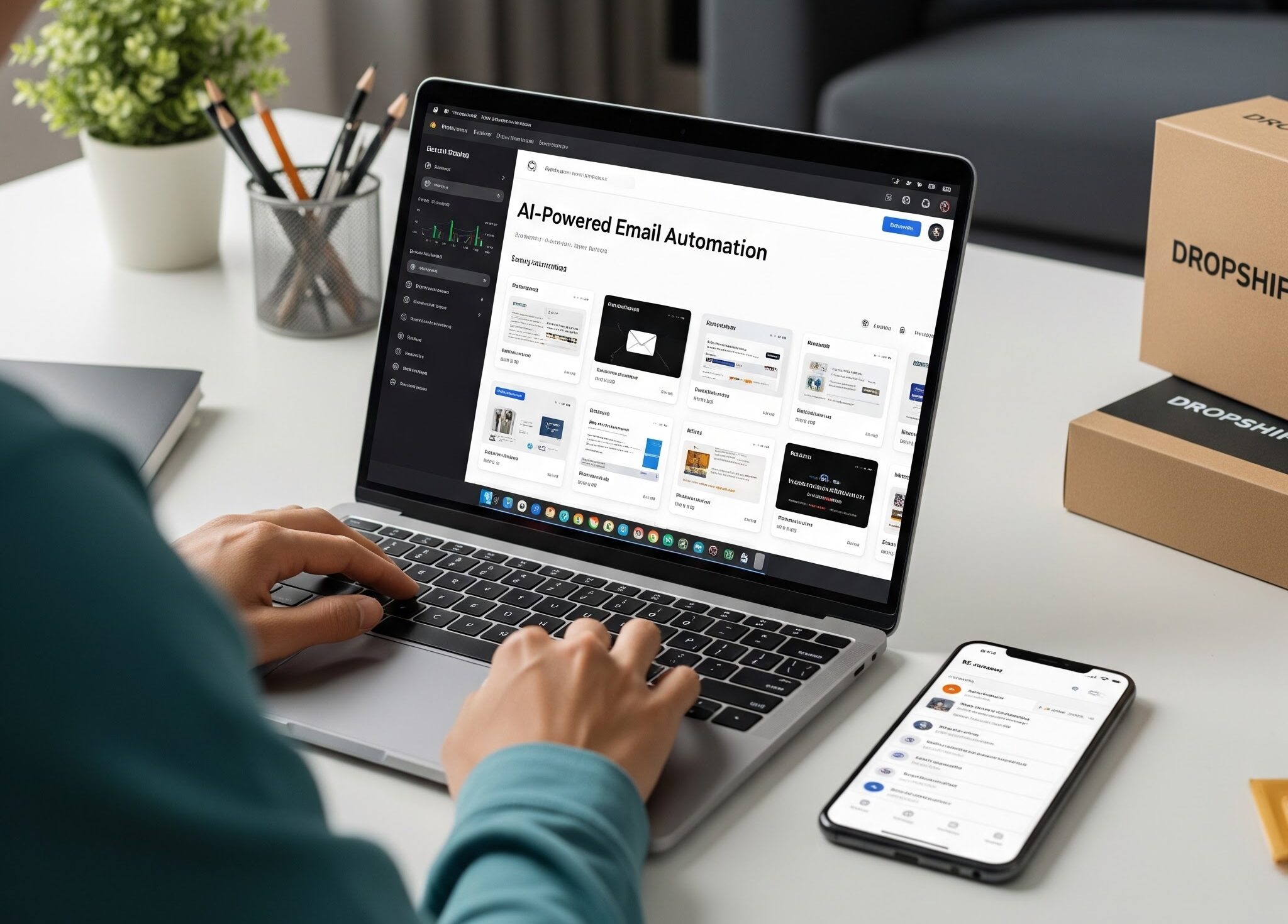
- AI-Powered Email Automation: Start building your email list from day one. Use Klaviyo or Mailchimp to implement AI-powered email automation for personalized welcome flows and abandoned cart reminders.
- Organic social media: TikTok and Instagram Reels offer incredible reach if you can create authentic, engaging short-form videos.
Step 7: Financial Planning
Running out of money is a fast way to close your business. Before you launch, map out your numbers so you know exactly what to expect.
Make sure you calculate:
- Cost of Goods Sold (COGS): The price of the product plus the cost to ship it.
- Ad spend: Expect to spend money before you turn a profit. Try to budget for at least three months of runway.
- Platform and software fees: Account for your website subscription and any apps you add to your store.
- Target metrics: Know your break-even point and your target ROAS (Return on Ad Spend).
Always keep your personal and business finances strictly separated from the moment you start.
Step 8: Legal & Operations Setup
Setting up the boring administrative stuff early saves you a lot of headaches later on. Take the time to make your business official.
- Register your business: Forming an LLC is a common step in the US to protect your personal assets.
- Set up banking: Open a dedicated business bank account and connect a reliable payment processor like Stripe or PayPal.
- Understand taxes: Look into your sales tax obligations for the regions where you plan to sell.
- Plan for customer service: Decide how you will handle customer emails. Fast response times prevent bad reviews and calm down anxious buyers.
Step 9: Launch & Optimize
It is time to go live! When you open your doors, start small. Focus on 5 to 10 “hero” products rather than overwhelming yourself with hundreds of items.
Once your store is live, watch the data closely:
- Track everything: Keep a close eye on your conversion rate, AOV (average order value), and CAC (customer acquisition cost).
- Cut the losers: If an ad doesn’t perform well, kill it fast. Take the budget from losing ads and scale up the ones that actually bring in sales.
- Collect reviews: Actively ask your happy customers to leave reviews using tools like Loox or Judge.me to build social proof.
Step 10: Scale Smart
Once you hit consistent profitability, you can start scaling up. Scaling means growing your revenue and conversions without breaking your operations.
- Negotiate pricing: When you start moving serious volume, reach out to your suppliers and ask for better bulk rates.
- Expand your channels: Start selling on new platforms like Amazon or TikTok Shop.
- Consider private labeling: If a product sells incredibly well, work with your supplier to put your own logo on the item and the packaging to build a true, recognizable brand.
Step 11: Master Customer Retention and Analytics
The smartest entrepreneurs know that holding onto an existing customer costs far less than finding a new one. Your dropshipping business plan is not complete without a strategy for retention and continuous improvement.
Set up automated email campaigns to re-engage past buyers. If someone buys a camping tent, send them an email a few weeks later suggesting a matching sleeping bag. Offer exclusive discounts to your most loyal shoppers to keep them coming back.
Simultaneously, never stop analyzing your store data. Use your analytics strategies to see exactly where people drop off in the checkout process. By constantly tweaking your site design, your email flows, and your ad creative, you create a machine that gets more efficient over time.
Ready to Build Your Store?
Starting a dropshipping business takes focus, research, and a willingness to learn. But when you follow these 11 steps, you set yourself up with a strong foundation for ecommerce success. You know how to find the right niche, source great products, and build a marketing engine that drives real sales.
Don’t let the planning phase hold you back. Pick your niche today, sign up for an online store builder, and take that exciting first step toward building your own business.