

eCommerce is exploding, and the numbers don’t lie. Experts predict the global eCommerce market will soar to an incredible $83.19 trillion by 2035.
When you narrow in on dropshipping, the growth is just as impressive. This corner of the market is expected to reach an amazing $1,253 billion by 2030. That’s a massive number of people shopping online, creating a fantastic opportunity for entrepreneurs like you to build a business that meets this growing demand.
This fast-paced growth brings up a big question: Is dropshipping still a great, low-risk business model, or has the game completely changed in 2026?
The short answer is yes, the rules have definitely shifted. What worked five years ago won’t get you the same results today. To succeed, you need to get familiar with how this business operates now. In this guide, we’ll walk you through the basics, explain how the business model works, and explore what’s new for 2026.
Dropshipping – The foundation
Let us start with a simple definition. Dropshipping website is a retail fulfillment method where a store does not keep the products it sells in stock. When your store sells a product, it purchases the item from a third party and has it shipped directly to the customer.
This creates a straightforward three-way relationship: the seller (you), the supplier, and the customer. You focus entirely on marketing and sales. The supplier handles the warehouse, the packaging, and the shipping. The customer simply gets the product they ordered.
You never have to touch the inventory. This matters because it removes the biggest financial hurdle of starting a traditional retail business. You do not need thousands of dollars to buy stock upfront. You only pay for a product after a customer has already paid you.
Your profit is the margin between the wholesale price you pay the supplier and the retail price the customer pays you. If a supplier charges you $10 for a custom mug, and you sell it for $25, you keep the $15 difference.
Traditional retail requires you to guess what people want, buy it in bulk, and hope it sells. Dropshipping removes that guesswork. It is the art of selling without stocking. However, in 2026, it demands far more from you than just listing products on a website.
How dropshipping works: Step by step
The mechanics behind this model are logical and easy to follow. If you were to draw a simple flowchart of the process, it would look exactly like this:
Step 1: Set up your store
You build a website using platforms like Wix, Shopify, WooCommerce, or even set up a TikTok Shop. This is where your brand lives and where customers browse.
Step 2: Source and list products
You find reliable dropshipping suppliers who offer thier services. You select the items you want to sell, add your own photos and descriptions, and list them on your site at a marked-up price.
Step 3: A customer places an order
A shopper visits your store, loves what they see, and buys an item at your retail price. The money goes directly into your merchant account.
Step 4: You forward the order
You take the customer’s order details and send them to your supplier. You pay the supplier their wholesale price for the item.
Step 5: The supplier ships the product
The supplier packages the item and ships it straight to your customer. They often use blind shipping, meaning their own company name does not appear on the box.
Step 6: You keep the profit
The transaction is complete. You keep the difference between the retail price and the wholesale cost.
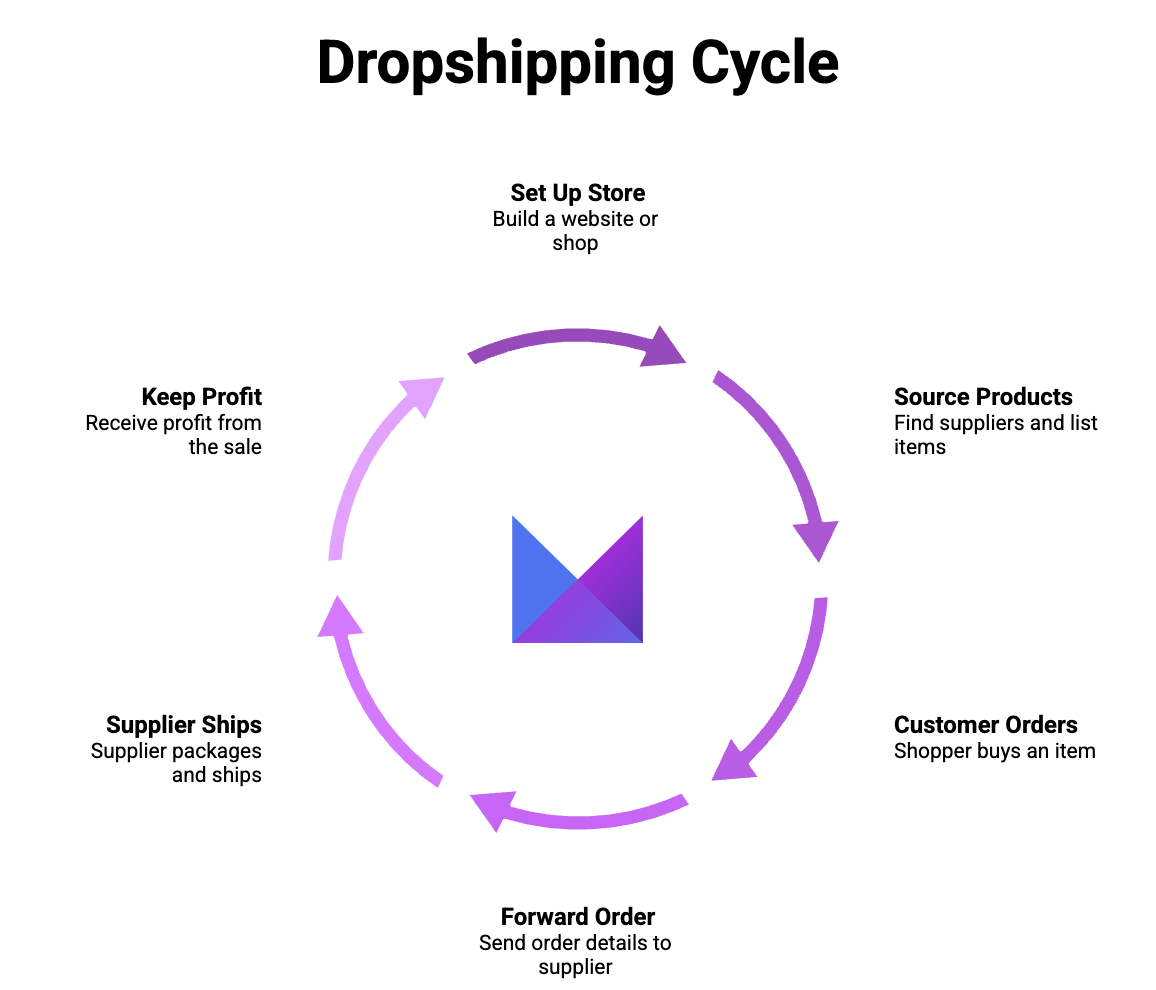
The process is remarkably straightforward. But remember, execution in 2026 requires smart automation and sharp supplier relationships. You need systems in place to make sure these steps happen quickly and reliably.
Is dropshipping still worth it in 2026?
Let’s get real. Dropshipping in 2026 is still a fantastic business model, but it’s no longer the get-rich-quick scheme it once was. Success now rewards a specific set of skills. To win, you need to master digital marketing, create compelling content, and actively pursue sales. The days of launching a generic store with a few basic ads and watching the sales roll in are long gone.
Today’s shoppers are smarter and more discerning. They research products, pore over reviews, and compare prices across multiple sites before making a purchase. This means maintaining pricing consistency across all your channels is more important than ever.
AI, LLMs and the Future of Dropshipping
This is where the revolution in AI and LLMs comes into play. These technologies aren’t just changing the game; they’re rewriting the rules. While AI can automate tasks like writing product descriptions or generating ad copy, it also raises the bar for everyone. Your competitors are using the same tools, which means creating a genuine, memorable brand is your ultimate advantage. A brand-first approach has completely replaced the old one-product store model. People want to buy from brands they trust and connect with. They’re looking for a cohesive look and feel, excellent customer service, and a clear mission that resonates with them.
AI can be your most powerful ally in building that brand. You can use it to analyze customer data and personalize your marketing messages. You can also add AI-powered chatbots to provide instant, 24/7 customer support. The right AI tools for your drop shipping website can even help you brainstorm creative content ideas that genuinely engage your audience, moving beyond generic templates. The trick isn’t just to use AI, but to use it to amplify your unique brand voice and build authentic connections.
So, is dropshipping for you? It is if you’re ready to build a real, long-term brand and dive into the world of modern marketing. It’s not for you if you’re just hunting for a passive income source. Dropshipping isn’t dead; it has evolved. Treat it like the serious business it is, or don’t start at all.
The biggest news in dropshipping: 2026 updates
The landscape shifts rapidly, and smart sellers adapt just as quickly. Here is a look at what has changed this year and why it matters for your store.
AI takes center stage
Artificial intelligence is no longer just a buzzword; it is a required tool for serious sellers. AI-powered personalization engines now deliver shopping experiences that adapt to each visitor in real time. They analyze browsing patterns and instantly suggest products the customer is most likely to buy.
Store owners are using AI to generate compelling product descriptions, adjust pricing based on market demand, and even predict which products will trend next. By using AI to find winning products before competitors do, you gain a massive advantage in the market.
Trade wars and tariff turbulence
International shipping costs are shifting. Baseline tariffs of around 31% to 45% remain in place between the US and China. Experts predict that new tariffs as high as 40% could still be imposed soon.
This turbulence forces dropshippers to completely rethink their supplier strategies. Relying solely on cheap overseas manufacturing is becoming risky. We are seeing a massive shift toward local and regional suppliers to avoid unpredictable delays and sudden cost surges.
Social commerce explosion
Social media is no longer just a place to run ads; it is the actual store. TikTok Shop has emerged as a dominant dropshipping channel in 2026.
Smart dropshippers are cashing in on viral short-form videos. Punchy TikTok videos and Instagram Reels are driving direct sales and increasing profit margins for those who act fast. Social media serves as both your marketing channel and your checkout counter, shrinking the path to purchase to just a few taps.
Faster shipping becomes non-negotiable
Customers expect quick delivery, no more waiting around. In fact, a recent survey of over 3,000 store owners revealed that 64% see shipping delays as their biggest challenge. Buyers aren’t going to wait four to six weeks for products to arrive from overseas. click here to review some great free shipping tips.
This demand has led to the rapid rise of US, EU, and local warehouse suppliers. Shipping speed is now a core competitive differentiator. If you can deliver a product in three days while your competitor takes three weeks, you will win the sale every single time.
Crypto payments go mainstream
Cryptocurrency payment options have moved out of the experimental phase. They are now completely mainstream across major eCommerce platforms in 2026. Offering crypto payments opens your store up to a massive, global audience that prefers decentralized transactions. It gives your buyers more ways to pay, which naturally leads to more completed checkouts.
The hottest dropshipping niches of 2026
Finding the right niche is half the battle. You want to sell products that solve clear problems or feed passionate hobbies.
The best trending dropshipping products in 2026 are heavily dominated by the “At-Home Health” sector. Consumers are skipping expensive spas and gym memberships to save money. Instead, they are investing in high-quality gadgets that bring those luxurious experiences right into their living rooms.
Here are the top-performing niches right now:
- Home and Wellness: With people spending more time at home, gadgets that improve their living space are a big hit. Think red light therapy masks, smart home devices, and kitchen gadgets that go viral on TikTok.
- Car Accessories: This is a huge market with endless practical, problem-solving products. From phone holders to trunk organizers, these items are always in demand.
- Eco-Friendly Products: More people are shopping with their values. Reusable, sustainable, and biodegradable goods attract a loyal customer base that’s often willing to spend a bit more.
- Pet Supplies: People love their pets, and it shows. The demand for everything from toys to grooming tools is consistently high, making it a reliable niche.
- Baby & Kids Products: Parents are always looking for items that make their lives easier and their children happier. It’s an emotional niche with a high potential for repeat customers.
- Phone Accessories: Almost everyone has a smartphone, creating a massive audience for cases, chargers, and other add-ons. This is a competitive but highly scalable market.
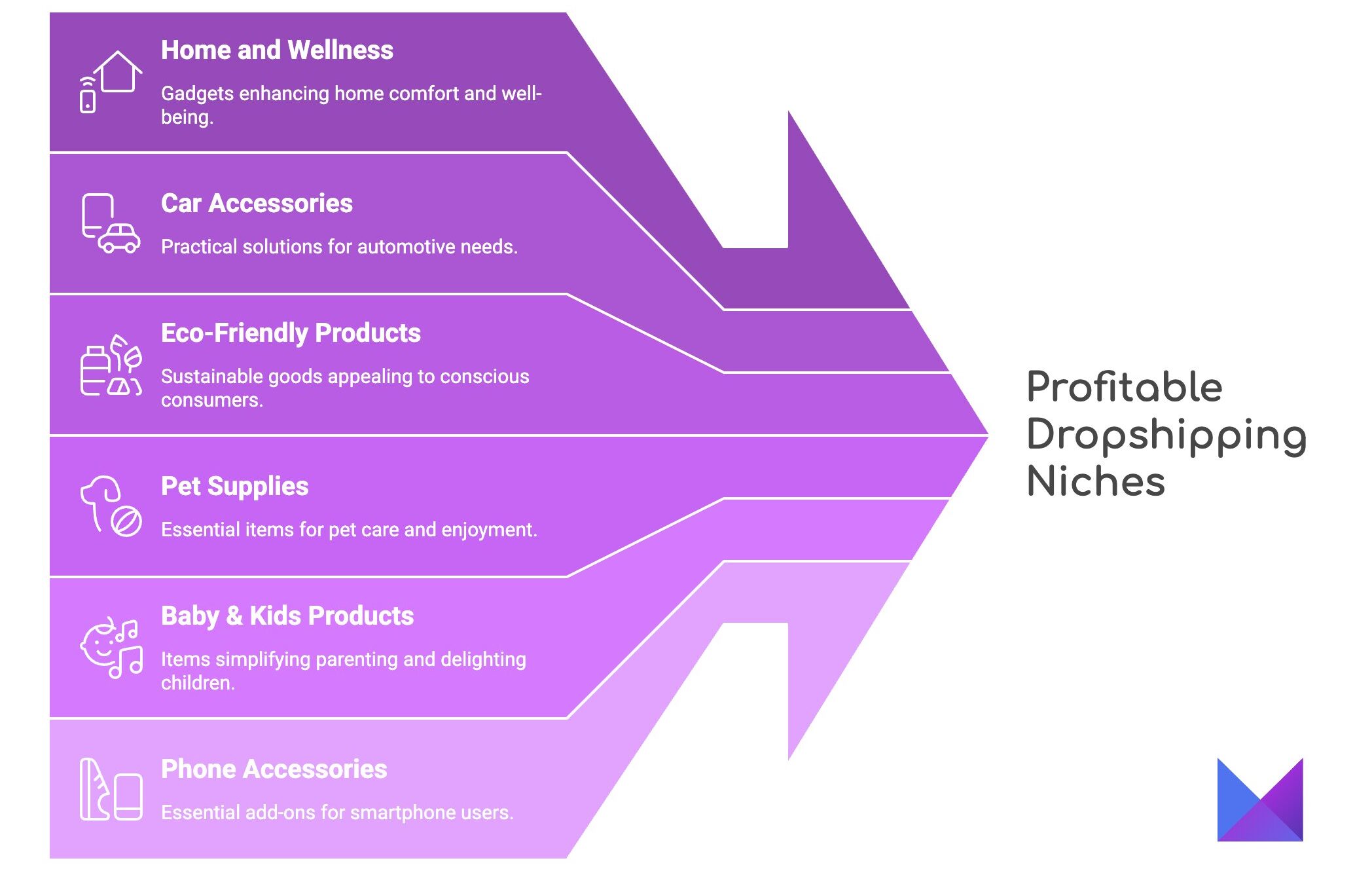
The best products for 2026 are not reinventing the wheel. They are simply making everyday items smarter, greener, or more beautiful.
The rise of the micro-brand in dropshipping
Generic, “sell-everything” stores simply do not convert anymore. When a customer lands on a site that sells dog toys, kitchen knives, and phone cases all on the same page, they get confused and leave.
Hyper-focused specialization is the new winning strategy. Entrepreneurs are diving incredibly deep into specific niches. They build micro-brands that serve targeted audiences who deeply value expertise and are willing to pay premium prices for it.
Instead of just selling a product, you build a brand identity around a specific feeling or lifestyle. If you sell yoga mats, your entire site should breathe calmness and wellness. You write blog posts about mindfulness. You share stretching routines on social media.
By positioning your store as a true authority in its narrow niche, you build trust. In 2026, you are not just selling products; you are selling an experience and a compelling story.
Tools and platforms powering your store
You cannot run a modern business on outdated software. The tech stack of a modern dropshipper is leaner, faster, and more integrated than ever before.
Your foundation starts with top eCommerce platforms like Wix, Shopify, WooCommerce, or direct integrations with TikTok Shop. These platforms give you the reliable, secure checkout process your customers demand.
From there, you layer on AI-powered automation tools to handle order fulfillment and dynamic pricing. You stop guessing what to sell and start using product research tools like Google Trends, TikTok Creative Center, and dedicated spy tools to see exactly what people are buying.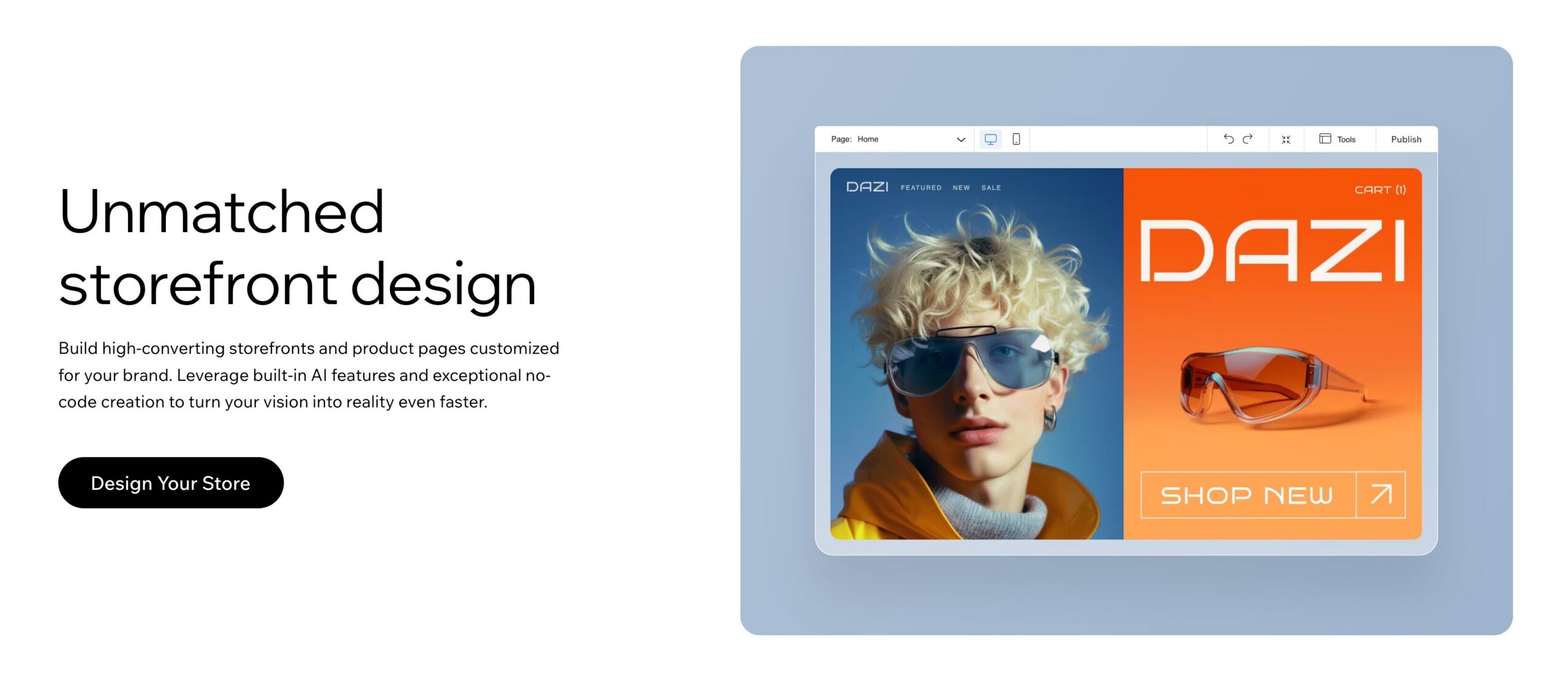 Image source: Wix ecommerce
Finally, you connect with modern supplier marketplaces. While AliExpress is still around, smart sellers are moving toward US-based suppliers, local directories, and niche wholesalers to guarantee those vital fast shipping times. The right tools truly make the difference between a struggling store and a wildly successful brand.
Challenges to watch out for in 2026
Every business model has its hurdles. Knowing what can go wrong is the first, most important step to avoiding it entirely.
Rising ad costs continue to eat into thin margins. As platforms get more crowded, you pay more for every click. This makes your organic content and customer retention strategies incredibly important. You also face intense competition in oversaturated niches. If you sell the exact same basic product as a hundred other stores, you will struggle to make a profit.
Supply chain disruptions and tariff impacts can suddenly change your product costs overnight. You must stay flexible and keep backup suppliers ready. You also have to manage massive customer expectations around shipping speed, product quality, and easy returns.
Currently, net profit margins average near 10% for standard dropshipping stores. Only the best brands consistently break above 20%. Selling high-ticket items with larger margins is often far more sustainable than relying on volume-based, low-ticket strategies.
Dropshipping in 2026: Evolved, not expired
Dropshipping is very much alive, but it has matured. The days of throwing up a sloppy website and making sales are behind us.
The clear winners in 2026 are dedicated brand builders, niche specialists, and creative marketers. They have a solid marketing strategy, use AI to work faster, source from reliable local suppliers, and connect deeply with their customers through engaging social content.
The barrier to entry for this business is still incredibly low. You can launch a beautiful store this weekend with very little upfront cash. But the bar for true success is higher than it’s ever been. You have the tools, the data, and the blueprint. Are you ready to rise to the challenge? Set up your store, find your winning niche, and start building your future today.