In the world of dropshipping, your product page is your shopfront, your salesperson, and your first impression all rolled into one. When customers cannot physically touch, test, or try the product, video becomes the closest thing to a tactile experience. This is why some of the most successful ecommerce brands rely heavily on video formats that demonstrate, explain, reassure, and persuade.
A well produced video can show product quality, build trust, answer questions, and reduce hesitation far better than images or text alone. In fact, approximately 87% of consumers report that watching a product video has persuaded them to purchase, underscoring the influence of video content on buying behaviour. For dropshippers, where competition is fierce and margins can be tight, mastering video is one of the most effective ways to increase conversions, reduce returns, and build long term customer confidence.
This guide breaks down the best performing video formats for selling products online, why they work, and how you can use them to create more effective product pages and marketing campaigns.

TL;DR
- – Utilizing video formats like product demos, unboxings, and tutorials can significantly enhance ecommerce sales
- – Trust and clarity are paramount in dropshipping; video builds legitimacy for unfamiliar brands and reduces return rates by setting clear expectations.
- – User-generated content (UGC) and testimonial videos create powerful social proof and resonate more with viewers than polished ads.
- – Lifestyle videos help brands connect emotionally with customers by showcasing products in real-life scenarios.
- – FAQ videos improve customer confidence by directly answering common pre-purchase questions, often leading to higher sales.
Why Video Matters in Dropshipping
Video is not just a nice addition to your product page, it is fast becoming an essential component of high performing ecommerce.
For dropshippers competing in crowded marketplaces, a well-made product video can make the difference between a sale and a bounce. Research consistently backs this up. According to Shopify, including a product video can boost conversions by as much as 89%. HubSpot adds that nearly three-quarters of customers are more likely to buy something after watching a product video, while Statista found that a staggering 96 percent of people have watched explainer videos specifically to learn more about a product. In short, if you’re not using video to sell your products, you’re not selling them as effectively as you could be.
For dropshippers, video plays a particularly vital role in building confidence and clarity around what is often an unfamiliar or unbranded product. First and foremost, it brings a level of product clarity that static images struggle to match. A well-shot video can show scale, texture, movement, and functionality in a way that bridges the gap between online browsing and in-person shopping. Viewers get to see how a product looks in real hands, how it behaves in use, and how it might fit into their lives, whether that’s a gadget in motion, a garment being worn, or a tool in action.
How Video Builds Trust, Reduces Returns, and Boosts Sales ?
Beyond clarity, video is a powerful trust-builder. Many dropshipping businesses don’t operate under recognisable brand names, and customers are often wary of buying from stores they haven’t heard of before. A video adds a layer of legitimacy. It feels more real, more considered. It signals to potential buyers that the seller has invested time and effort into showing the product properly, which in turn increases the perceived reliability of both the item and the business.
Finally, a good product video can significantly reduce returns. Many returns in ecommerce are the result of mismatched expectations, a customer receives the item and finds it smaller, flimsier, or just different from what they imagined. Video mitigates that risk. It paints a much more accurate picture of what the customer can expect, leading to more informed purchases and fewer unpleasant surprises. In short, video does what words and photos often cannot: it makes the product feel tangible, understandable, and desirable.
1.Product Demo Videos
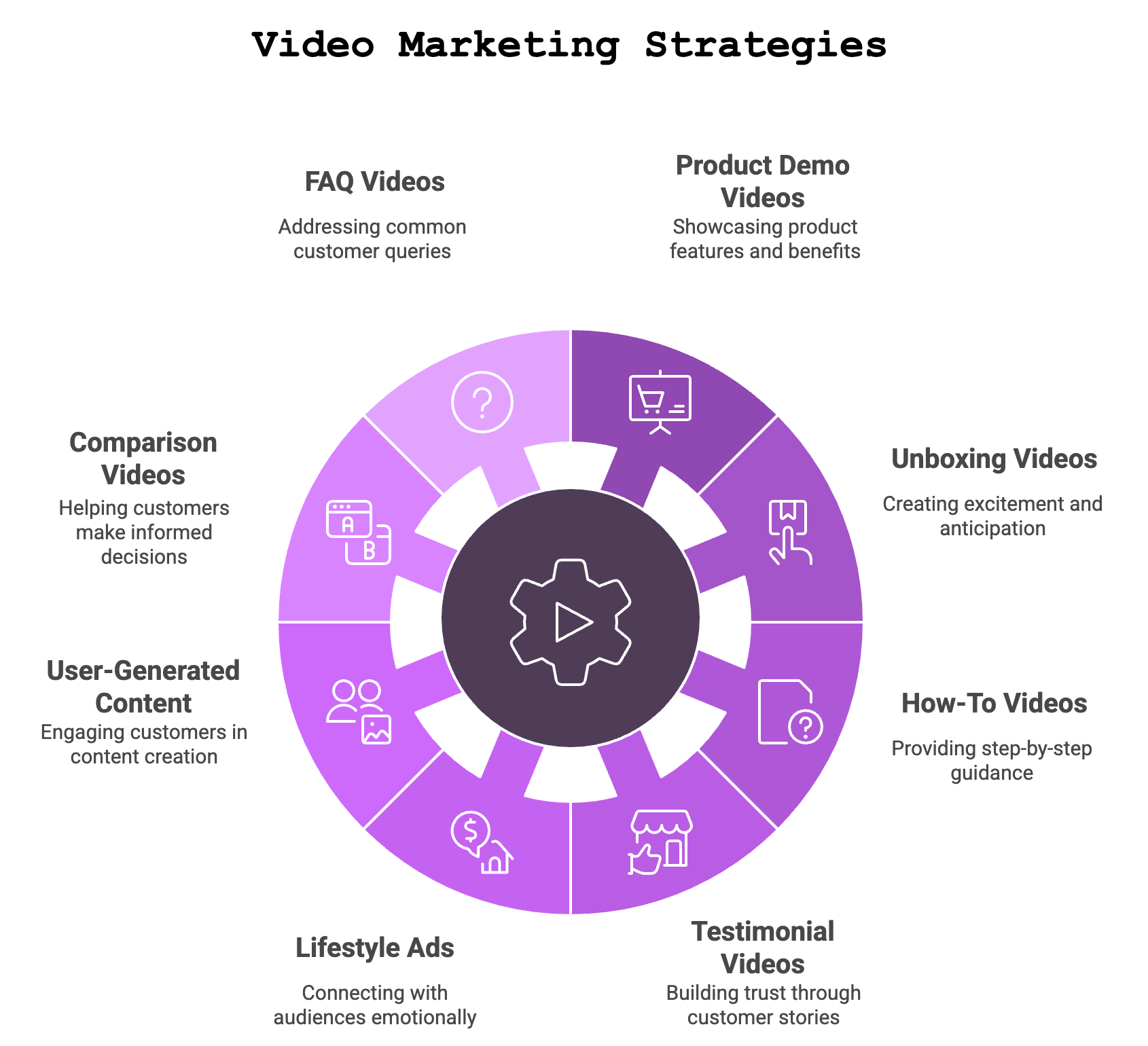
Product demo videos are consistently one of the most effective tools for selling online, particularly for dropshippers. Their strength lies in their simplicity: a demo video shows the product being used in a real-world scenario, focusing on what it does, how it works, and why it matters to the buyer. These videos don’t rely on fancy production or narrative, they’re all about clear, functional communication. When a potential customer can see the product in action, it eliminates much of the hesitation or second-guessing that can happen at the point of purchase.
The reason demo videos are so powerful is that they reduce uncertainty. A shopper no longer has to imagine how the item might function, whether it will fit their needs, or if it’s genuinely as described. Instead, they get visual proof. These videos often answer the most common customer questions before they’re even asked: How big is it? How do you use it? What problem does it solve? And because they’re so practical, demo videos are effective across all product categories, from kitchen gadgets and phone accessories to clothing, beauty tools, and tech.
Tips for an effective Product Video
Here are essential tips for creating an effective demo video:
- Prioritize clarity in the presentation of the product.
- Keep the video length under one minute to maintain viewer attention.
- Utilize close-up shots to emphasize texture, detail, and movement.
- Select natural lighting and a neutral background to minimize distractions.
- Demonstrate how the product solves a problem or offers a specific benefit.
- Show the product in action to illustrate its effectiveness, like a phone stand for hands-free viewing or a water bottle that keeps drinks cold.
- Ensure that the demonstration is clear and practical to enhance viewer conversion rates.
2.Unboxing Videos
Unboxing videos have evolved from a niche YouTube trend into one of the most emotionally resonant tools in ecommerce. For dropshippers, they offer a surprisingly effective way to build trust, excitement, and clarity around a product. The appeal lies in the psychology of anticipation. Viewers aren’t just watching a product being opened, they’re imagining the experience of receiving it themselves. This emotional projection makes unboxing content highly persuasive.
These videos work so well because they strip away the unknown. Customers get to see exactly what will arrive at their door: the packaging, the contents, any included extras, and the overall presentation. This level of transparency helps ease buyer anxiety, particularly for lesser-known or emerging brands. It also reassures the viewer that the product is genuine and complete, with nothing hidden or misrepresented.
Tips for an effective Unboxing Video
Creating an effective unboxing video requires attention to detail and authenticity:
- Maintain a calm and authentic approach during the unboxing process.
- Set up a neat workspace, such as a plain desk or tabletop, to keep focus on the product.
- Utilize natural light to accurately showcase the product’s color and quality.
- Ensure clear audio is present for capturing sounds like rustling paper and snapping plastic.
- Deliver genuine, unrehearsed reactions to build trust with viewers.
- Highlight the emotional experience of ownership to enhance customer engagement.
3.How To and Tutorial Videos
Tutorial videos provide practical, step-by-step instructions on how to use a product, making them one of the most valuable tools in a dropshipper’s content strategy. These videos serve two key purposes: they boost confidence before a purchase, and they enhance satisfaction after the product arrives.
Pre-purchase, a well-crafted tutorial reassures potential buyers by showing exactly how the product works. It removes ambiguity, answers common questions, and positions the product as something easy to adopt. This is especially helpful for products with multiple features or those that might seem complicated at first glance. For post-purchase users, tutorials help reduce confusion, minimise frustration, and ultimately lead to fewer support requests and product returns.
Tips for an effective Tutorial Video
Effective tutorial videos enhance viewer engagement and promote product understanding.
- Begin with a clear presentation of the final outcome to set expectations.
- Guide viewers through the process step by step, utilizing on-screen text or labels for clarity.
- Keep instructions concise and visual to enhance comprehension and minimize the need to pause.
- Conclude by showcasing the product in action to reinforce its benefits and effectiveness.
- These tutorials are particularly successful on platforms like YouTube and TikTok, and on product pages.
- Demonstrating how the product resolves a problem or integrates into daily life can convert interest into sales.
4.Social Proof and Testimonial Videos
Humans are naturally inclined to trust other people more than they trust businesses, especially when those businesses are unfamiliar. This is why testimonial videos are so powerful in the world of dropshipping, where the customer may have no previous relationship with the brand. Seeing someone else use the product, talk positively about it, and share their experience provides the kind of reassurance that no product description or glossy ad can replicate.
Testimonial videos work because they offer social proof. When viewers see real individuals benefiting from a product, it lends credibility to the brand and eases common doubts. These videos can show practical outcomes, but more importantly, they establish emotional relatability. A good testimonial gives potential buyers the chance to hear their own concerns voiced, and then resolved,by someone just like themselves.
Tips for effective Testimonial Videos
Here are effective strategies for dropshippers to utilize testimonial videos in the customer journey:
- Embed testimonial videos directly on product pages to maximize visibility at the decision-making point.
- Use testimonial videos in retargeting ads to re-engage visitors who previously showed interest but did not purchase.
- Incorporate testimonials in email campaigns, particularly in post-abandonment sequences, to recover lost sales.
- Share short testimonial videos on platforms like TikTok and Instagram Reels for both organic reach and paid promotion.
- Opt for authentic, less polished videos as they resonate better with audiences and feel more genuine.
- Focus on authenticity in testimonials, whether they are polished case studies or raw clips from satisfied customers.
5.Lifestyle and Story Driven Ads
Lifestyle videos function as short, emotionally-driven adverts that show your product in the context of everyday life. Rather than focusing on the item itself, these videos highlight the experience of using it. They tap into storytelling and aspiration, helping potential customers picture how your product could enhance their own routine. Done well, a lifestyle video does more than sell a product, it sells a feeling or identity.
This format is especially effective because it bridges the gap between desire and purchase. Viewers aren’t just shown what the product does, they’re shown what it means. Whether it’s a water bottle in a yoga studio, a backpack on a city commute, or a gadget on a kitchen worktop, lifestyle videos give products relevance and purpose. They reinforce brand identity and shape customer perception, making the product feel more premium and desirable.
For that reason, they are particularly useful in paid advertising campaigns. A well-crafted lifestyle ad can cut through the noise on Facebook, Instagram, TikTok, or YouTube, sparking interest and driving clicks. It’s one of the most powerful formats for dropshippers looking to elevate both conversion rates and brand image.
Tips for an effective Lifestyle Video
Creating effective lifestyle videos involves several key elements:
- Engage a creative video production company for high visual quality and sound design.
- Ensure models or actors reflect the target audience for relatability.
- Incorporate the product organically within the scene for natural integration.
- Use music and editing to enhance the emotional tone of the video.
- Maintain a simple and clear message throughout the video.
- End with a strong call to action to encourage viewer response.
- Remember, a well-executed lifestyle video contributes to the broader brand story.
6.User Generated Content (UGC)
User Generated Content (UGC) has become one of the most powerful tools in a dropshipper’s arsenal. These are videos created by real people, customers, influencers, or freelance creators, who showcase or talk about a product in a candid, informal style. What makes UGC so persuasive is its rawness. It doesn’t feel scripted or overly produced, and that’s precisely why it resonates.
Today’s consumers are savvy. They scroll past traditional ads but pause when they see someone like themselves speaking honestly about a product. The casual tone, handheld footage, and unpolished delivery give UGC a sense of authenticity that is difficult to replicate in traditional brand videos. It mimics the organic style of TikTok and Instagram content, helping it blend seamlessly into users’ feeds and making it more likely to be watched and trusted.
This format also converts exceptionally well in advertising. UGC is consistently one of the top-performing formats for paid social campaigns, particularly on TikTok, Meta, and Snapchat. It is seen as more trustworthy, more relatable, and more compelling than polished brand content. It creates a sense of social proof without needing a single celebrity endorsement.
For dropshippers, UGC offers another major advantage: cost. These videos are far cheaper to produce than high-end lifestyle spots or studio demos. In many cases, the content is created for free by happy customers. Others may offer their time in exchange for a small incentive like a discount or free product. Some brands take this a step further and hire freelance creators to produce UGC-style content that mirrors the natural, unscripted tone of a real user, because the format consistently outperforms highly produced brand ads.
Tips for effective User-Generated Content
Here are strategies to effectively generate user-generated content (UGC):
- Send a post-purchase email encouraging customers to share their experiences on camera.
- Include a simple message in the packaging asking buyers to ‘share your results’ or use a specific branded hashtag.
- Offer small rewards, such as entries into a prize draw or future discounts, to motivate contributions.
- Collaborate with micro-influencers who resonate with your target audience for greater reach without high costs.
- Recognize that UGC is a strategic approach, turning authentic customer reactions into valuable marketing.
7.Comparison or Versus Videos
Comparison videos are a highly effective format for dropshippers looking to position their products against common alternatives. Whether it’s showing how your product performs better than a cheaper version or demonstrating unique features that justify a higher price point, these videos help customers make informed choices, and that makes them more likely to convert.
Unlike overtly promotional content, comparison videos present information in a structured and balanced way. They walk the viewer through clear differences, size, performance, features, price, so that they can weigh up what matters most to them. This helps build trust, especially when the tone is more informative than pushy. Rather than telling the audience why your product is the best, you’re showing them the facts and letting them decide.
This format also allows you to justify a higher price tag if your product offers real benefits. For example, a better build quality, longer battery life, or added functionality can be shown side-by-side with a cheaper alternative, making the value obvious. It’s particularly useful in saturated markets, where consumers are weighing lots of options and want help narrowing the field.
Tips for effective Comparison Videos
Effective comparison videos require honesty and credibility to influence buyers.
- Comparison videos must be honest to be effective.
- Audiences can easily detect exaggeration or bias in videos.
- The goal is to highlight the strengths of your product authentically.
- Maintain credibility while demonstrating product advantages.
- A well-crafted comparison video can instill buyer confidence.
- Use real and demonstrable examples to support claims.
8. FAQ Videos
FAQ videos are a simple but powerful way to boost sales, especially for products that are new, complex, or come with lots of customer questions. For dropshippers, these videos serve a dual purpose: they help potential buyers make informed decisions, and they reduce the load on customer service teams by answering common queries upfront.
By directly addressing the concerns customers tend to have before hitting “buy” – things like durability, sizing, what’s included in the box, how long shipping will take, or how easy the product is to assemble, FAQ videos remove friction from the purchasing process. Instead of searching through text or trying to piece together information from different sources, customers get quick, visual reassurance that the product meets their expectations.
This kind of clarity builds trust. Buyers feel like their concerns have been anticipated and answered, which makes them more confident in their decision. And that confidence translates directly into higher conversion rates and fewer abandoned carts.
Tips for an effective FAQ video
FAQ videos are an effective tool for enhancing customer trust and driving sales.
- FAQ videos are easy to produce, requiring minimal production effort.
- They focus on delivering honest and direct answers clearly and quickly.
- Responses from customer support logs or live chat can often be repurposed for content.
- These videos enhance store transparency and perceived helpfulness.
- Increased trust can lead to higher sales and reduced return rates.
Conclusion
Video is no longer optional for product based businesses, especially in the world of dropshipping where customers often meet your brand for the first time on a product page or in a social feed. The right video formats help shoppers understand your product, trust your brand, and feel confident enough to click buy.
Whether you start with simple demos or invest in lifestyle ads, each video format plays a clear and valuable role in the customer journey. Choose the formats that fit your product and audience, and you will see a noticeable impact on engagement, conversions, and long term customer satisfaction.