

In this guest post, we’ll explore which product visuals convert best in the world of dropshipping and e-commerce. Based on current benchmarks and real-world case studies, immersive media formats like 360° views and 3D models significantly outperform standard images in driving purchases.
We’ll also review what types of visuals are supported by major platforms such as Amazon, Modalyst, eBay, Shopify, and Etsy, and we’ll outline the tools available for generating immersive product views.
Then, we’ll conclude by reviewing methods to generate a 3D model rendition of your product. There’s a method for every pocket from hi-tech machinery to do it yourself.
TL;DR
- – Immersive Media Wins: 3D models and 360° views significantly outperform static images; conversion rates for 3D models can be up to 94% higher.
- – E-commerce Platform Support: Platforms like Amazon, Shopify, and eBay increasingly support immersive media formats, enhancing customer experience.
- – Budget-Friendly Tools: Various methods, from expensive photogrammetry to cost-effective AI tools like Sloyd, allow for easy 3D model generation.
- – Key Niches Benefit Most: Categories such as fashion and home decor gain substantial confidence from immersive product views, driving sales effectively.
Summary of Case-Studies on Conversion by Media Type
Sources include:
Speed Commerce Conversion Benchmarks: This industry benchmark report aggregated data across various e-commerce verticals and reported an average conversion rate of 3% for listings that relied solely on static images. This figure was used as the baseline in our summary table.
Practical E-commerce Blog: Several case studies shared by Practical E-commerce, particularly in categories like tools and consumer goods, showed that adding a 360° product view increased conversions by approximately 30% to 50%. For example, True Value Hardware saw a 22% boost, while other retailers reported similar double-digit gains when using rotating image formats.
Shopify Merchant Studies: Shopify released internal research showing that stores using 3D models and AR experiences (like “View in Your Space”) achieved conversion rates up to 94% higher than listings with just static images. This uplift, paired with store case studies like Rebecca Minkoff and pet product retailers, supports the 60% to 150% uplift range shown in the table.
Single Grain Case Studies: Single Grain compiled conversion metrics from brands leveraging AR tools such as Sephora and Warby Parker. These brands reported gains between 85% to 189%, with AR allowing users to preview makeup or accessories on themselves before buying. These high-end cases influenced the upper bounds of the “3D Model & AR” category in the conversion uplift range.
Together, these sources illustrate a trend: the more interactive and immersive the visual content, the more likely customers are to convert. The summary table reflects a median estimate based on reported data from multiple verticals and platforms.
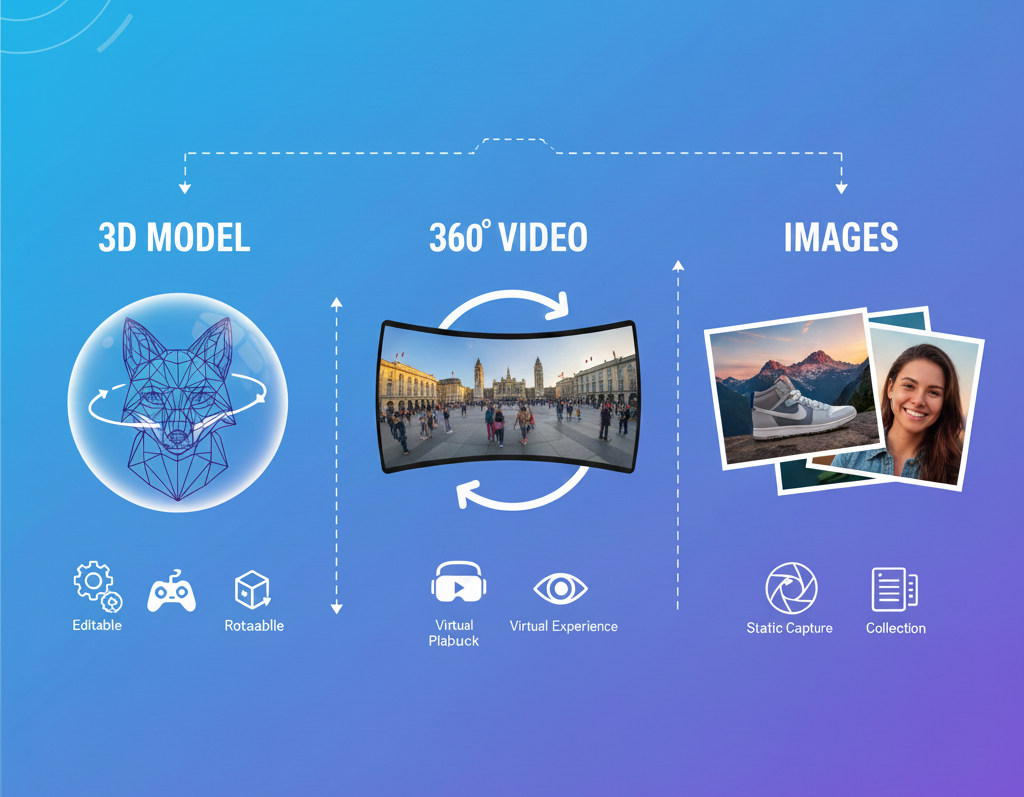
Interactive visuals give customers a clearer sense of a product’s dimensions, texture, and real-world application. This increased clarity builds confidence and leads to higher purchase rates. Fully 3D and AR-based previews go even further by enabling shoppers to interact with items or see them in their own space, making them particularly valuable for categories where fit and aesthetics matter.
Why This Matters for Dropshippers
Dropshipping is a competitive space where differentiation often hinges on product presentation and customer experience. Unlike traditional retail, dropshipping doesn’t give customers a chance to touch or try a product before purchasing. As a result, visual trust-building tools like 3D views and AR can play a pivotal role.
Popular dropshipping niches include: Fashion accessories (bags, watches, jewelry), home decor and furniture, fitness gear and equipment, and beauty products.These categories benefit from immersive media because customers often hesitate to buy without seeing multiple angles or understanding scale. A 360° view of a decorative lamp or a try-before-you-buy AR preview of a gym bench in a customer’s living room can significantly boost purchase confidence.
The payoff is substantial: Shopify merchants who added 3D/AR models saw conversion increases of up to 94%, and platforms like Amazon have reported 2-3x higher conversions on listings with 3D-enabled features.
Media Types Accepted By Leading E-commerce Platforms
Modalyst users can easily integrate 3D and 360° content using apps from the Wix marketplace. Shopify offers native 3D model support and converts them into interactive viewers. Amazon supports both AR and 3D, particularly in electronics, fashion, and home decor. Etsy is further behind, focusing mostly on static visuals with some limited AR capability in its mobile app.
How to Generate a 3D Model for 360 Views and Commerce AR
There are three main ways to create 3D models or 360° views, varying in cost and complexity.
1. Photogrammetry scanning
Photogrammetry uses a scanning machine to capture hundreds of precise images of an object and stitch them into a photorealistic 3D model. Machines range from handheld to large industrial setups. For example, the Artec Eva scanner costs around $20,000 and is used in professional retail and manufacturing workflows. These setups are ideal for high-value or intricate items where accuracy is critical.
2.Turntable
This method involves placing the object on a rotating platform (manual or motorized) and photographing it from multiple angles using a DSLR camera. A typical setup might include:
- Motorized turntable ($100 – $300)
- DSLR camera with interval timer ($500+)
- Tripod and lighting kit ($150)
The result is usually a 360° spin video or image sequence. While not a true 3D model, this format adds substantial visual appeal and simulates interactivity. It’s useful for marketplaces like eBay or Etsy, which support embedded video or spinning GIFs. However the embedded 360 solution in Amazon and in many other platforms requires uploading a 3D model and not a video. In addition, as a video, it would not fit an AR integration.
You might hire a professional photographer once for a few hero products, or set up your own mini studio.
The budget way: Multiview AI
New AI-driven tools like Sloyd offer AI multiview-to-3D conversion. All you need is a smartphone and 3-4 orthogonal photos (front, side, back). Sloyd’s AI predicts how the object looks from all angles and generates a basic 3D model. It’s a great choice for small gadgets, accessories, and handmade items. In Sloyd with a subscription, you can generate unlimited models. While the fidelity may not capture micro details, it’s fast, affordable, and increasingly accurate.
Beyond 3D multi-view with Sloyd’s image generation and image editing you can also:
- Remove and replace backgrounds automatically
- Predict product shadows and reflections
- Generate synthetic lifestyle photos with consistent lighting
For dropshippers, especially those managing large catalogs, these tools reduce the need for costly photoshoots and enable rapid iteration.
In Summary
As e-commerce becomes more competitive, dropshippers must invest in visual experiences that inspire confidence and reduce friction. The data is clear: immersive content converts better. With tools now available at every budget level, there’s no reason not to elevate your product displays.
Whether you’re using high-end photogrammetry or AI multiview tools like Sloyd, richer visuals can be a powerful edge, especially when integrated seamlessly with platforms like Modalyst. Customers today expect to see products from every angle. Meeting that expectation could be the difference between a bounce and a sale