
Modalyst has joined Wix.com | Read More Here
Integration
Seamlessly integrate to your eCommerce store to become a successful dropshipping business overnight.
Wix
Add Modalyst to your ecommerce plan and start taking your Wix website to the next level.
Shopify
Install Modalyst's Shopify app in one click to automate dropshipping for your Shopify store.
BigCommerce
List thousands of products to your BigCommerce store with a single click..
Partner
Kit
Peer-to-peer marketplace

Learn how to start a successful dropshipping business with Modalyst. Overnight.

Over 250,000 entrepreneurs & online businesses have signed up to receive tips, tricks, and news on dropshipping & ecommerce success.

Reducing Cart Abandonment in Dropshipping with Ringless Voicemails

Look, cart abandonment sucks. You spend money on ads, drive traffic to your store, watch someone add items to their cart… and then they just disappear. Poof. Gone. About 70% of online shopping carts get abandoned, which translates to millions in lost sales.

Why? The usual suspects: surprise shipping costs nobody warned them about, they got distracted by a text, their kid started screaming, or they just… changed their mind. For dropshippers, especially where margins are already tight, abandoned cart hurts.

Email reminders work okay. But let’s be honest: your carefully crafted recovery email is probably sitting unread between a Bed Bath & Beyond coupon and someone’s LinkedIn spam.

Enter ringless voicemails. I know what you’re thinking, voicemail in the 21st century? Tools like the VoiceDrop Shopify App, which offers seamless ringless voicemail integration, are changing the game. Dropshipping stores using it are already seeing real results, from recovering abandoned carts to boosting repeat purchases.

Other ecommerce brands use ringless voicemails to send personalized post-purchase thank-yous, win-back messages for inactive customers, or even exclusive VIP promotions, all without interrupting the customer’s day. It’s a small touch that feels personal and builds real trust, and the best part? It scales effortlessly.


Why People Bail on Their Carts (And Why It Matters)

When someone adds products to their cart and bounces without buying, that’s cart abandonment. In dropshipping, where you’re selling products you don’t actually stock, this is particularly painful because you’ve already done the hard part-getting them interested.

The reasons people abandon carts aren’t mysterious. Sometimes the shipping cost pops up at checkout, and they weren’t expecting it. Sometimes the checkout process takes too long (nobody wants to create yet another account). Phone rings, kid needs help with homework, boss walks by their desk. Life happens.

Other times? Cold feet. Security concerns. Second-guessing whether they really need another pair of shoes.

For dropshippers, this represents money that was basically already in your hand before it slipped away. You can send them an email or a text, sure. But there’s another option that’s getting overlooked.

What’s the Deal with Ringless Voicemail?

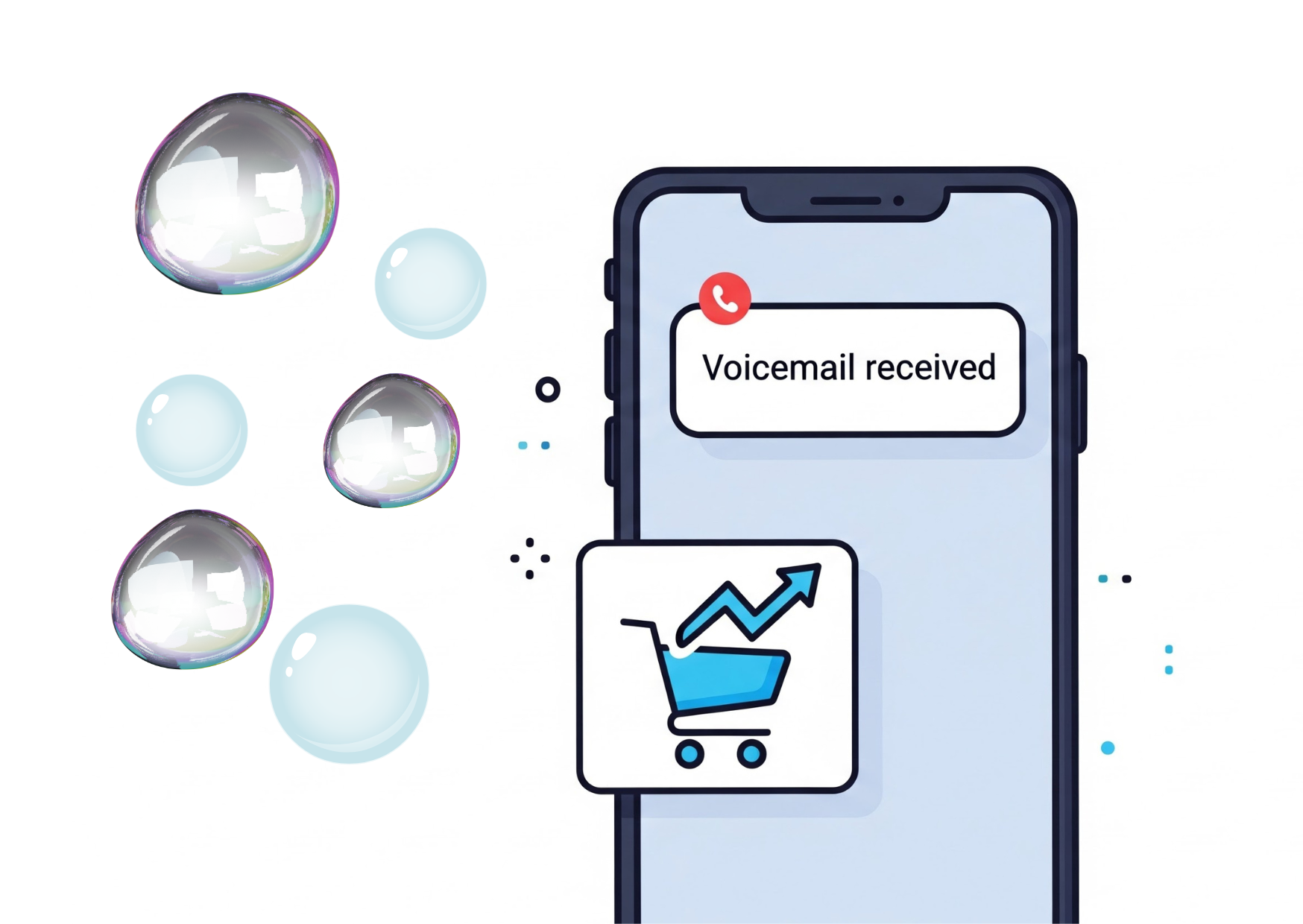
Ringless voicemail drops a pre-recorded message straight into someone’s voicemail inbox. Their phone never rings. No interruption. They just see a voicemail notification and can listen when they want.

The technology works through carrier networks to deliver the audio file directly-kind of like how a text message gets delivered, but it’s audio that goes to their voicemail box instead of their messages.

Why does this matter for dropshipping? Because, unlike a phone call (annoying), it doesn’t interrupt anyone. Unlike an email (ignorable), it feels more personal. People actually listen to these-listen rates typically run over 50%, which is wild compared to email open rates.

Here’s the thing: voicemails feel more human. When was the last time you got a voicemail from a business? It stands out. And for abandoned cart recovery, standing out is literally the whole game.


How This Actually Helps Recover Sales

The strategy is straightforward. When someone abandons their cart, you send them a personalized ringless voicemail. Not a generic “Thanks for shopping with us” robot message-something that actually references what they left behind, maybe includes an incentive to come back and finish the purchase.

It works because it hits differently than email. Voicemail feels more direct, more personal. And because it doesn’t ring, it’s not intrusive. It’s just… there when they’re ready to check their messages.

Writing a Voicemail Script That Doesn’t Suck

Keep it short. Seriously-30 seconds max. People don’t have time for a monologue.

Start friendly and use their name. “Hey Sarah, noticed you were checking out that navy backpack earlier.” Not “Dear valued customer.” Come on.

Give them a reason to come back. “I can knock 10% off if you complete your order today” beats a vague “We miss you!” any day.

End with a clear next step. “Head back to your cart and use code COMEBACK10 at checkout.” Done.

Skip the corporate jargon. Write like you’re talking to a friend. Show some personality. Add urgency without being pushy-there’s a difference between “Limited time offer!” and “BUY NOW OR MISS OUT FOREVER!!!”

The goal is to sound human, not like a script someone in marketing agonized over for three weeks.

When to Actually Send These Things

Timing matters more than you’d think.

Send the first message within an hour of cart abandonment. That’s when their interest is still hot. They might’ve gotten distracted and genuinely forgot.

If they don’t respond? Hit them again after 24 hours. But that’s it-don’t become a stalker.

Avoid evenings and weekends unless your data shows that’s when your specific customers are most responsive. Most people don’t want to deal with shopping reminders at 9 PM on a Saturday.

And frequency: one or two messages is reasonable. Five is harassment. Don’t be that brand.

If you’re seeing carts abandoned mid-week, that’s when you focus your efforts. Use your actual customer behavior data to guide timing, not some generic “best practices” article you read.

Making It Actually Work with Your Setup

Good ringless voicemail platforms integrate with your existing tech stack. VoiceDrop works with Shopify, WooCommerce, and HubSpot-the usual suspects.

Set up automation triggers so when a cart gets abandoned, the system fires off a voicemail automatically. You’re not sitting there manually sending messages to every person who bails.

This frees up your time to actually run your business instead of chasing down abandoned carts one by one.

Dropshipping voicemail marketing

Getting Started Without Screwing It Up

First, pick a platform that works with your store. For instance VoiceDrop integrates with Shopify and WooCommerce, which covers most dropshippers.

Second-and this is important-make sure you have consent. You can’t just start dropping voicemails to anyone. Check TCPA compliance if you’re in the US. Seriously, don’t skip this part. Fines are not fun.

Upload your customer list (the ones who’ve opted in), set up your automation triggers, write some test scripts, and run a small pilot program. Start with maybe 100-200 customers and see what happens.

Train your team on the system if you have one. If it’s just you, spend an afternoon getting comfortable with the platform.

Cost per message is usually pretty low, but budget accordingly. Connect everything to your CRM so the messages feel personalized based on actual customer behavior.

Then scale up once you’ve proven it works. Don’t go all-in on day one.


Does This Actually Make Money?

Track your recovery rate-how many abandoned carts convert after getting a voicemail. Look at listen rates, how many people call back, and most importantly, how much revenue you’re recovering.

Do the math: divide the sales you recover by what you’re spending on the service. That’s your ROI.

For dropshipping, if you can get a 5-10% lift in conversions, you’re doing well. Some businesses report recovering 20% of abandoned carts this way, which is honestly impressive.

Use the data to refine your approach. If messages sent at 2 PM perform better, do more of that. If your script isn’t working, rewrite it. This isn’t set-it-and-forget-it need to pay attention and adjust.

Bottom Line

Ringless voicemails aren’t some magic bullet that’ll solve all your cart abandonment problems. But they’re another tool in your arsenal, and they work because they’re personal without being pushy, timely without being annoying, and different enough that people actually pay attention.

If you’re watching potential sales disappear every day, it’s worth testing. Tools like VoiceDrop make it pretty straightforward to get started.

Run a pilot, measure the results, adjust your approach. If it works, great-you’re recovering sales you would’ve lost. If it doesn’t, you’ll know pretty quickly.

Your dropshipping store deserves better than 70% cart abandonment. Time to do something about it.
7 Data-Driven Email Tips Every Dropshipping Business Should Know

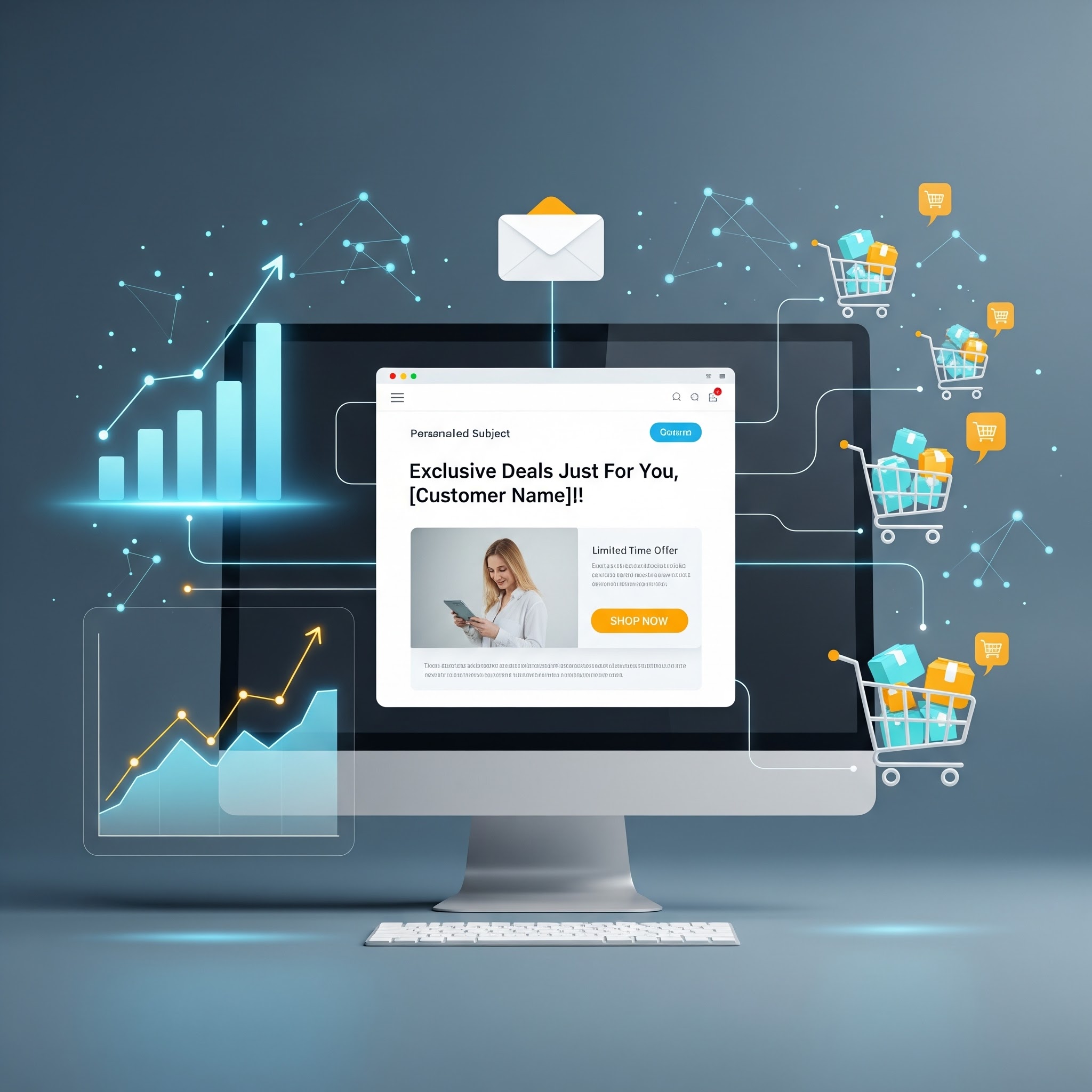
In dropshipping, email marketing works best when every decision is based on data. Meaning from subject lines to send times, understanding what your customers actually do helps you sell more with less effort. Tracking opens, clicks, and purchases, you can learn what keeps shoppers engaged and what makes them leave. 

In this guide, you’ll find 7 practical, data-backed email tips to help you improve engagement, conversions, and customer loyalty.

TL;DR:

7 Data-Driven Email Tips for Dropshipping Businesses

  1. Group subscribers by their purchase history, browsing activity, or engagement level to send more relevant and higher-converting emails.
  2. Test subject lines, CTAs, and send times to find what truly resonates with your audience.
  3. Use browsing or purchase behavior to send personalized product recommendations that drive conversions.
  4. Automate follow-ups for cart abandoners, repeat buyers, or unopened emails to re-engage customers efficiently.
  5. Track when someone opens or clicks your emails with MailTracker to optimize timing and send better follow-ups.
  6. Remove inactive or bounced contacts regularly to protect deliverability and improve open rates.
  7. Connect each campaign to actual sales and measure revenue per email to identify your most profitable flows.

Why Data Is the Core of Successful Dropshipping Emails

Data is important because it helps dropshipping businesses understand what truly drives sales. 

Unlike traditional retail, dropshipping relies on automation, fast decision-making, and customer insights to stay competitive.

The most valuable metrics for ecommerce include:

  • Open rate: shows how engaging your subject line is.
  • Click-through rate: reveals how relevant your content or offers are.
  • Conversion rate: measures how effective your email flow is.
  • Customer lifetime value: tracks how well you retain and nurture buyers.

When you use these insights, you remove the guesswork from your campaigns. Every email you send becomes more targeted, efficient, and profitable, helping you maximize ROI over time.

7 Proven Email Marketing Tips Backed by Data for Dropshipping Success

1. Segment Customers Based on Real Behavior

Segmentation is one of the most effective ways to boost engagement and sales. If your message doesn’t match what your subscribers care about, they won’t open, click, or buy.

Start by using the data you already have (orders, browsing history, and past engagement) to create meaningful customer segments. A few examples include:

  • First-time buyers vs. repeat customers
  • Cart abandoners vs. active shoppers
  • Product-category interests (for instance, “home fitness” vs. “pet supplies”)

Once you’ve identified these groups, tailor your campaigns to each segment’s needs. 

For example, first-time buyers might receive a welcome discount, while repeat customers get early access to new products. This approach works because it feels relevant to the recipient. 

2. Use A/B Testing to Validate Every Email Decision

The best dropshipping email strategies are built on testing, not guessing. A/B testing helps you understand what really works for your audience before sending your campaigns to everyone.

Start by testing one element at a time. You can compare:

  • Subject lines: “Shop Now” vs. “Last 24 Hours to Save 15%”
  • Email layouts: single-column vs. product grid
  • CTA buttons: “Buy Now” vs. “Claim Offer”
  • Send times: morning vs. evening

Then, you can measure success using key metrics like open rate, click-through rate, and conversions per variant. 

Even small tweaks can make a big difference. Changing the subject line from “Shop Now” to “Last 24 Hours to Save 15%” can help improve open rates and engagement. 

Over time, you’ll build a data-backed playbook of what your audience responds to best, improving both engagement and ROI.

  1. Personalize Based on Engagement Data

Personalization should go beyond just using a first name. The most effective emails are those that reflect what your customers actually do.

Use data from browsing history and past purchases to recommend products your audience already cares about.

For example, send a restock alert only to customers who clicked on a sold-out item, or highlight accessories that complement their last order.

When your emails reflect real customer behavior, they feel more genuine and timely. Even small, data-driven changes can lead to higher conversions.


4. Automate Smart Follow-Ups and Triggers

Automation delivers the best results when it’s based on real customer behavior. Rather than sending identical follow-ups to everyone, set up triggers that respond to each shopper’s actions.

Here are a few ideas to start with:

    • Email opened but no click: resend with a stronger call-to-action.
    • Cart abandoned: send a reminder within 24 hours.
    • Repeat purchase: follow up with a loyalty or referral offer

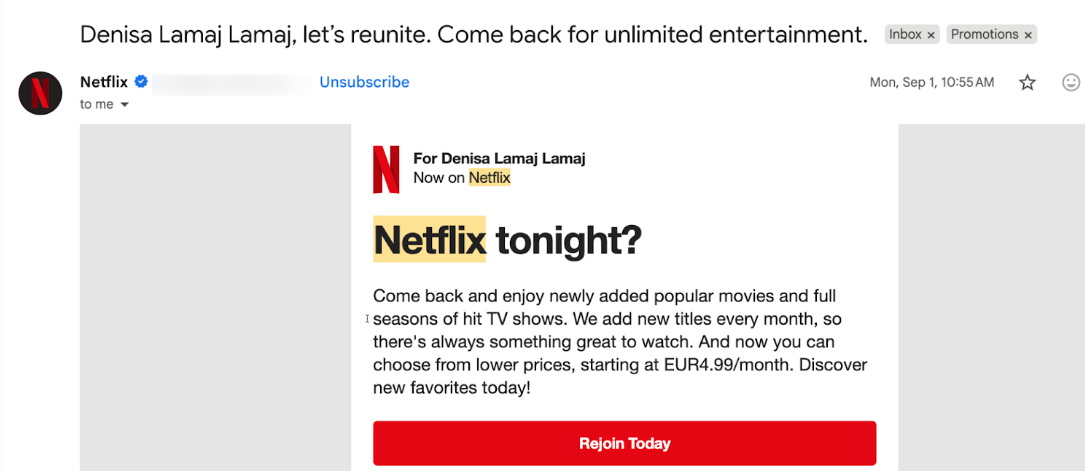
For example, Netflix uses automated win-back emails like the one below to re-engage past subscribers. 

The message is personalized with the user’s name and highlights new content to encourage them to return.
Netflix email

These automated workflows help you stay connected without constant manual effort. They save time, recover missed opportunities, and steadily increase conversions.

5. Track Email Engagement and Timing

Knowing when people open or click helps you understand what catches their attention and when they’re most likely to engage.

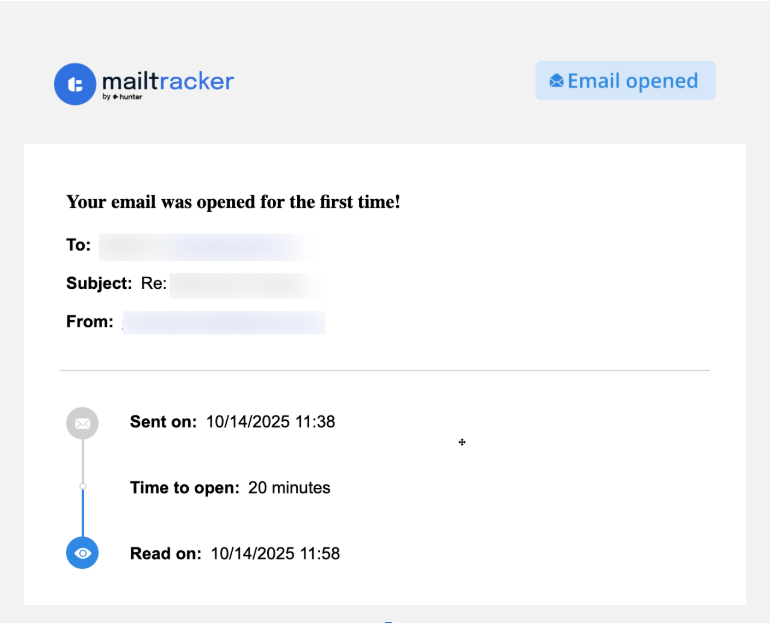
Using tools like MailTracker helps you see when someone opens your emails. This data is important for sending well-timed follow-ups and optimizing your next campaign. Here’s what it looks like:

MailTracker

For example, if you notice that most customers open your emails within the first few hours, you can schedule future sends. Or, if certain contacts never open, you can target them with reactivation campaigns.

6. Clean Your List and Protect Deliverability

A healthy email list is key to keeping your campaigns effective. Over time, inactive subscribers, bounced addresses, and spam complaints can hurt your sender reputation and deliverability.

Review your list every few months and remove contacts who haven’t opened or clicked any emails in a while. You can also create a reactivation campaign to win them back before removing them completely.

Regular list cleanup can improve open rates within weeks. Fewer inactive contacts mean higher engagement and a better chance of landing in the inbox instead of the spam folder.

7. Track Revenue, Not Just Opens

While open and click data are useful, they don’t tell the full story. To measure real success, you need to connect your emails directly to sales.

Start by tracking how much revenue each campaign generates and dividing it by the total number of emails sent. 

For example: $1,200 revenue ÷ 2,000 emails = $0.60 revenue per email.

This simple calculation helps you understand which email flows bring the highest return. When you focus on revenue, you can prioritize the campaigns that truly drive profit and refine the ones that don’t.

Track, Analyze, and Refine

Data-driven decisions are what separate strong dropshipping brands from the rest. Tracking engagement and performance gives you the clarity to improve each campaign instead of guessing what works.

Use your email metrics to identify what’s driving clicks, where engagement drops, and how timing affects conversions. 

Tools like MailTracker can help you understand when subscribers interact with your emails, allowing you to fine-tune your follow-ups and email strategy.

The more you analyze and adjust, the more efficient your campaigns become, turning every email into an opportunity to learn, connect, and sell smarter.