
Despite most online stores operating only in English, most consumers want to purchase products from sites using their native language. Given that your dropshipping business likely operates globally (or you want it to), this is both a massive opportunity and a critical vulnerability.
You’re able to build a truly global brand through strategic localization even if your competitors struggle with basic translation. In short, you need a complete framework for taking your dropshipping store global. This covers the technical foundations, cultural adaptations, and operational strategies that are vital for expansion.
TL;DR
– Most consumers prefer shopping in their native language, making localization crucial for dropshipping stores aiming for global reach.
– Effective localization involves technical implementation, cultural adaptation, and operational excellence to enhance customer trust and conversion rates.
– Only 25% of customers will buy from sites that aren’t in their native language, underscoring the importance of a native shopping experience.
– Utilize tools like Weglot for multilingual SEO and consistent terminology, enabling smooth integration across different markets.
– Clear communication about shipping times and payment options tailored to local preferences can greatly improve customer satisfaction and sales.
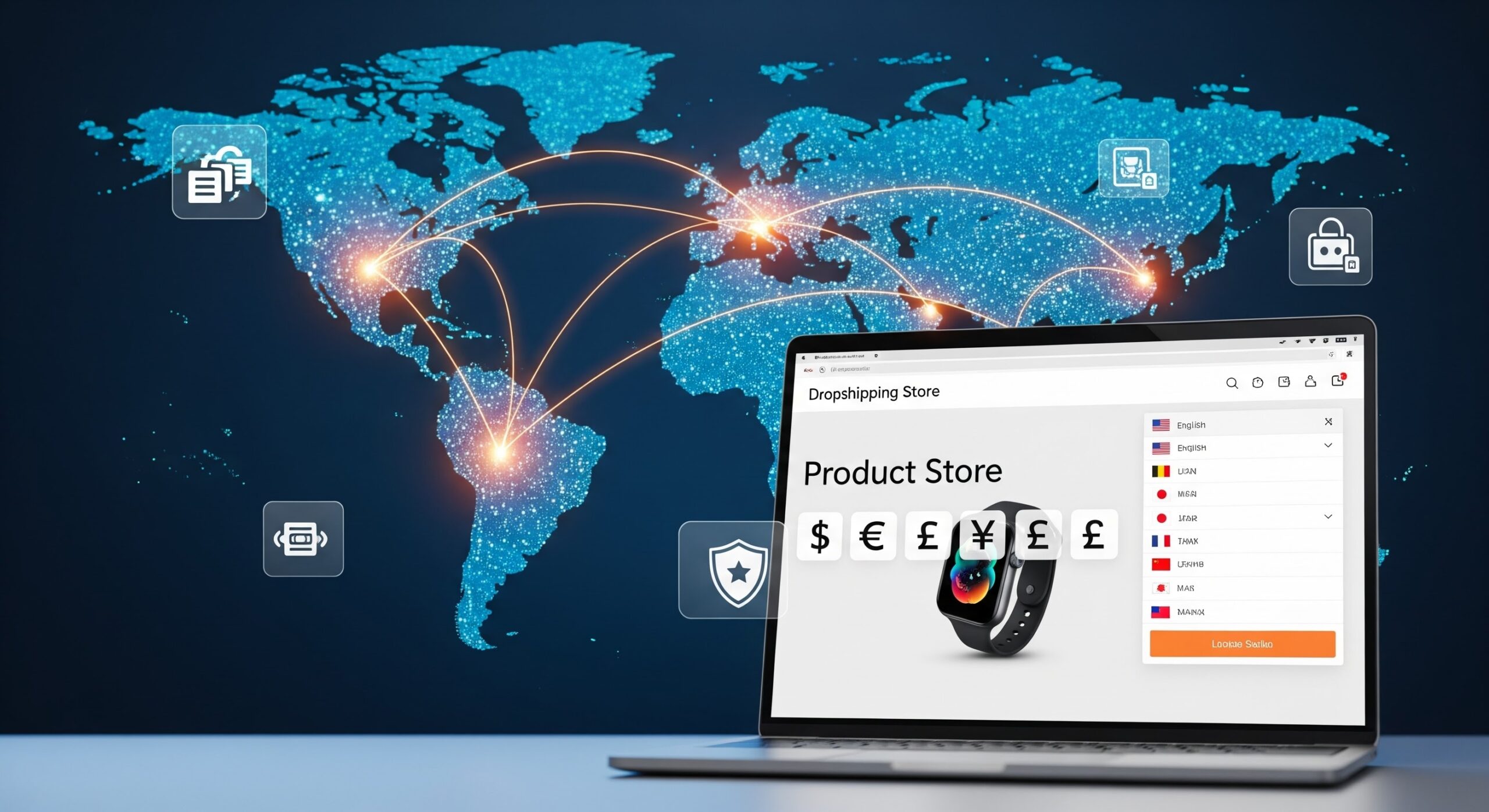
What Localization Means for Dropshipping Stores
While translation changes the actual words on the screen, localization is the process of adapting your entire shopping experience to feel native in each target market. This is a huge deal for dropshipping businesses, where trust and perceived legitimacy often determine whether your visitors convert into customers.
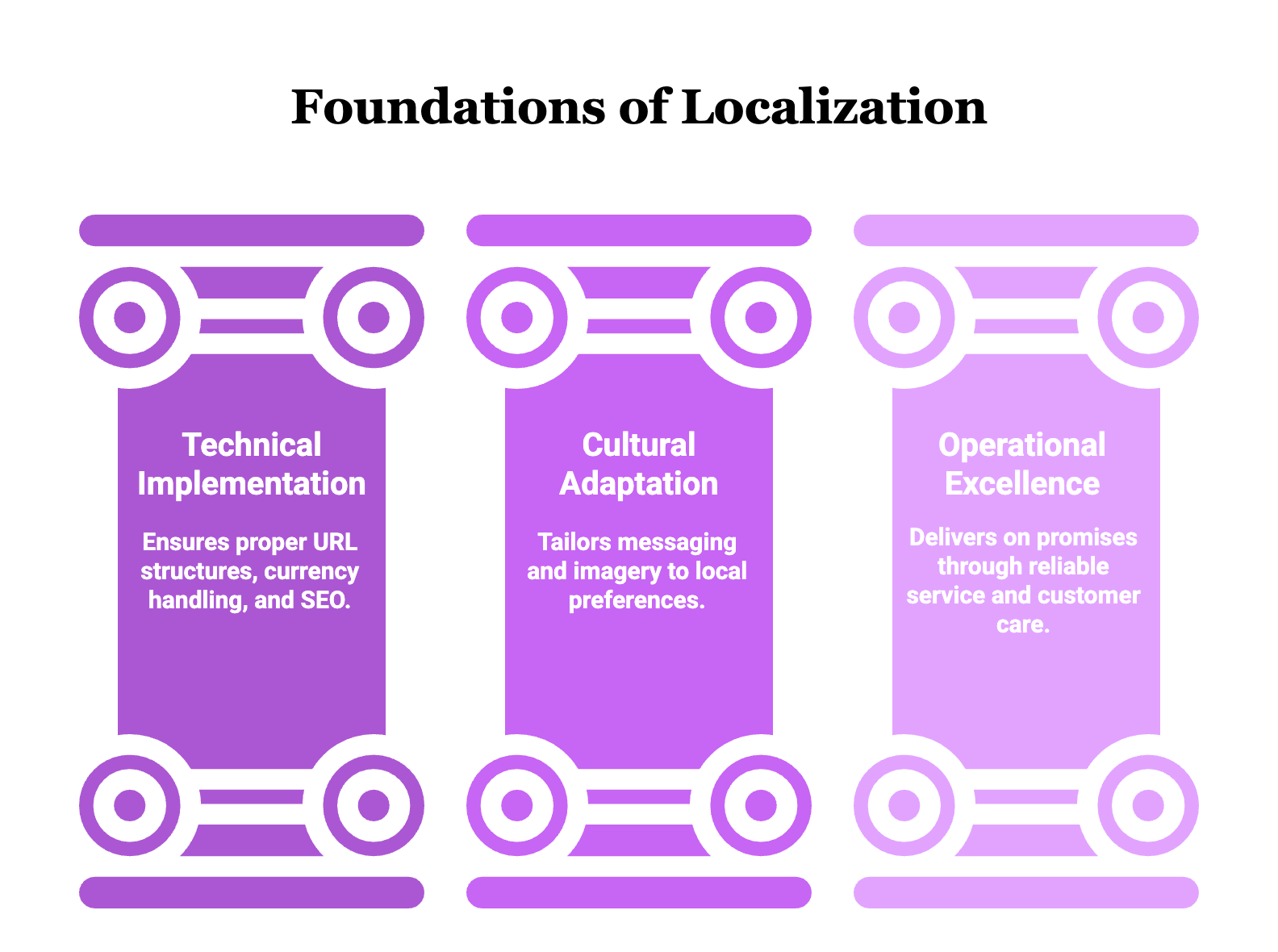
There are three pillars of effective localization that work together to create this native experience:
– Technical implementation is how you set up proper URL structures, handle different currencies, and carry out solid SEO.
– Cultural adaptation will ensure your messaging, imagery, and promotional strategies resonate with the local preferences and sensitivities of your target market.
– Operational excellence is more subjective, but essentially is how you deliver on the promises you make to the customer. This could be through reliable shipping, appropriate payment methods, customer service, and other aspects that meet local expectations.
Unlike typical e-commerce businesses, dropshipping doesn’t control inventory or shipping directly. This means your localization strategy must account for supplier capabilities, shipping timeframes, and product availability across different markets.
Why Translation Alone Kills Your International Conversion Rates
Given that a majority of customers won’t entertain buying from a ‘non-native’ store, this explains why many dropshipping stores see disappointing results when trying to expand to other markets.
While basic content translation seems like the right idea, it only stands to create the illusion of localization without delivering the substance. For instance, a French customer visiting your translated store might be able to read product descriptions in their language, but will encounter USD pricing, US-focused shipping information, and checkout flows designed for American shopping behaviors. Each element adds friction to the purchasing process.
In fact, removing small uncertainties throughout the shopping journey that results in a properly localized experience means your purchasing metrics (such as Conversion Rate Optimization (CRO)) can stand to improve:
– Currency displays need to show prices in local formats rather than simple conversions.
– Payment methods must include the options customers actually use in each market. For example, PayPal dominates in some regions while bank transfers or local payment apps lead in others.
– Shipping expectations can vary based on location. Some markets might accept multi-week delivery windows, while others will abandon carts if delivery exceeds a week.
There are other psychological factors too, such as color associations across cultures and product presentation differences. Even the tone and style of your copy will need adjustment. As an example, direct sales language that converts in American markets can feel pushy or inauthentic to European audiences.
How to Choose Your Target Markets
Like any new venture, choosing the right initial target market needs care and attention. You can begin by examining where your current traffic originates, as existing visitor patterns will often reveal untapped demand. For instance, your analytics might show promising traffic from specific countries where your conversion rates lag behind your primary market.
Shopping behaviors will be an influence on your choice of market, too. Some regions prefer mobile shopping while others maintain strong preferences for desktop purchases. None of these factors are in a bubble, as they all interlink. As an example, higher-value items could go hand-in-hand with using desktops rather than mobile devices.
Payment types are another example: it could be that your European customers use bank transfers more often than the mobile payment platforms of Asian markets. You’ll need to research these preferences early so you get a realistic assessment of whether you can serve each market.
Related to payments, shipping and delivery expectations will take up a lot of your attention. Your supplier network will determine what you can actually deliver, so you have to verify that those suppliers can ship to your target markets within the timeframes your customers expect.
If you work with suppliers across multiple regions through platforms such as Modalyst, you’ll have the flexibility to serve different markets from geographically appropriate locations.
Cultural Adaptation Strategies to Make Your Store Feel Like Home
When it comes to your store’s content, such as product descriptions, tactics that work in one market might not be right in others due to cultural differences in how people perceive sales and discounts. For example, a market that responds well to ‘limited time offer’ urgency tactics might feel manipulative or inauthentic to others.
This is the same for your images and media too; in fact, it could carry a greater cultural weight in some cases. When it comes to localization, your product photography should reflect the diversity of your target markets to show products in contexts that feel relevant and aspirational.
Part of that relevance is through color schemes and design elements. Yes, there are symbolic meanings for colors in various cultures, but the style (such as minimalist aesthetics in Scandinavian markets) is also crucial.
However, substance in the form of your content is the other side of the coin. A market that prefers straightforward, factual communication (such as Germany) will clearly need a different approach and style to warmer, relationship-focused messaging that Italian customers might appreciate.
Part of your cultural adaptation will be making sure that your content has the right consistency for building recognition. This is where a website translation tool comes into play, such as Weglot, as its glossary rules will ensure that key terms always translate the same way across your entire store.
Getting the Technical Foundation Right for Global Dropshipping
Speaking of which, Weglot can translate your website and allow you to properly localize it too. Tools like this handle the technical side of URL structure, hreflang tags, and multilingual SEO automatically. This lets you focus on the cultural and operational aspects of your localization rather than wrestling with complex technical implementations.
Proper URL structure doesn’t seem like it matters, but it forms the foundation of multilingual SEO. You have two primary options:
– Subdirectories (example.com/de/). This structure generally provides stronger SEO benefits by keeping all language versions under your main domain, which can consolidate your domain authority
– Subdomains (de.example.com). These are separate entities under your main domain name and can be great for support pages in different languages, blogs, and plenty of other site setups.
With Weglot, you can choose between both subdirectories and subdomains. It also automatically adds hreflang tags, which tell search engines the right language version to show to specific users. These technical elements prevent situations where German users see English content in search results or French content appears for Spanish speakers.
However, hreflang tags are notorious for being difficult to set up and administrate, which is why this happens under the hood thanks to Weglot.
Creating the Right Experience for Your International Customers
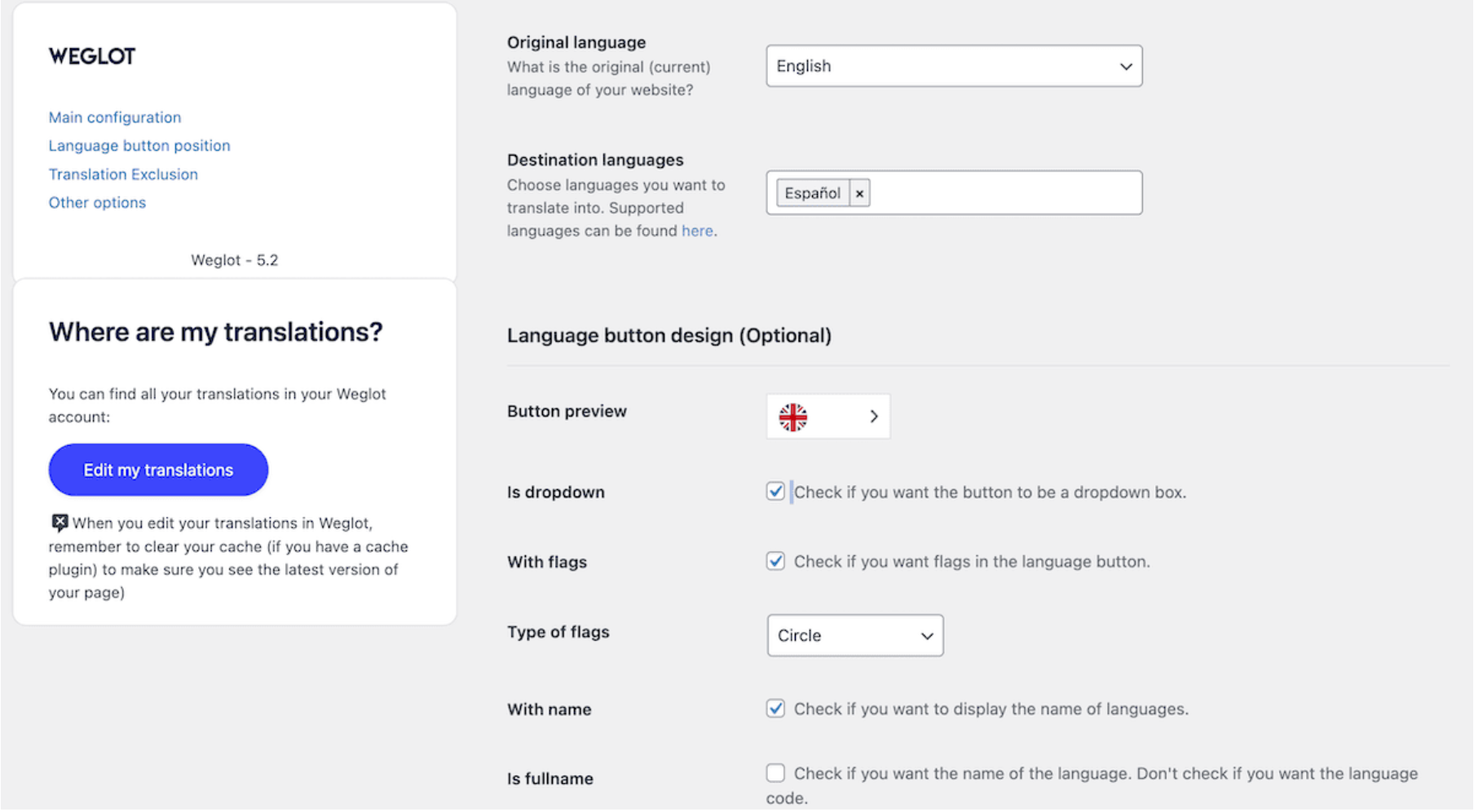
One of the first indications that your dropshipping website will be multilingual is your language switcher. Its design and positioning will influence whether customers even discover other languages.
In a nutshell, the switcher should be immediately visible without cluttering your header design. Most successful implementations place the switcher in one of the corners of the screen and use language names in their native form (“Deutsch”, not “German”), with or without flag icons.
When it comes to payments, prices need some adaptation to local formats. European currencies typically use commas for decimal separators,
while US formats use periods, for instance.
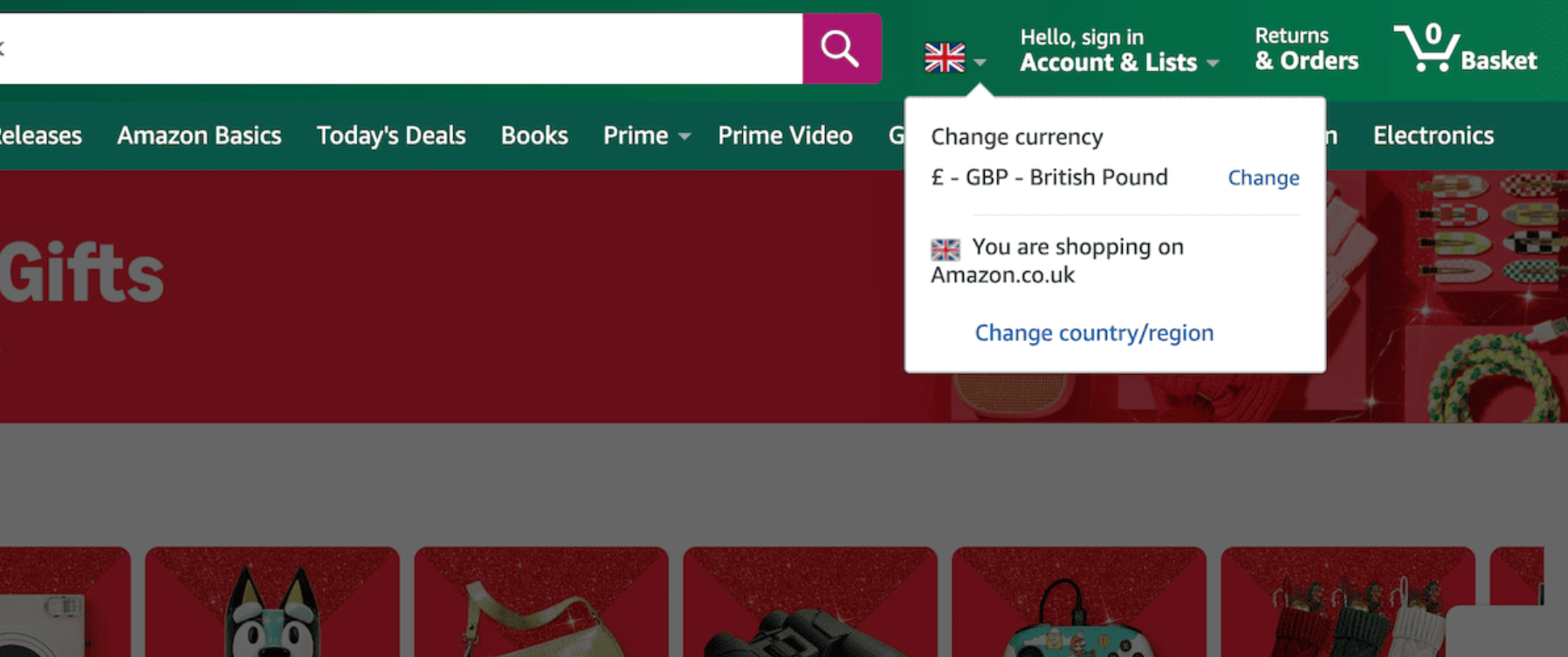
Even the way you present your pricing will change based on the culture:
-Some cultures respond to .99 endings.
-Others prefer round numbers.
Simple currency conversion often produces awkward pricing, such as €87.43, which feels less professional than rounded pricing like €89.00. As such, much like your content, your pricing will need translation as well as localization.
Remember that for your dropshipping store, the technical implementation needs to account for how supplier pricing, shipping costs, and local taxes affect your final customer-facing prices. Building a sufficient margin into your localized pricing ensures you can cover these variable costs while maintaining profits.
Moving on, every step in the checkout process will need both localization and translation. This includes cart review screens, payment processing, order confirmations, error messages, form labels, and instructional text.
You should look to be the most clear when it comes to shipping. Here, display realistic delivery timeframes based on where you ship from and typical customs processing times for the destination country. Transparency about your shipping process will build trust and reduce post-purchase anxiety, particularly for international customers who may be unfamiliar with your brand.
Managing Operations Across Multiple Markets
Dropshipping, more than most other e-commerce types, will have unique requirements relating to inventory visibility. You need systems that track which products and regions suppliers can ship to in order to prevent situations where an order might not reach the customer.
One way to begin implementing this is to communicate with suppliers who serve your target markets about capabilities and limitations:
– Verify shipping coverage for your target countries.
– Confirm typical delivery timeframes.
– Identify any restrictions on what products can be shipped to specific countries.
– Understand any customs documentation requirements.
This groundwork is something Modalyst can help to streamline. It provides clear information about which suppliers serve which markets, so youcan curate product catalogs appropriately for each region.
As for your customers, communicate clearly about your delivery windows. So, if products ship from China to European customers, you can state multi-week delivery windows rather than implying faster shipping you can’t deliver. Honesty builds trust even when the news isn’t ideal.
For times when your customers need support, a multilingual approach is necessary but tough to implement. It could be that you handle the initial volume through automation. You could use Weglot to translate common inquiries, but you should also plan for how you’ll handle complex issues that need native language support. Some businesses outsource multilingual support, while others hire multilingual team members.
Conclusion
Localization transforms how international customers will perceive your business. First, targeting one or two markets lets you develop your localization strategy before scaling to additional regions. Having the right foundation using tools such as Modalyst can take care of many of the aspects of selling in these new markets, but others can tackle other facets.